
Body Mehndi Designs: Beautiful Ideas and Patterns
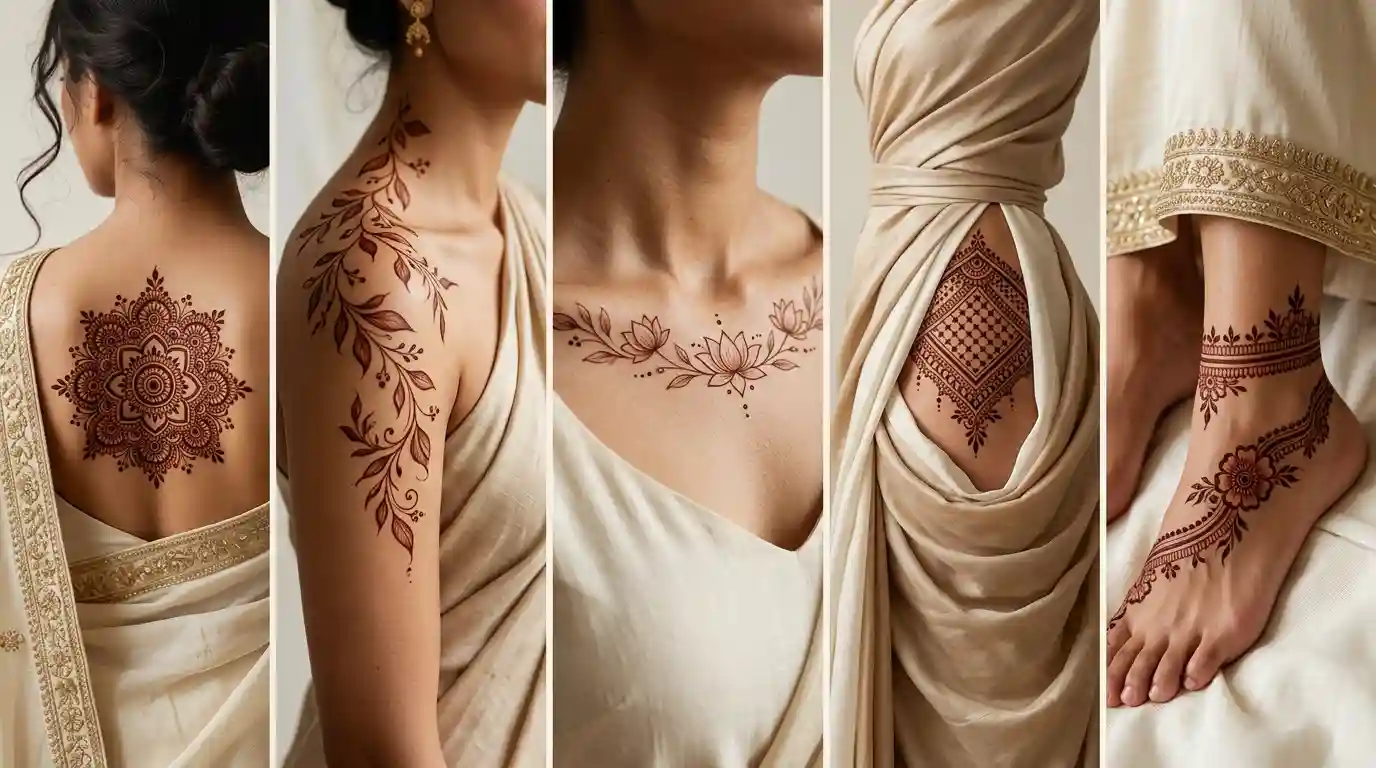
Body mehndi designs are a creative and elegant way to decorate your skin with temporary henna artwork beyond traditional hand patterns. From delicate shoulder flowers and graceful collarbone vines to intricate back mandalas, waist patterns, thigh motifs, and decorative ankle designs, body henna offers endless possibilities for personal expression. Whether you prefer traditional Indian and Pakistani mehndi, flowing Arabic patterns, minimalist body art, or modern geometric designs, you can find a style that complements your outfit, personality, and occasion. Brides often choose elaborate back or shoulder artwork to match wedding attire, while smaller floral and feather motifs are attractive for Eid, festivals, parties, and casual celebrations. Body henna can also incorporate meaningful symbols, initials, lotus flowers, half-moon patterns, and personalized decorative elements. In this guide, you will discover beautiful body mehndi ideas for different placements, learn how to customize designs for your body, compare simple and detailed patterns, and understand proper henna application, aftercare, and safety.
Table of Contents
- What Are Body Mehndi Designs?
- Body Mehndi Designs by Placement
- Body Mehndi Styles and Motifs
- Body Mehndi Designs by Occasion
- Choosing and Personalizing a Body Mehndi Design
- Simple and Beginner-Friendly Body Mehndi
- Applying and Caring for Body Mehndi
- Finding a Mehndi Artist and Planning Your Design
- Body Mehndi Designs FAQs
- Final Thoughts
What Are Body Mehndi Designs?
Body mehndi designs are decorative patterns applied to different parts of the body using henna paste or other materials specifically intended for temporary skin decoration.
Unlike conventional hand-focused mehndi, body henna can decorate the shoulders, arms, neck, back, waist, hips, thighs, ankles, and feet.
These designs range from small botanical motifs to elaborate ornamental compositions that follow the natural contours of the body.
Mehndi and Henna as Temporary Body Art
Mehndi, also called mehendi, is a traditional form of decorative body art associated with numerous cultural celebrations.
Natural henna comes from the leaves of the Lawsonia inermis plant, which contain a dye molecule called lawsone. When prepared into a suitable paste, henna can temporarily stain the outer layers of skin.
The resulting artwork generally develops orange, reddish-brown, or brown tones.
Body henna designs can be delicate and understated or highly detailed, depending on the motif, placement, and available space.
If you are new to henna, exploring traditional mehndi designs can help you understand basic patterns before adapting them to larger body areas.
The Meaning of Henna Designs
Henna artwork often carries cultural, festive, and personal significance.
In some communities, mehndi is associated with weddings, joyful celebrations, blessings, and new beginnings.
Floral patterns may represent beauty or growth, while certain lotus designs carry spiritual associations in particular traditions.
However, henna motifs do not have universal meanings. A flower might hold cultural significance for one person and simply be an attractive decorative choice for another.
Personalized body mehndi may include meaningful initials, symbolic shapes, dates, or artistic elements inspired by important memories.
Temporary Henna and Permanent Tattoos: Key Differences
Henna body art is sometimes called a henna tattoo, but it differs significantly from permanent tattooing.
Traditional henna paste stains the outer layers of the skin without the needles used for permanent tattoos.
Permanent tattoos involve depositing pigment into the skin with needles and are intended to last indefinitely.
Natural henna designs gradually fade as the stained outer skin cells shed, commonly within one to three weeks.
The temporary nature of henna makes it appealing to people who want decorative body artwork without a permanent commitment.
However, temporary does not automatically mean risk-free. Product ingredients and skin sensitivity still matter.
Body Mehndi Designs by Placement
Placement is one of the most important factors when choosing body henna.
Different areas offer different shapes, sizes, and levels of visibility. A small flower may look beautiful near the collarbone, while a large mandala may be more suitable for the upper back.
The best compositions work with the body’s natural curves rather than ignoring them.
Shoulder and Arm Mehndi Designs
Shoulder mehndi designs often feature rounded mandalas, decorative flowers, curved vines, and feather-inspired motifs.
A large floral mandala can sit on the outer shoulder, with small leafy trails extending toward the upper arm.
For a lighter appearance, a single rose with a curved stem can create a graceful composition.
Arm mehndi provides additional space for longer patterns.
An Arabic-style vine extending along the upper arm can combine flowers, leaves, and dotted borders without covering the entire area.
For more elaborate artwork, an ornamental band can wrap around part of the arm while connecting to a floral shoulder design.
Front and Back Neck Mehndi Designs
Neck mehndi focuses on small, carefully positioned decorative elements.
Back-neck henna may include a narrow floral vine, small mandala, or symmetrical geometric motif placed below the hairline.
A vertical pattern extending slightly down the upper spine can create an elegant effect with an open-back outfit.
Front-neck designs should remain subtle and avoid sensitive areas.
A small decorative motif near the base of the neck may complement certain clothing styles, but applying henna close to the face, eyes, mouth, or irritated skin requires additional caution.
Anyone considering face mehndi designs should remember that ordinary henna products are not necessarily suitable or approved for facial cosmetic use.
Collarbone Mehndi Designs
Collarbone mehndi creates a delicate decorative effect by following the natural line across the upper chest.
Thin leafy vines, tiny flowers, half-moon motifs, and minimalist botanical patterns are attractive options.
A floral branch can begin near one shoulder and extend gently toward the center of the collarbone.
Another approach is to place two small symmetrical motifs near the outer collarbones.
These designs work particularly well with off-shoulder clothing, boat necklines, and outfits that leave the upper chest visible.
For a refined appearance, choose fine lines and limited coverage instead of a crowded pattern.
Back Mehndi Designs
Back mehndi offers one of the largest continuous surfaces for elaborate henna artwork.
Popular designs include circular mandalas, lotus flowers, symmetrical vines, intricate ornamental patterns, and decorative vertical compositions.
A large upper-back mandala can become the central feature, with fine leaves and dots surrounding it.
Another attractive idea is a floral vine extending vertically between the shoulder blades.
Brides wearing low-back clothing may choose a design that follows the shape of the neckline.
Those who appreciate richly detailed body art may draw inspiration from intricate mehndi designs featuring miniature motifs, layered borders, and decorative latticework.
Waist and Hip Mehndi Designs
Waist and hip mehndi designs combine flowing movement with decorative placement.
Popular ideas include curved floral vines along the side waist, ornamental paisleys above the hip, and geometric bands following the natural waistline.
A delicate branch extending diagonally from the waist toward the outer hip can create a graceful visual flow.
For a bolder appearance, artists may use a large lotus motif surrounded by fine curved patterns.
Mehndi designs on hips are particularly suited to compositions that curve naturally rather than using rigid horizontal arrangements.
Because these areas often come into contact with fitted clothing, plan the application around drying time and avoid friction immediately afterward.
Thigh Mehndi Designs
Thigh mehndi provides space for both small artistic motifs and larger decorative compositions.
A floral mandala on the outer thigh can create a striking focal point.
Other options include feather patterns, curved paisleys, ornamental half-moons, and long botanical vines.
For a minimalist appearance, position a small lotus or decorative flower on one side of the thigh.
For extensive artwork, combine one large motif with smaller supporting details rather than filling the entire area uniformly.
Consider the clothing you plan to wear and whether the placement will be comfortable while the paste dries.
Ankle and Feet Mehndi Designs
Ankle and foot mehndi designs are particularly popular for weddings, festivals, and formal celebrations.
Anklet-inspired bands, also called payal-style patterns, may feature dots, floral borders, and hanging bead-like details.
A leafy vine wrapping partially around the ankle can create the appearance of delicate jewelry.
Foot mehndi may extend across the upper foot toward the toes using flowers, paisleys, or geometric patterns.
Matching the ankle design with wrist henna can give the overall appearance a coordinated feel.
Choose footwear carefully because straps and tight shoes may rub against the design during application or fading.
Mehndi Designs Under the Ear
Mehndi designs under the ear usually feature tiny decorative motifs positioned near the side of the neck or just below the ear.
A small leaf, miniature flower, crescent-inspired motif, or decorative dotted pattern can create a subtle appearance.
These placements are especially visible with tied-up hairstyles.
Keep the artwork simple because the available surface is small and curves around the ear.
Avoid applying paste inside the ear, on mucous membranes, or near irritated skin. Be particularly cautious with facial and ear-area applications because many henna products have not been evaluated for those uses.
Full-Body Mehndi Designs
Full-body mehndi generally refers to coordinated artwork extending across several body areas rather than one isolated placement.
A complete concept might connect shoulder flowers, upper-back patterns, arm vines, and ankle motifs through a shared decorative theme.
For example, lotus flowers and delicate leaves can appear throughout the design.
Another option is to combine symmetrical mandalas with smaller geometric borders across selected areas.
Brides and performers sometimes choose extensive temporary body decoration for specific events or artistic projects.
Large-scale henna requires careful planning, additional application time, and particular attention to ingredients, skin condition, comfort, and drying.
It does not require coating every part of the body. Selected connected placements often create a more balanced artistic result.
Body Mehndi Styles and Motifs
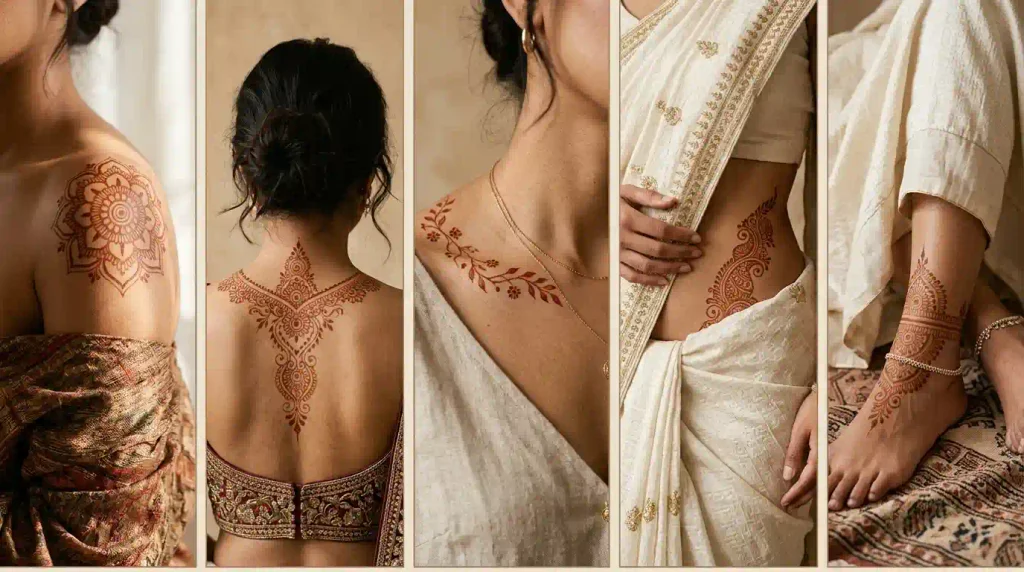
Body mehndi can draw inspiration from traditional henna cultures and contemporary decorative art.
The main style influences the arrangement, line thickness, motif selection, and amount of open space.
Combining different motifs can create an original composition, but maintaining a consistent visual theme helps the finished design feel cohesive.
Traditional Indian and Pakistani Patterns
Traditional Indian and Pakistani henna designs frequently incorporate paisleys, floral motifs, mandalas, vines, and intricate ornamental borders.
When adapted for body placement, these motifs can form larger decorative compositions.
For example, a traditional paisley pattern may become the central motif of an upper-back design.
A floral mandala can decorate the shoulder, while fine jaali-inspired borders extend toward the upper arm.
These styles are particularly attractive for wedding celebrations and traditional attire.
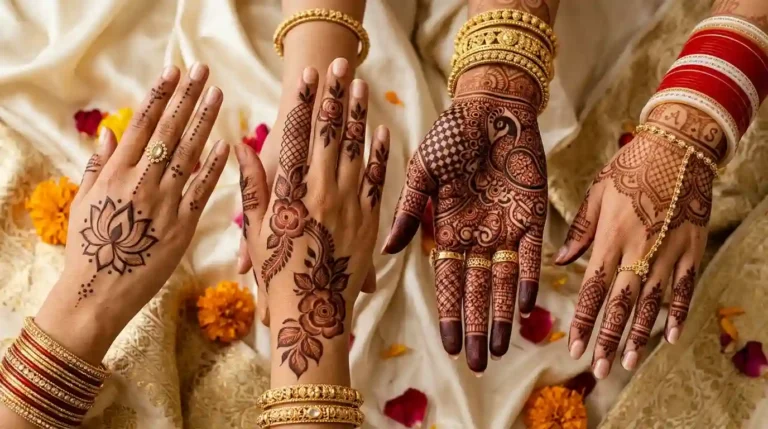
Those seeking additional visual inspiration can explore beautiful mehndi designs that combine traditional motifs with elegant decorative arrangements.
Arabic Mehndi Patterns
Arabic body mehndi is recognized for flowing flowers, prominent leaves, curved lines, and relatively open compositions.
A large floral vine running diagonally across the shoulder or along the arm creates a graceful appearance.
Unlike densely filled designs, many Arabic patterns allow generous space between their main decorative elements.
This makes them particularly suitable for elongated body areas such as the forearm, collarbone, or side waist.
For a balanced composition, choose one or two prominent flowers and connect them through smaller leaves and curved stems.
Modern and Minimal Body Mehndi
Modern body henna often emphasizes negative space, abstract patterns, geometric lines, asymmetrical designs, and delicate botanical motifs.
A single curved line with three tiny flowers can create an elegant collarbone pattern.
A small half-moon surrounded by dots may work well near the shoulder or ankle.
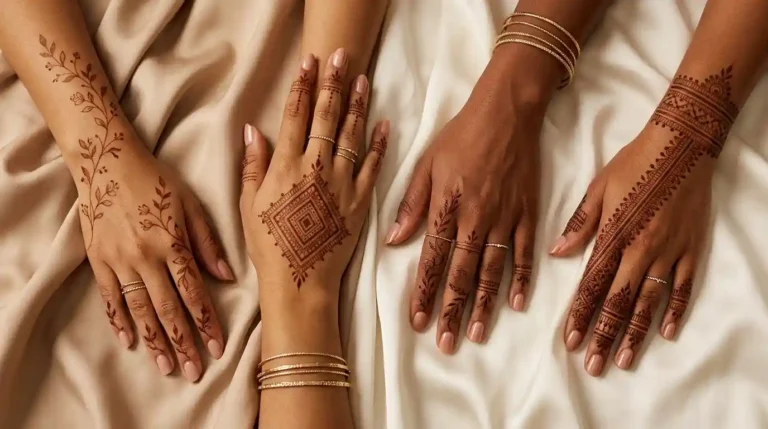
People interested in modern mehndi designs can experiment with minimal coverage and unconventional placements.
These designs are particularly effective when you want the artwork to complement jewelry or clothing rather than dominate the overall appearance.
Floral and Lotus Designs
Floral designs are among the most adaptable choices for temporary body art.
Roses, lotus flowers, buds, and leafy branches can decorate almost any suitable placement.
A large lotus motif on the upper back can create a striking symmetrical composition.
A smaller flower near the shoulder may feel softer and more understated.
Lotus-inspired artwork often looks especially attractive when surrounded by delicate petal layers, dots, and fine curved borders.
For a cohesive design, repeat similar petal shapes in the surrounding decorative details.
Mandala and Half-Moon Designs
Mandala motifs use concentric circles, repeated petals, and symmetrical borders to create a balanced decorative pattern.
Large mandalas are particularly suitable for the upper back, shoulder, and outer thigh.
Half-moon designs offer a different appearance.
A crescent-shaped motif may be decorated with flowers, dotted chains, or geometric details.
A small half-moon near the collarbone or shoulder can create a contemporary look.
The two motif families can also be combined, using a circular mandala as the main feature and crescent-shaped decorative elements around it.
Feather and Vine Designs
Feather and vine motifs are ideal for body areas that benefit from elongated patterns.
A feather can follow the curve of the shoulder blade, arm, or outer thigh.
Fine lines and dotted details create texture without requiring dense coverage.
Leafy vines work particularly well along the collarbone, waist, and ankle.
A floral vine extending across one side of the upper back can create elegant visual movement.
When combining the motifs, use a feather as the focal point and surround it with a few delicate leaves rather than adding too many unrelated patterns.
Body Mehndi Designs by Occasion
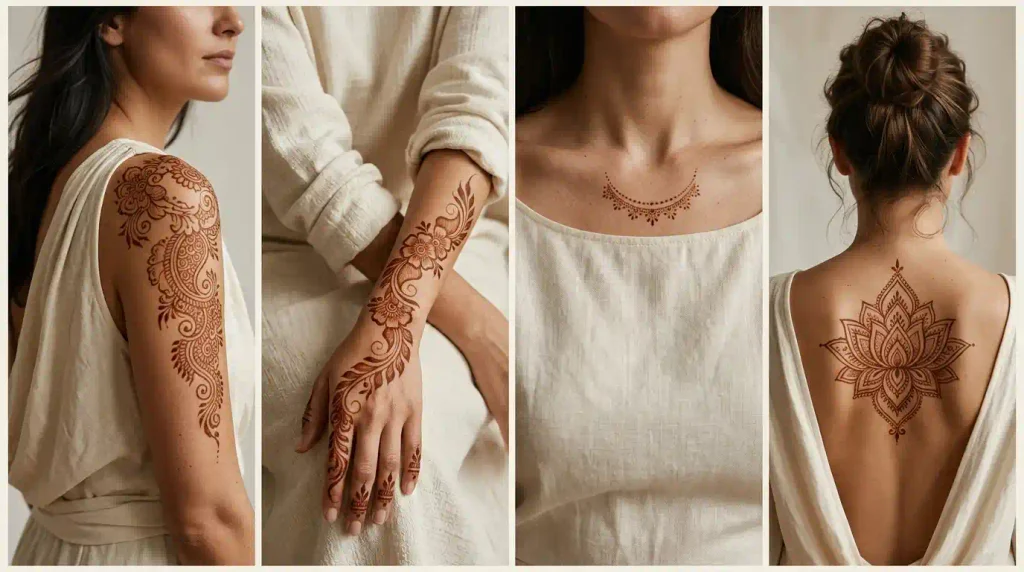
The occasion often determines how elaborate a body henna design should be.
A bridal celebration may suit large, detailed patterns, while a casual gathering may only require a small floral or geometric motif.
Choosing an appropriate level of coverage helps the artwork complement the event rather than feel excessive.
Bridal and Wedding Guest Designs
Bridal body mehndi can be coordinated with traditional hand and foot henna.
A bride wearing a backless blouse may choose an upper-back mandala, while an off-shoulder outfit may suit a decorative shoulder vine.
For elaborate bridal styling, heavy mehndi designs can provide inspiration for dense floral arrangements and ornamental detailing.
Wedding guests may prefer smaller body designs, such as a delicate ankle band, small collarbone flower, or graceful arm motif.
The design should complement the outfit while remaining comfortable throughout the celebration.
Mehndi for Eid and Other Festivals
Eid al-Fitr, Eid al-Adha, Diwali, and other festivals offer opportunities to experiment with decorative henna beyond traditional hand patterns.
For Eid, a flowing Arabic floral design on the arm can complement embroidered sleeves.
A small shoulder motif or elegant ankle pattern may also work beautifully with festive outfits.
For traditional celebrations, floral mandalas and paisley details provide recognizable decorative elements.
If you prefer understated artwork, a small leafy branch near the wrist or ankle can create a festive appearance without extensive coverage.
Simple Designs for Parties and Casual Events
Casual events are well suited to smaller body henna patterns.
A tiny butterfly on the shoulder, small flower near the ankle, or minimal geometric wrist design can create a distinctive look.
These patterns typically require less application time and are easier to coordinate with everyday clothing.
For creative inspiration, you can explore Mehndi Design Ideas and adapt familiar floral or geometric elements to different body placements.
Simple designs are also a useful starting point for anyone experimenting with body henna for the first time.
Choosing and Personalizing a Body Mehndi Design
A successful body mehndi design should complement the natural shape of the chosen area, the outfit you plan to wear, and your preferred style.
Body coverage, visibility, and motif placement all influence the final appearance.
Match Mehndi to Your Outfit and Jewelry
Your clothing provides a useful starting point for selecting body henna.
Delicate embroidery often pairs well with fine botanical patterns, while elaborate traditional outfits may suit detailed paisleys and ornamental borders.
Jewelry can also influence the design.
A decorative shoulder motif may complement statement earrings, while a fine collarbone vine can sit elegantly above a necklace.
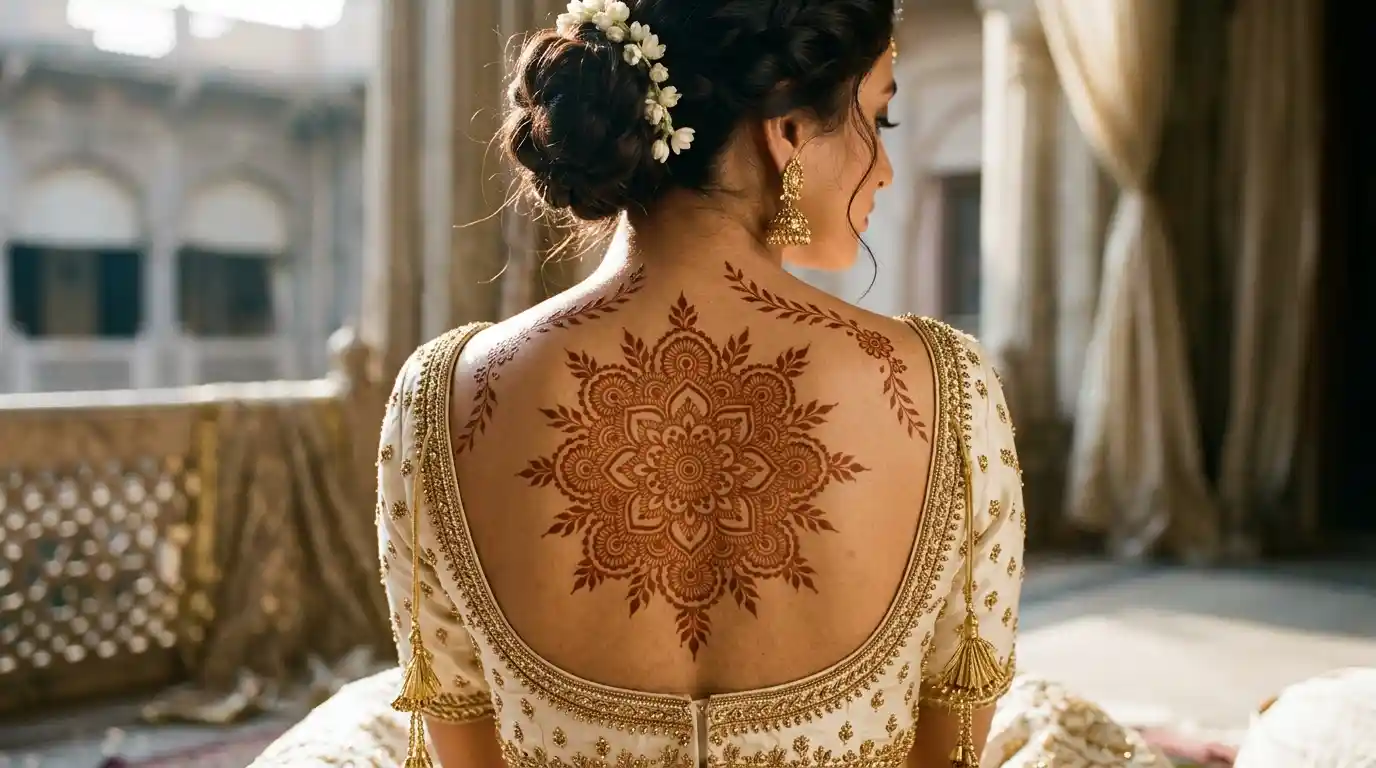
Designs for Backless and Low-Back Outfits
Backless and low-back outfits provide a visible surface for upper-back henna.
A central floral mandala can become the main decorative feature.
Alternatively, a vertical vine extending down the upper back can create an elongated appearance.
Keep the design within the area that will remain visible above the clothing.
A pattern that follows the neckline often feels more harmonious than one positioned without considering the outfit.
Designs for Off-Shoulder and Sleeveless Styles
Off-shoulder outfits draw attention to the collarbones, shoulders, and upper arms.
A delicate shoulder flower connected to a leafy vine can complement this silhouette.
Sleeveless outfits also make arm mehndi more visible.
For a modern look, choose a small geometric arrangement on one upper arm.
For a traditional appearance, a large floral motif with detailed ornamental borders may be more suitable.
Matching Mehndi with Necklines and Embroidery
The neckline and embroidery style can guide the scale of your henna artwork.
A broad neckline may suit a small symmetrical collarbone pattern.
A heavily embroidered blouse might look balanced with a simpler shoulder design.
Outfits featuring geometric borders can complement structured henna patterns, while floral embroidery pairs naturally with roses, leaves, and vines.
You can also draw inspiration from celebrity mehndi designs when considering how decorative henna works with formal styling.
Choose a Design for Your Placement and Body Coverage
Body henna should be selected according to the available surface and desired visibility.
Small motifs can feel elegant on narrow areas, while larger designs generally need enough space for the details to remain recognizable.
The placement should also be comfortable during application and drying.
Compare Design Size and Visibility
A small collarbone flower may be visible only with certain necklines.
A large shoulder mandala may remain prominent with sleeveless clothing.
Back designs can be dramatic but may be hidden beneath everyday outfits.
Before choosing a placement, consider whether you want the artwork to be visible throughout the event or revealed only with particular clothing.
Visibility often matters more than the overall size of the pattern.
Adapt a Reference Design to Your Chosen Body Area
Reference images provide inspiration, but patterns may need adjustments for different placements.
A circular palm mandala can be enlarged for the upper back.
A long finger vine can be adapted to follow the collarbone.
Similarly, a decorative wrist band may inspire an ankle design.
Artists should adjust motif proportions and spacing to suit the available area rather than simply copying the original design at an unsuitable scale.
Connect Motifs into One Flowing Design
Connected motifs can create the appearance of one continuous decorative composition.
A shoulder flower may lead into a curved arm vine.
An upper-back mandala may be surrounded by small leafy branches extending toward the shoulders.
For waist and hip placement, a flowing botanical arrangement can follow the natural curve of the body.
Keeping consistent line thickness and repeating selected motifs helps separate sections feel connected.
Personalize a Design with Meaningful Details
Personalized body henna may include initials, meaningful dates, favorite flowers, symbolic shapes, or motifs associated with personal memories.
A small initial can be incorporated into a floral border.
A meaningful symbol may become the central element of a shoulder or ankle design.
People seeking unique mehndi designs can combine personal elements with traditional motifs to create a distinctive composition.
The key is balance. One carefully selected personalized detail often has more visual impact than several unrelated symbols.
Simple and Beginner-Friendly Body Mehndi
Beginners can explore body henna without starting with large, intricate compositions.
Small, recognizable motifs allow you to practice placement, line control, and design balance.
Simple artwork is also useful when you want a decorative result without an extended application appointment.
Small Designs for First-Time Henna
First-time users may prefer a single flower, tiny mandala, simple leaf, or miniature butterfly.
These motifs require fewer lines and are easier to position on smaller areas.
A tiny rose on the outer shoulder or a small leafy pattern near the ankle can look attractive without extensive decoration.
You can explore small mehndi designs for inspiration and adapt individual motifs to suitable body placements.
Start with a straightforward composition before attempting highly detailed artwork.
Easy Patterns for the Shoulder, Wrist, and Ankle
Shoulders, wrists, and ankles are useful placements for simple patterns.
A five-petal flower surrounded by dots works well on the shoulder.
A short vine with alternating leaves can decorate the wrist.
For the ankle, try a narrow decorative band with miniature floral accents.
Beginners should practice these shapes on paper or a reusable practice surface before applying any product to skin.
Consistent dots, smooth curves, and controlled line thickness help produce a neater result.
Simple Designs Compared with Detailed Designs
Simple body mehndi typically uses fewer motifs, limited coverage, and more open skin.
Detailed artwork may include layered mandalas, fine latticework, miniature paisleys, and repeated ornamental borders.
Simple patterns generally require less application time and can be easier to maintain visually as the stain begins fading.
Detailed designs provide more opportunities for decorative complexity but require greater precision.
Neither style is automatically more beautiful.
The best choice depends on the placement, occasion, and personal preference.
Applying and Caring for Body Mehndi
Proper application and aftercare influence the quality and appearance of body henna.
However, ingredient safety comes before achieving a darker stain.
Henna products can differ considerably, and not every product marketed as natural or temporary is suitable for skin use.
How to Apply Henna at Home
Begin by selecting a straightforward design and practicing it before attempting skin application.
Use only a product with transparent ingredient information and directions appropriate to its intended use. Be aware that traditional henna skin decoration is not an FDA-approved use of henna color additive in the United States.
Once you have assessed the product’s suitability, follow its instructions.
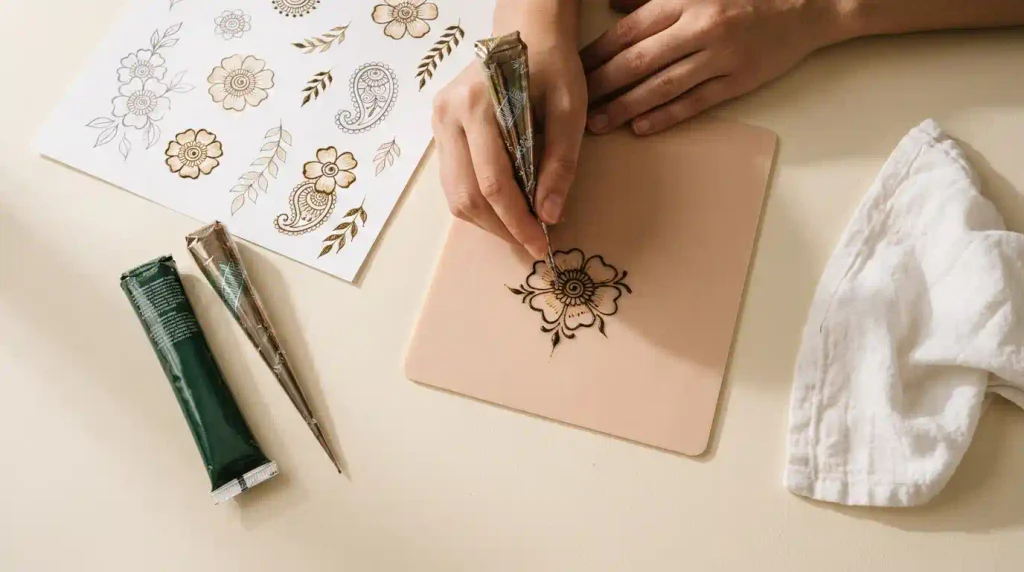
For a basic design, the process commonly involves cleaning and drying the area, positioning a reference image, and drawing the main motif before adding smaller details.
A henna cone allows controlled application through a narrow opening.
Start with the main flower, circle, or curved line. Add leaves, dots, and decorative borders only after the basic shape is complete.
Avoid attempting self-application on difficult-to-reach areas such as the upper back. A trained artist or trusted helper may provide greater control.
How Long Body Mehndi Lasts
Natural henna stains commonly remain visible for approximately one to three weeks.
The exact duration varies with skin turnover, placement, washing habits, friction, and the original stain.
Henna on areas exposed to frequent clothing friction may fade unevenly.
The initial stain often appears orange before deepening toward a reddish-brown shade over the following day or two.
Body areas may develop different stain intensities, so a shoulder design may not look identical in color to henna applied on the palms.
Henna Aftercare for a Longer-Lasting Stain
Follow the product’s application and removal instructions.
Allow the paste to dry without rubbing it against clothing or accessories.
Once the recommended processing time has passed, remove the paste gently rather than scraping aggressively.
Avoid unnecessary friction and prolonged water exposure immediately afterward when practical.
Moisturizing with a suitable gentle product may help maintain skin comfort, but no aftercare method can guarantee a particular stain shade or duration.
Traditional routines sometimes use lemon juice, sugar mixtures, or oils. These are not essential, and acidic or fragranced substances can irritate sensitive skin.
Henna Design Fading and Removal
Natural henna fades as the stained outer layers of skin are gradually shed.
There is no reliable instant method for completely removing a properly developed natural henna stain.
Gentle washing and normal skin renewal are generally preferable to aggressive removal methods.
Avoid bleaching agents, harsh scrubbing, and irritating chemical mixtures.
These techniques may damage the skin without effectively removing the design.
If you need henna for a particular event, consider the expected fading period before choosing a large or highly visible placement.
Possible Skin Reactions and Safety Considerations
Some temporary henna products may cause skin irritation or allergic reactions.
Warning signs can include itching, redness, swelling, burning, or blistering.
The risk depends on the specific formulation and individual sensitivity.
Products marketed as black henna deserve particular caution because some contain substances unsuitable for application to skin.
How to Check Henna Ingredients
Ask the artist or seller for a complete ingredient list before application.
Natural henna powder comes from the Lawsonia inermis plant, but prepared pastes may contain additional ingredients.
Avoid products with unknown dyes, undisclosed additives, or unclear manufacturing information.
Do not assume that an ingredient is suitable for skin simply because it is plant-derived.
Products advertised as colored mehndi designs may use cosmetic body paints or other decorative materials instead of traditional henna.
These products should be assessed according to their own ingredients, labeling, and intended use.
Why to Avoid “Black Henna”
Black henna is not necessarily ordinary natural henna with a darker stain.
Some products marketed under this name contain para-phenylenediamine, or PPD, a hair-dye ingredient associated with serious allergic skin reactions.
PPD-containing temporary tattoos can cause blistering, significant inflammation, and sometimes lasting skin changes.
The U.S. Food and Drug Administration’s guidance on temporary tattoos, henna, and black henna explains these risks and notes that henna is approved as a hair dye, not for direct skin decoration, in the United States.
Avoid suspicious products promising an immediate jet-black henna stain.
How to Do a Patch Test Before Application
A patch test may sometimes help identify sensitivity to a particular product, but it cannot guarantee that a product is safe.
For a cosmetic product specifically intended and permitted for skin use, follow its manufacturer’s allergy-testing instructions, if provided.
Do not deliberately test potentially dangerous black henna or a product suspected of containing PPD.
A small test area cannot reliably rule out delayed allergic reactions, and testing itself may trigger a reaction.
Anyone with a history of contact allergy, eczema, or previous henna reactions should consult a qualified healthcare professional before considering skin-applied products.
If irritation develops after application, stop using the product and seek medical advice. Significant swelling, blistering, or painful reactions warrant prompt assessment by a healthcare professional.
Finding a Mehndi Artist and Planning Your Design
Professional mehndi artists can help translate inspiration into artwork suited to your chosen body placement.
For larger designs, an experienced artist can manage proportions, spacing, and motif connections more effectively than attempting to copy a reference without adjustments.
Planning also makes it easier to estimate appointment time and understand the total cost.
How Much Time Different Design Sizes May Take
Application time depends on design size, motif complexity, line detail, and artist experience.
Small motifs may take only several minutes, while elaborate back designs can require considerably longer.
| Design Type | Approximate Application Time |
| Small flower or symbol | 5–15 minutes |
| Simple wrist or ankle design | 10–25 minutes |
| Medium shoulder floral design | 20–45 minutes |
| Detailed upper-arm or thigh pattern | 45–90 minutes |
| Large intricate back design | 1–3 hours |
| Multiple connected body placements | Several hours or more |
These estimates cover application rather than the additional time needed for paste processing and stain development.
Ask the artist to assess the exact design before booking.
When to Apply Mehndi Before an Event
Natural henna stains often deepen during the first 24–48 hours after application.
For this reason, some people schedule their body mehndi approximately one or two days before a wedding or special occasion.
The best timing depends on the product, desired stain appearance, and individual skin characteristics.
Consider your clothing and other preparations as well.
A back design may need extra care to avoid rubbing against fitted outfits while the paste is drying.
Discuss timing with your artist instead of assuming every product develops in the same way.
What to Discuss with a Mehndi Artist
Bring reference images showing your preferred motifs, placement, and coverage.
Explain whether you want a small design, medium arrangement, or extensive body composition.
Discuss the area that will remain visible with your outfit.
Ask about the artist’s experience with the specific placement, especially for curved or hard-to-reach body areas.
You should also ask about ingredients, hygiene practices, appointment duration, design changes, and pricing.
For personalized artwork, clarify initials or symbolic details before application begins.
How to Learn or Practice Mehndi
Learning henna artwork begins with basic drawing techniques.
Practice dots, curved lines, petals, spirals, paisleys, and leafy branches on paper or a reusable practice surface.
Once you can create consistent shapes, combine them into simple compositions.
You may find it useful to sketch body outlines and plan where the main motifs should sit.
For example, an upper-back design can begin with a central mandala surrounded by smaller botanical elements.
People exploring mehndi designs for women can study how different artistic styles adapt to personal preferences and occasions.
Consistent practice is more useful than immediately attempting complicated full-body artwork.
Henna Kits and Stencils
Henna kits and stencils can help beginners practice consistent decorative shapes.
A stencil may guide the placement of a flower, mandala, or geometric border.
Reusable practice sheets are especially useful for learning line control before applying anything to skin.
However, buying a kit does not automatically establish that its paste is suitable for body application.
Review ingredient information, product instructions, and relevant safety considerations.
Temporary decorative stickers can be an alternative for trying a placement visually, but their adhesives and colorants may also cause skin reactions.
Choose products specifically intended for the proposed use and avoid unknown or suspicious ingredients.
What Affects the Cost of a Mehndi Design
The cost of body mehndi varies according to the location, artist experience, design complexity, placement, and total application time.
A small ankle flower usually costs less than an elaborate upper-back composition.
Detailed mandalas, miniature ornaments, custom artwork, and connected body designs may require additional time.
Travel fees, bridal booking packages, and peak wedding-season demand can also influence pricing.
For a meaningful comparison, ask several artists for quotes based on the same reference images and coverage requirements.
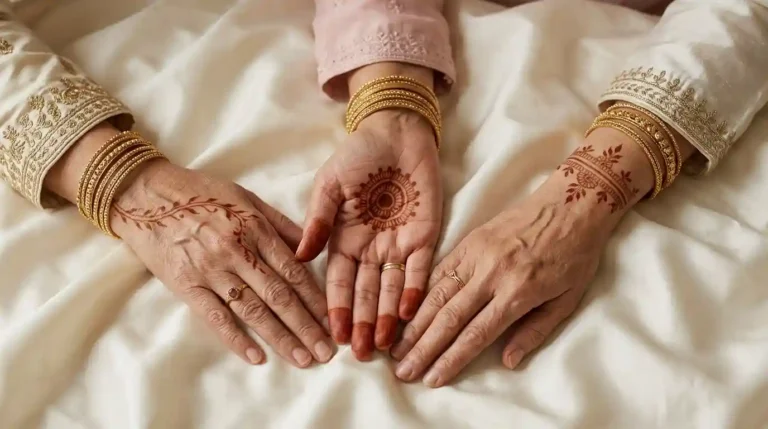
Those considering elegant designs later in life can also explore mehndi designs for older women, where comfortable placement and preferred detail level may help guide the final choice.
Body Mehndi Designs FAQs
What Are Body Mehndi Designs?
Body mehndi designs are temporary decorative henna patterns applied to areas such as the shoulders, back, arms, waist, thighs, and feet.
Which Body Parts Are Best for Mehndi Designs?
Popular placements include the shoulders, arms, upper back, collarbones, ankles, and feet, depending on your preferred design and visibility.
How Long Do Body Mehndi Designs Last?
Natural henna stains usually remain visible for approximately one to three weeks, depending on skin characteristics, placement, and aftercare.
Can I Apply Body Mehndi at Home?
You can practice simple patterns at home, but assess product safety carefully and seek professional help for difficult placements.
Are Body Mehndi Designs Painful?
Traditional henna application does not involve needles, although unsuitable products can cause irritation or allergic reactions.
Which Mehndi Design Is Best for the Back?
Floral mandalas, lotus patterns, symmetrical vines, and ornamental vertical designs are attractive options for the upper back.
Can Body Mehndi Be Applied on the Face?
Facial application requires special caution because products intended for other areas may be unsuitable or unsafe near the eyes and mouth.
How Much Does Body Mehndi Cost?
Prices vary by artist, location, coverage, complexity, and appointment duration, so an individual quote is the most reliable estimate.
Final Thoughts
Body mehndi designs offer a beautiful way to explore temporary decorative art beyond traditional hand and foot patterns. From elegant shoulder flowers and delicate collarbone vines to detailed back mandalas, hip motifs, and ankle designs, every placement provides an opportunity for creativity. Traditional Indian, Pakistani, Arabic, and modern minimalist styles can be adapted to suit weddings, festivals, parties, and personal preferences.
Choose a pattern that complements your outfit, follows your body’s natural shape, and provides the amount of coverage you want. Always prioritize ingredient safety and discuss larger designs with an experienced artist.
For more inspiration, visit Mehndi Designs Studio and discover creative henna patterns for your next occasion.
One Comment