
Mehndi Designs for Older Women: Elegant Ideas
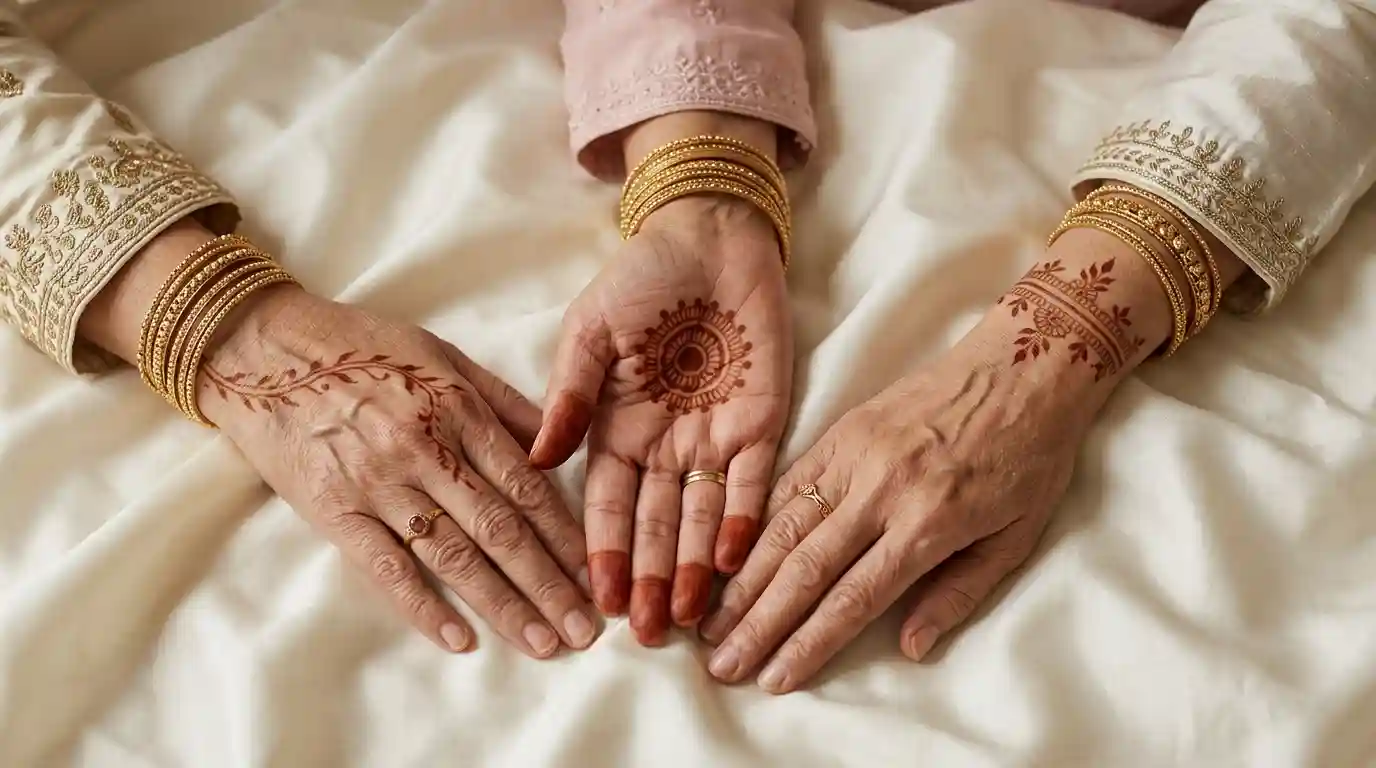
Mehndi designs for older women offer a beautiful way to celebrate traditions, complement festive outfits, and express personal style through elegant henna artwork. From delicate floral motifs and simple Arabic vines to traditional round tikki patterns, graceful paisleys, and ornamental wrist designs, there are countless options for mature hands. Some women prefer small flowers, dotted borders, and minimalist patterns with plenty of open space, while others enjoy detailed Indian, Pakistani, Marwari, or Indo-Arabic mehndi. Whether you are preparing for Eid, Karva Chauth, Teej, Navratri, a wedding, or a family celebration, the right design can look sophisticated without requiring extensive application time. Floral wrist bands, finger-only henna, central mandalas, and leafy bail patterns are especially versatile because they can be adapted to different hand shapes and personal preferences. This guide explores beautiful designs for palms, fingers, wrists, and backs of hands, along with beginner-friendly instructions, comfortable application methods, and important skin-safety advice. You will also discover how to choose patterns that match your jewelry, clothing, and preferred coverage.
Table of Contents
- Mehndi Designs for Mature Hands
- Mehndi Designs by Hand Placement and Coverage
- Mehndi Designs for Different Occasions
- Choosing a Mehndi Design for Older Women
- Simple Mehndi Designs With Step-by-Step Instructions
- Applying Mehndi When Hand Movement Is Limited
- Natural Henna and Skin-Sensitivity Considerations
- Mehndi Application and Aftercare
- Why Floral Mehndi Suits Mature Hands
- Frequently Asked Questions About Mehndi Designs for Older Women
- Final Thoughts
Mehndi Designs for Mature Hands
Mehndi can look beautiful on hands of every age. Mature women may enjoy traditional artwork that reflects familiar cultural styles, modern patterns with delicate details, or elaborate designs that make a statement.
There is no requirement to choose lighter or smaller patterns simply because of age. The best design depends on personal preference, comfort, hand placement, and the occasion.
For inspiration, you can compare different mehndi designs before selecting the motifs you enjoy most.
Simple Floral Mehndi Designs
Simple floral mehndi is an elegant choice for women who appreciate delicate, timeless artwork.
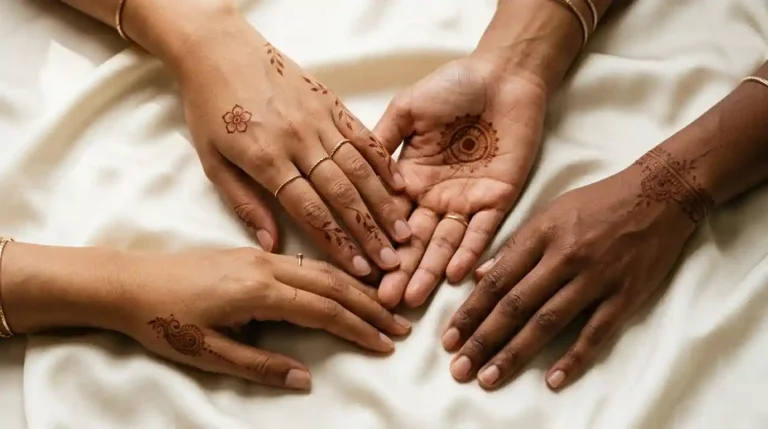
A small five-petal flower placed near the center of the back of the hand can create an attractive design without covering the entire surface.
The flower may be surrounded by fine dots, tiny leaves, or a short curved stem.
Another option is to position two small blossoms near the wrist and connect them with a slender vine.
Floral designs are easy to adapt. Larger petals create a bold appearance, while narrow outlines and smaller leaves produce a refined look.
For a neat result, allow enough open space around the main flower.
Those who prefer delicate decoration can explore small mehndi designs featuring miniature floral arrangements and individual motifs.
Tiny Floral Dot Pattern
A tiny floral dot pattern combines small flowers with carefully placed decorative dots.
Begin with a miniature flower on the back of the hand or near the wrist.
Add several dots around the petals, gradually decreasing their size toward the outer edges.
You can create a dotted trail extending toward one finger or place three small flowers in a curved arrangement.
This style is particularly suitable when you want light decoration without complicated artwork.
For a balanced appearance, keep the dots evenly spaced and use one central flower as the focal point.
A tiny floral dot design can complement traditional rings and delicate bangles without appearing crowded.
Arabic Mehndi Designs
Arabic mehndi features flowing flowers, leafy vines, curved outlines, and decorative open spaces.
Many Arabic-inspired patterns follow a diagonal arrangement from the wrist toward one or two fingers.
A large rose with two smaller buds can form a graceful back-hand design.
The surrounding leaves may contain fine veins or dotted accents.
Arabic patterns are versatile because they can be adjusted for different coverage preferences.
A woman who wants a quick design might choose one floral vine, while someone who enjoys more detail can add miniature paisleys and decorative finger bands.
For additional floral inspiration, explore beautiful mehndi designs featuring elegant botanical arrangements.
Marwari Mehndi Designs
Marwari mehndi draws inspiration from traditional decorative patterns associated with Rajasthan’s Marwar region.
Common design elements may include paisleys, floral borders, ornamental arches, and symmetrical patterns.
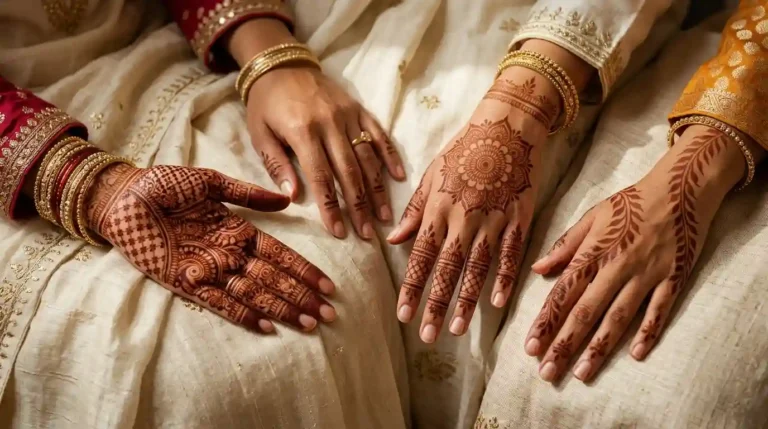
A traditional Marwari-inspired palm design can feature a circular mandala surrounded by small curved paisleys.
A decorative wrist border may include miniature flowers and repeated ornamental lines.
Women who enjoy traditional wedding styles can choose more elaborate Rajasthani motifs, including peacocks and decorative architectural shapes.
For a lighter interpretation, retain one prominent paisley or floral motif and simplify the surrounding details.
Traditional Marwari henna can complement sarees, lehengas, and embroidered salwar suits.
Mandala and Round Tikki Designs
Mandala and round tikki mehndi designs are timeless options for palm decoration.
A tikki design usually features a circular motif positioned near the center of the palm.
The simplest version uses one central circle surrounded by dots or small petals.
A more elaborate mandala contains multiple decorative rings, floral shapes, and scalloped borders.
Round tikki patterns are attractive because their structure creates a balanced composition.
For a traditional look, combine a central tikki with small decorative details on the fingertips.
For a minimalist version, leave the surrounding palm uncovered and allow the circular motif to stand alone.
The design can also be adapted to the back of the hand.
Vine and Bail Designs
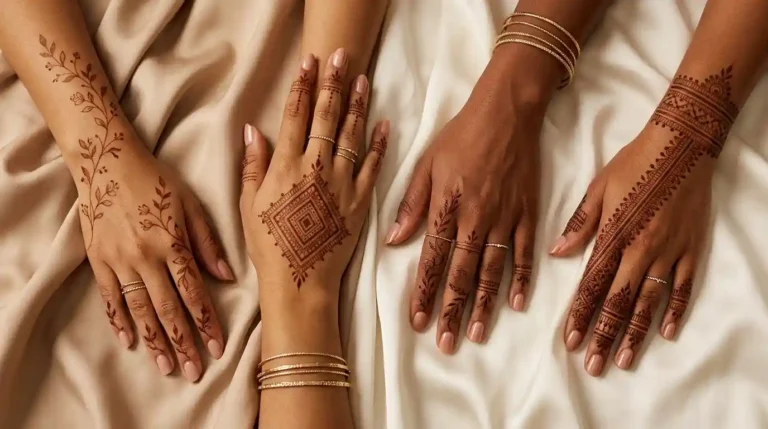
Vine and bail mehndi uses flowing stems decorated with leaves, flowers, or miniature paisleys.
The word bail, often written bel, is commonly used to describe a decorative vine or trailing pattern.
A simple bail design may begin near the wrist and extend diagonally toward the middle finger.
Small pointed leaves can alternate along the curved stem.
For additional decoration, place a small rose or lotus at the beginning of the vine.
These patterns create a graceful sense of movement.
They can also be made shorter for limited coverage or extended toward the forearm for a more elaborate appearance.
Finger-Only Mehndi Designs
Finger-only mehndi concentrates decoration on the fingers while leaving the palm and back of the hand mostly uncovered.
Popular motifs include small leaf trails, dotted rings, geometric bands, and miniature flowers.
A coordinated design may use the same ornamental band on every finger.
Alternatively, each finger can feature a slightly different motif.
For example, the index finger might carry a leafy vine while the ring finger features small floral dots.
Finger-only patterns work particularly well when you want visible decoration that does not require a complete hand design.
They can be paired with simple nail polish or traditional rings.
Bracelet-Style Mehndi Designs
Bracelet-style mehndi imitates the appearance of wrist jewelry through decorative henna bands.
A narrow wrist cuff may contain flowers, scalloped borders, geometric shapes, or hanging bead-like details.
One elegant arrangement uses two parallel curved lines filled with miniature leaves.
A small flower can be placed near the center of the bracelet.
For a coordinated appearance, connect the wrist design to a finger motif through a dotted chain.
This creates a jewelry-inspired composition.
Bracelet-style henna is attractive with sarees, shalwar kameez, and festive outfits featuring embroidered sleeves.
Paisley Mehndi Designs
Paisley motifs are curved teardrop-shaped ornaments widely used in traditional South Asian henna.
They can be filled with miniature flowers, dots, spirals, or decorative lines.
A single large paisley on the palm creates a recognizable traditional design.
Smaller paisleys may be arranged along the wrist or connected through a floral vine.
For a simple appearance, use one paisley with a thin border and a few decorative dots.
For a more elaborate look, surround the main motif with leaves and repeated ornamental shapes.
Paisley patterns complement traditional jewelry and richly embroidered clothing.
Lotus Mehndi Designs
Lotus mehndi uses layered petals arranged around a central point.
A small lotus near the wrist can create a delicate botanical appearance.
A larger lotus mandala on the palm provides a more traditional look.
The flower may be surrounded by fine dots, leaves, or decorative borders.
Lotus patterns are also attractive in symmetrical compositions, with matching motifs on both hands.
For a personalized design, combine a lotus with a small initial or meaningful symbol.
Women who enjoy distinctive combinations can explore unique mehndi designs for additional creative interpretations.
Peacock Mehndi Designs
Peacock mehndi is associated with elaborate traditional Indian and Rajasthani artwork.
The recognizable curved body and decorative feather details make the motif an attractive focal point.
A large peacock can decorate the palm, while a smaller feather-inspired design may suit the wrist.
For a lighter appearance, choose one peacock feather surrounded by leaves and dots.
Those who prefer detailed artwork can combine the bird with paisleys, flowers, and ornamental borders.
A peacock motif may take longer to apply than a simple flower because its distinctive features require careful proportions.
Moroccan Mehndi Designs
Moroccan mehndi often emphasizes geometric shapes, angular lines, diamonds, and repeated decorative patterns.
These structured designs can create an elegant alternative to floral artwork.
A narrow geometric band across the wrist may feature repeated diamond shapes.
Small triangles and dots can decorate selected fingers.
For a modern appearance, combine one geometric border with an open central area.
Moroccan-inspired patterns are particularly attractive when line thickness and spacing remain consistent.
Women who prefer contemporary styling can explore modern mehndi designs that combine geometric elements with minimal coverage.
Indo-Arabic Mehndi Designs
Indo-Arabic mehndi combines bold flowing flowers with finer decorative details.
A large Arabic-style floral vine may be surrounded by miniature Indian-inspired paisleys and geometric borders.
This fusion creates a balance between recognizable flowers and intricate ornamentation.
For mature hands, a medium-coverage Indo-Arabic design can feature one central flower, a leafy trail, and decorated fingertips.
However, women who enjoy extensive detailing can choose a fuller composition.
The style can be adapted for Eid, weddings, Karva Chauth, and other formal celebrations.
Minimal Mehndi Designs With Open Space
Minimal mehndi uses a limited number of motifs and intentionally uncovered areas of skin.
A single flower near the thumb, one curved wrist line, or a small circular mandala can create an elegant appearance.
Open space helps each element remain visually distinct.
A minimalist pattern can also complement jewelry without competing with its details.
For women who prefer simplicity, choose one central motif and a few supporting dots or leaves.
Minimal coverage does not mean the design must be plain.
Fine borders, carefully arranged petals, and small geometric details can make a simple composition feel sophisticated.
Mehndi Designs by Hand Placement and Coverage
The placement of a mehndi pattern affects its appearance and application time.
Some women prefer central palm motifs, while others enjoy decorative back-hand patterns or simple wrist designs.
Different placements can also be combined into one coordinated look.
Palm Mehndi Designs
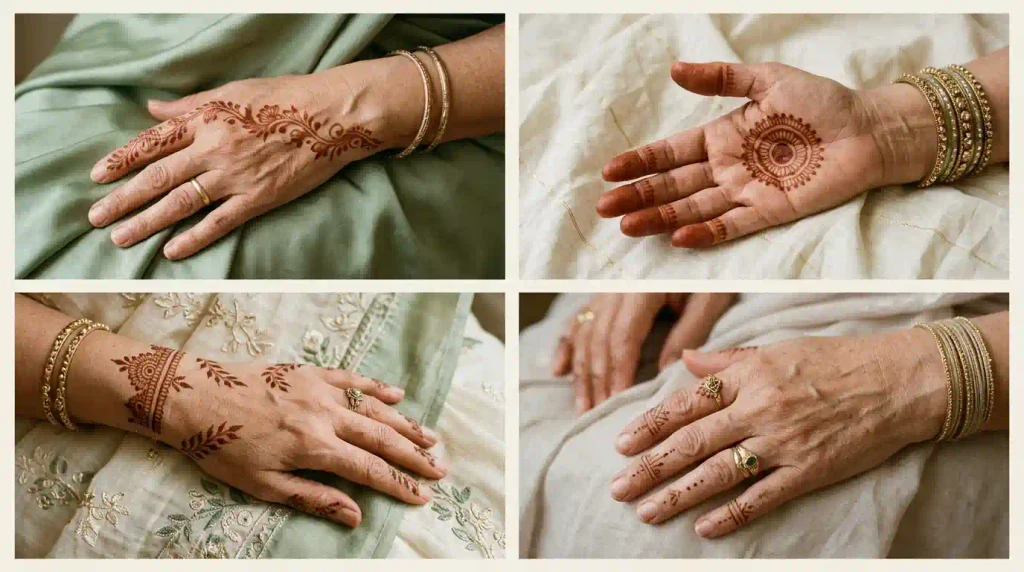
Palm mehndi is suitable for round tikki designs, mandalas, lotus flowers, and paisleys.
A central circular motif can create an elegant appearance with relatively little coverage.
For a more traditional look, add decorative finger details and a narrow border around the main motif.
Women who enjoy elaborate artwork may choose multiple connected flowers or symmetrical patterns.
A simple palm design can also work beautifully on its own.
The right size depends on the available space and personal preference.
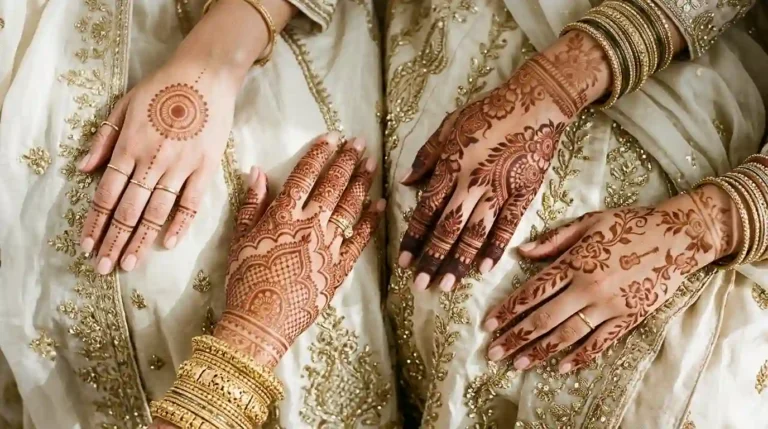
Back-Hand Mehndi Designs
Back-hand designs are particularly attractive when paired with rings and bracelets.
A floral vine extending from the wrist toward one finger creates a graceful composition.
A central flower with decorative dots is another versatile option.
For traditional occasions, a medium-sized mandala can be placed on the back of the hand.
Women who prefer intricate artwork may add fine jaal patterns or ornamental borders.
The most important consideration is maintaining enough spacing for the main motifs to remain visible.
Finger and Fingertip Mehndi Designs
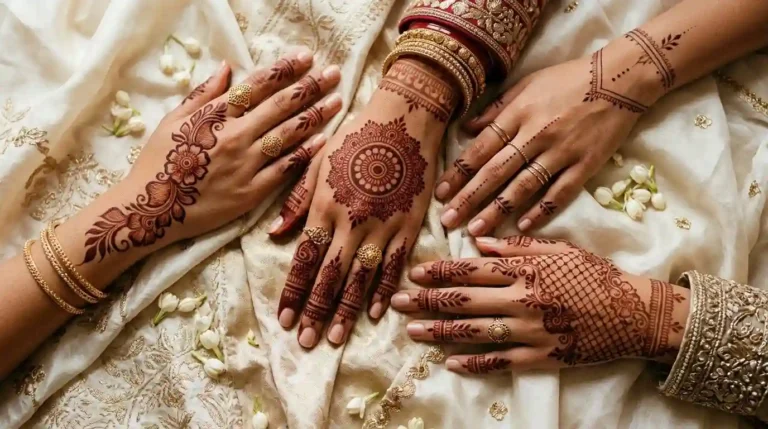
Finger mehndi can feature dots, rings, leaves, small flowers, and decorative geometric bands.
The motifs should be proportional to the narrow surface of the fingers.
A simple design might decorate only two fingers.
A fuller arrangement can repeat matching patterns across every finger.
Shaded fingertips are another traditional option, although they create more coverage than fine outlined patterns.
For a coordinated appearance, use similar line thickness and border styles throughout.
Wrist Mehndi Designs
Wrist mehndi can resemble a bracelet or decorative cuff.
Simple arrangements include two parallel bands with small flowers or leaves between them.
For a festive appearance, add scalloped borders and ornamental dots.
A wrist design may also connect to a floral back-hand pattern through a thin vine.
These patterns are especially attractive alongside traditional bangles.
If you plan to wear jewelry, consider leaving enough space so the henna remains visible rather than being hidden beneath bracelets.
Small Motifs, Partial Coverage, and Full-Hand Designs
Mehndi coverage can range from one small flower to elaborate full-hand artwork.
Small motifs are useful for women who prefer light decoration or have limited application time.
Partial-hand patterns may include a floral vine, decorative fingers, and a wrist border.
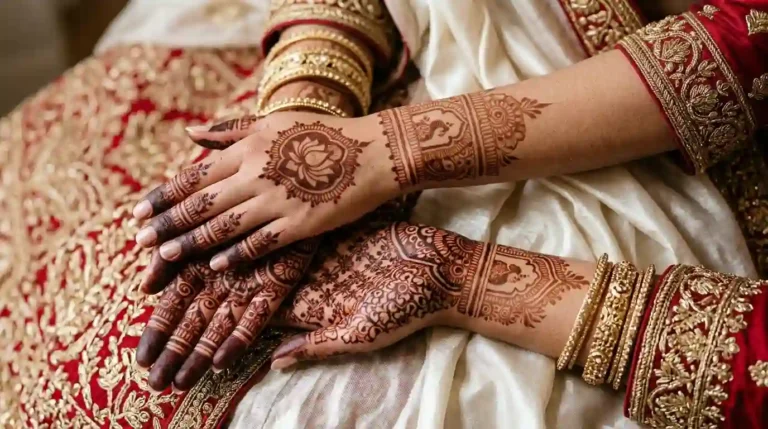
Full-hand henna can incorporate mandalas, paisleys, flowers, and fine geometric backgrounds.
Some women enjoy richly filled heavy mehndi designs for weddings and traditional festivals.
Others prefer generous open space.
The amount of coverage should be guided by comfort, occasion, and individual taste rather than age.
Mehndi Designs for Different Occasions
Traditional celebrations often inspire specific styles of mehndi.
The choice depends on cultural customs, clothing, personal preference, and the level of decoration desired.
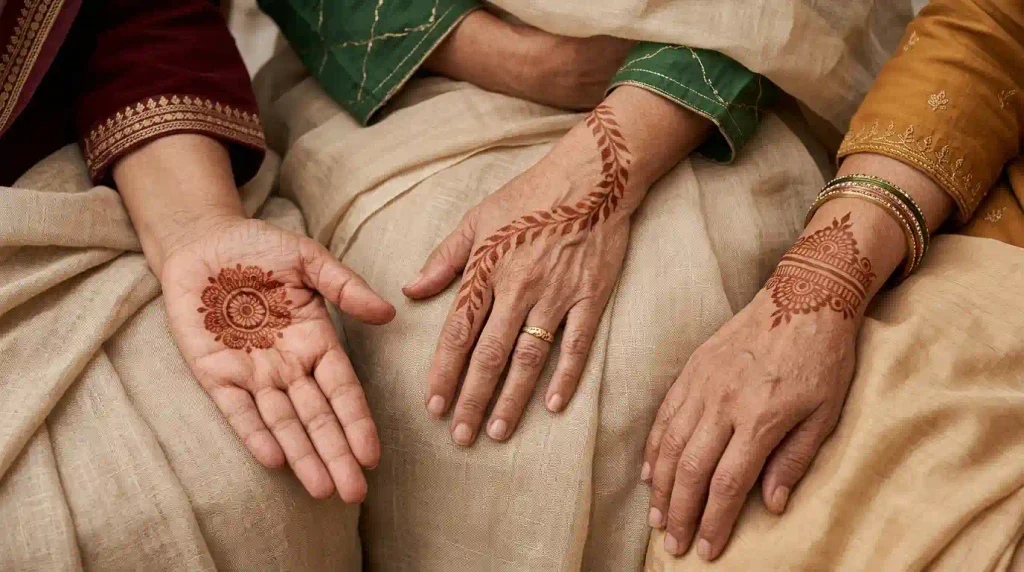
Mature women can wear any pattern they enjoy, from a tiny floral motif to elaborate bridal-style artwork.
Eid Mehndi Designs
Eid al-Fitr and Eid al-Adha are popular occasions for henna in many Muslim communities.
Arabic floral vines, delicate wrist patterns, and traditional back-hand motifs are attractive choices.
A single flower connected to two decorated fingers can complement festive shalwar kameez or embroidered kurtis.
For a more traditional appearance, choose a circular palm design with decorative dots.
Women who enjoy detailed artwork can add miniature paisleys and patterned fingertips.
Chand Raat gatherings may also provide an opportunity to apply henna before Eid celebrations.
Karva Chauth Mehndi Designs
Karva Chauth is associated with traditional celebrations and decorative henna in many Hindu communities.
Circular tikki patterns, floral mandalas, paisleys, and decorative finger motifs are suitable options.
A large central flower surrounded by dots creates a balanced traditional design.
Some women prefer full-hand mehndi with intricate borders.
Others choose smaller patterns that complement bangles and festive sarees.
The design can be personalized with initials or meaningful symbols if desired.
Teej Mehndi Designs
Teej celebrations often inspire floral vines, paisleys, mandalas, and traditional hand decoration.
A leafy bail extending from the wrist toward the fingers creates a graceful appearance.
For a more elaborate style, combine a central mandala with patterned fingertips.
Traditional jewelry and colorful festive outfits can complement these motifs.
A simple wrist cuff or floral back-hand pattern is also appropriate when a shorter application is preferred.
Navratri, Ashtami, and Ram Navami Mehndi Designs
Navratri, Ashtami, and Ram Navami celebrations may inspire traditional floral and symbolic artwork according to personal and family customs.
Lotus motifs, mandalas, and decorative vines are attractive options.
Some women may choose culturally meaningful symbols, including Shiva-Parvati, Radha-Krishna, or other devotional imagery when appropriate to their traditions.
Religious motifs should be selected and placed respectfully.
A small lotus or circular floral arrangement can provide a simple festive alternative to detailed figurative designs.
For a coordinated appearance, match the motif with selected elements of your saree or traditional outfit.
Dandiya Night Mehndi Designs
Dandiya nights often involve dancing, festive clothing, colorful accessories, and social gatherings.
A decorative wrist band or partial back-hand pattern can create a festive appearance without extensive coverage.
Floral vines, geometric bands, and small mandalas are versatile options.
If you plan to dance or wear several bangles, consider placing the design where it will remain visible and comfortable.
Apply the henna early enough for the paste to be removed and the stain to develop before the celebration.
For additional styling inspiration, celebrity mehndi designs can provide ideas for coordinating traditional motifs with elegant outfits and jewelry.
Choosing a Mehndi Design for Older Women
The ideal mehndi design is one that feels comfortable, reflects personal preferences, and suits the occasion.
Older women do not need to follow special restrictions on coverage or complexity simply because of their age.
However, comfort, hand movement, application time, and skin condition can be important practical considerations.
Choose a Design That Feels Comfortable
A comfortable application begins with choosing a hand position that can be maintained without strain.
Some women prefer to keep their hands resting on a cushion or tabletop while the artist works.
A small back-hand pattern may be convenient when holding the palm open is uncomfortable.
For longer appointments, the design can be divided into sections with breaks between them.
If an older woman has limited hand movement, ask the artist to adapt the placement.
The goal is to enjoy the decoration without unnecessary discomfort.
Decide How Much Coverage You Want
Coverage affects both the appearance and the length of the appointment.
A small floral motif may require relatively little time.
A half-hand design provides more decoration while preserving open space.
Full-hand patterns can incorporate multiple mandalas, paisleys, floral vines, and decorative borders.
Choose coverage according to the occasion and personal taste.
There is no reason to avoid elaborate mehndi if it is comfortable and desired.
Likewise, a single elegant flower can be enough for a festive appearance.
Match the Design to the Occasion and Outfit
Consider the colors, embroidery, and decorative elements of your clothing.
A traditional saree with floral embroidery may pair beautifully with rose or lotus motifs.
Geometric borders can complement contemporary outfits.
An embroidered salwar suit may look attractive with a graceful Arabic vine.
Jewelry also matters.
If you plan to wear large bangles, a back-hand pattern may remain more visible than a wrist design.
For minimal jewelry, an ornamental bracelet motif can create a decorative effect on its own.
Choose Between a Quick Design and a Detailed Design
Quick mehndi usually features a small number of motifs and simple outlines.
A flower, vine, or circular tikki can often be applied in approximately 10–20 minutes by an experienced artist.
Detailed patterns require more time.
Fine jaal work, miniature flowers, and elaborate paisleys may take considerably longer.
Women who enjoy intricate mehndi designs can choose smaller detailed motifs rather than extensive coverage.
This creates an elegant result while keeping the appointment manageable.
Select Motifs That Suit Your Personal Style
Personal preference should guide the final choice.
Women who appreciate traditional artistry may prefer mandalas, paisleys, and floral borders.
Those who enjoy minimalist styling might choose delicate vines, individual flowers, or simple geometric lines.
Some prefer bold motifs that remain visible from a distance.
Others enjoy fine detailing.
Browse different Mehndi Design Ideas and save reference images that reflect your taste.
A design becomes more meaningful when it feels personal rather than chosen according to an assumed age category.
Simple Mehndi Designs With Step-by-Step Instructions
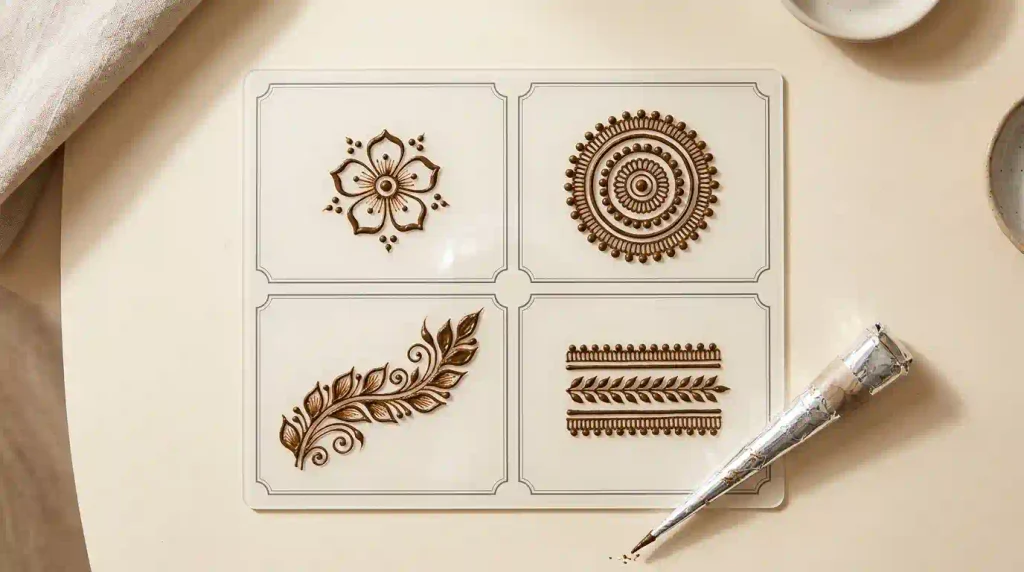
Simple patterns can be created from basic shapes such as flowers, leaves, dots, lines, and circles.
Beginners should practice on paper or a reusable practice surface before attempting any skin application.
These drawing exercises can also help family members prepare reference patterns for a mehndi artist.
How to Draw a Small Floral Design
A small flower is one of the easiest motifs to practice.
- Draw a small circle or spiral at the center.
- Add five rounded petals around the center.
- Extend one gently curved stem from the flower.
- Draw two or three pointed leaves along the stem.
- Finish with small dots near the outer petals.
Keep the petals approximately the same size.
If the design will be placed on the back of the hand, position the flower where the surrounding open space makes it clearly visible.
A small floral motif can also be connected to a narrow wrist border.
How to Draw a Mandala or Round Tikki
A basic round tikki design can be created using several circular shapes.
- Draw a small central circle.
- Add a second circle around the first.
- Create evenly spaced petals around the outer circle.
- Add small dots between selected petals.
- Finish with a thin decorative border.
Begin with a simple arrangement before attempting detailed mandalas.
The main challenge is keeping the circles balanced and the petals evenly spaced.
A single round tikki can become a complete palm design without requiring further decoration.
How to Draw a Vine or Bail
A bail design uses curved lines and repeated leaves.
- Draw one smooth curved line.
- Add small pointed leaves along alternate sides.
- Place one flower or bud near the beginning of the vine.
- Add a few small decorative dots.
- Extend the stem toward the intended endpoint.
Keep the direction of the vine consistent.
A diagonal arrangement can create a graceful back-hand design.
For a simple wrist pattern, shorten the vine and curve it gently around the available space.
How to Create a Finger-Only Design
Finger-only mehndi can use narrow bands and miniature leaves.
- Draw two short parallel lines around part of a finger.
- Add small dots or diagonal strokes between the lines.
- Create a tiny flower or leaf near the center.
- Repeat a matching detail on another finger.
- Leave the remaining fingers undecorated if preferred.
Avoid placing very fine lines too close together.
A simple band with a small flower often looks more polished than an overcrowded finger pattern.
What to Show a Mehndi Artist as a Reference
Choose clear photographs showing the design, placement, and coverage you prefer.
If you want a simple floral back-hand pattern, select an image with similar proportions.
Explain whether you want broad outlines or fine detailing.
Mention any specific motifs, such as roses, lotuses, paisleys, or circular tikki designs.
If a family member is helping with the appointment, they can organize the reference images in advance.
For a more personal design, show the artist examples of motifs that have cultural or sentimental significance.
Applying Mehndi When Hand Movement Is Limited
Some women find it difficult to hold their hands in one position for long periods.
This may be related to joint discomfort, reduced grip strength, fatigue, or individual mobility needs.
A few practical adjustments can make henna application more comfortable.
Ask an Artist or Family Member to Apply the Design
Applying detailed mehndi to your own hands can require steady movement and good visibility.
A professional artist or trusted family member may make the process easier.
Explain any movement limitations before the application begins.
The artist can choose a suitable placement and adjust the design to reduce the need for awkward hand positions.
For simple artwork, a family member who has practiced basic motifs may be able to help.
However, product safety and cleanliness remain important regardless of who applies the design.
Find a Comfortable Hand Position
Position the hand on a stable surface, such as a table or supportive cushion.
The wrist should feel relaxed rather than forced into an uncomfortable angle.
If the palm cannot remain fully open, consider a back-hand or wrist design instead.
Avoid placing pressure on painful joints.
An adjustable chair or table may help the artist work without requiring the wearer to lean forward.
Comfortable positioning is particularly useful for detailed mandalas and finger patterns.
Take Breaks During Application
Long mehndi sessions may become tiring, especially when the hands must remain still.
Discuss the possibility of short breaks before the appointment begins.
The artist can work in manageable sections when the design allows it.
For example, the main palm motif might be completed before beginning the finger decoration.
Avoid resting a freshly painted area against fabric or furniture during breaks.
If discomfort develops, pause rather than forcing the same position.
Choose a Simple Pattern for a Shorter Application
Small motifs usually require less application time than full-hand designs.
A floral wrist band, single paisley, or tiny mandala may be more convenient.
Choose larger, recognizable shapes when fine detail would extend the appointment unnecessarily.
A graceful Arabic vine with a few flowers can also provide substantial visual impact without dense coverage.
For older women who prefer shorter sessions, a simple design can be completed in stages or limited to one selected area.
The goal is to achieve an attractive result while keeping the experience comfortable.
Natural Henna and Skin-Sensitivity Considerations
Skin safety matters at every age.
Natural henna and commercially prepared mehndi pastes can differ in their ingredients.
Products marketed as herbal, natural, or instant-color henna are not necessarily free from additives.
Older adults with fragile, dry, irritated, or sensitive skin should be especially careful, but skin condition varies between individuals.
Natural Henna and Black Henna: What to Know
Natural henna comes from the leaves of Lawsonia inermis.
It generally creates orange to reddish-brown or brown stains.
Products marketed as black henna may contain para-phenylenediamine, commonly called PPD.
PPD-containing temporary tattoos can cause significant allergic skin reactions, including redness, swelling, blistering, and irritation.
Natural henna does not ordinarily produce an instant jet-black stain.
The U.S. Food and Drug Administration’s guidance on henna, mehndi, and black henna explains these risks and notes that henna is approved as a hair-color additive, not for direct skin decoration, in the United States.
Avoid products containing suspected PPD or unidentified darkening chemicals.
Check the Ingredients in Mehndi Cones and Paste
Before applying mehndi, ask the artist or seller for a complete ingredient list.
Traditional henna powder comes from a plant, but prepared pastes may contain additional ingredients.
Some products include fragrances, preservatives, dyes, or other additives.
Do not assume that a product is safe merely because it is labeled herbal.
Products with unclear ingredients or exaggerated promises of instant dark color should be avoided.
Low-quality cones may also have inconsistent paste flow, which affects application precision.
An experienced artist should be able to explain the materials being used.
If the ingredients cannot be identified reliably, avoiding application is the safer choice.
Test a Small Area Before Applying Mehndi
A small skin test may sometimes help identify reactions to certain cosmetic products, but it cannot guarantee safety.
For products specifically intended and permitted for skin use, follow the manufacturer’s allergy-testing instructions where appropriate.
Do not perform a home patch test with suspected black henna or products that may contain PPD.
Even a small exposure can cause a reaction or contribute to sensitization.
Women with known contact allergies, previous henna reactions, or unusually sensitive skin should consult a healthcare professional before considering skin-applied products.
A dermatologist can advise on appropriate allergy assessment.
When to Avoid Applying Mehndi to Irritated Skin
Do not apply mehndi to broken, inflamed, infected, or irritated skin.
Avoid areas with cuts, rashes, blisters, or active dermatitis.
If the skin feels unusually dry or uncomfortable, address the skin condition before considering decoration.
Mehndi should also be avoided if a previous application caused a significant allergic reaction unless a qualified healthcare professional advises otherwise.
If itching, painful swelling, blistering, or a spreading rash occurs after application, stop using the product and seek medical care.
Preserving skin health is more important than achieving a darker stain.
Mehndi Application and Aftercare
Proper preparation and aftercare can influence how the henna design looks and how gradually it fades.
Natural henna stains typically develop over time rather than reaching their final shade immediately after paste removal.
Follow the specific product instructions and avoid unverified darkening methods.
Clean and Moisturize the Hands
Clean hands provide a suitable starting point for application.
Use a gentle cleanser to remove dirt and excess surface oil.
Dry the skin thoroughly.
If you normally use moisturizer, apply it as part of your regular skin-care routine rather than placing a heavy layer directly before henna application.
Thick creams or oils immediately before application may interfere with contact between the paste and the skin.
For dry or mature skin, prioritize comfort and avoid harsh exfoliation.
A gentle skin-care routine is preferable to aggressive preparation methods.
Use a Fine-Tip Cone for Precise Lines
A fine-tip cone helps an experienced artist create delicate lines, small leaves, and dotted details.
It is useful for floral patterns, miniature paisleys, and decorative finger bands.
The paste should flow consistently through the applicator.
Excessive squeezing can cause uneven lines.
Beginners should practice on paper or a reusable practice surface before trying detailed designs.
The quality of the cone tip and consistency of the paste can influence the artwork.
However, a cone that produces neat lines is not necessarily safe; ingredient suitability must be assessed separately.
Let the Mehndi Dry and Avoid Smudging
Once the design is applied, keep the decorated area as still as practical.
Avoid touching clothing, jewelry, or furniture with wet paste.
The surface may begin drying before the staining process is complete.
Follow the product-specific instructions for the required processing time.
If the hands become tired, ask the artist how to reposition them without damaging the pattern.
Avoid using excessive heat, hot steam, or other potentially irritating drying methods.
Allowing the paste to remain undisturbed helps preserve the design’s outlines.
Follow the Product’s Instructions for Paste Removal
Different henna formulations may require different processing and removal methods.
Remove the paste according to the product instructions.
If the dried material is ready to come off, loosen it gently rather than aggressively scraping the skin.
Avoid sharp tools, harsh scrubbing, and chemical removers.
The initial stain may appear lighter than expected.
Natural henna often develops from orange toward reddish-brown during the following day or two.
Do not apply unknown chemicals in an attempt to force an immediate darker stain.
What Affects Stain Development and Fading
The final henna stain depends on the formulation, skin characteristics, application conditions, and placement.
Natural henna commonly remains visible for approximately one to three weeks.
Frequent washing, friction, and normal skin turnover contribute to fading.
The palms may develop a deeper stain than some other areas because of differences in the outer skin layers.
Skin tone can affect visual contrast, but it does not determine which patterns someone can wear.
Traditional aftercare methods sometimes involve lemon-sugar mixtures, natural oils, or clove steam.
These are not essential, and acidic ingredients, fragrances, or excessive heat can irritate the skin.
For women who prefer different decorative effects, colored mehndi designs may provide ideas involving cosmetic body art, but these materials are different from natural henna and require separate safety consideration.
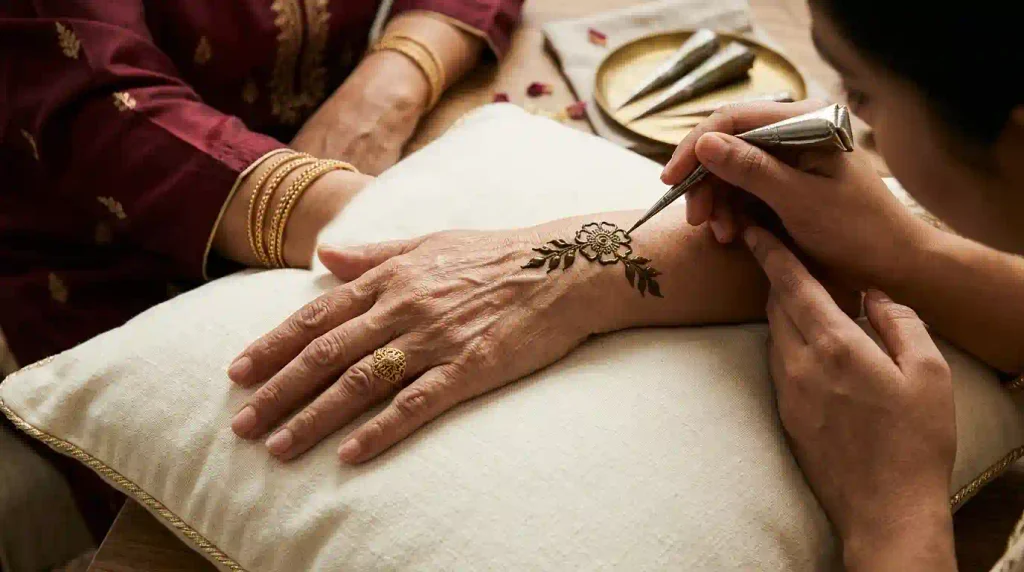
Why Floral Mehndi Suits Mature Hands
Floral mehndi is especially versatile because flowers, vines, and leaves can be arranged in almost any size or placement.
These motifs offer opportunities for delicate decoration, traditional styling, and personal expression.
Their appeal is not limited to mature hands, but they are convenient for anyone who wants a balanced design with adjustable coverage.
A Graceful Look Without Heavy Coverage
A single rose or lotus can serve as an attractive focal point.
Small leaves and dots can enhance the flower without filling the entire hand.
This arrangement creates a graceful look while preserving open space.
A central floral motif is also easy to coordinate with bangles, rings, and traditional clothing.
For women who prefer bolder artwork, the same flower can be enlarged or surrounded by additional decorative details.
Floral mehndi works equally well as a minimalist design or the foundation of a more elaborate pattern.
Designs for Casual and Festive Occasions
Floral patterns are suitable for both everyday decoration and formal celebrations.
A small flower on the wrist can complement a casual family gathering.
A floral back-hand vine is attractive for Eid or Teej.
For Karva Chauth and weddings, a larger lotus mandala or detailed rose composition may feel more festive.
The versatility of floral artwork makes it easy to adjust the level of detail without changing the overall artistic theme.
Women who enjoy traditional and contemporary patterns can explore additional mehndi designs for women and adapt favorite motifs to their personal style.
Simple Patterns That Take Less Time and Effort
Simple floral patterns can often be completed more quickly than detailed portrait or full-hand designs.
A five-petal flower with a short stem and a few decorative dots may require only several minutes for an experienced artist.
A small floral wrist band can also provide an elegant result without a lengthy appointment.
This is useful for women who prefer short sessions or find it uncomfortable to remain in one hand position.
For a more elaborate version, additional leaves, paisleys, or borders can be added as desired.
The same basic flower can therefore support many different looks, from understated everyday decoration to richly detailed festive henna.
Frequently Asked Questions About Mehndi Designs for Older Women
What Are the Best Mehndi Designs for Older Women?
Floral vines, round tikki patterns, Arabic mehndi, paisleys, wrist bracelets, and minimalist mandalas are versatile choices.
Which Mehndi Design Is Easiest for Mature Hands?
A single flower with a leafy stem or a small circular tikki is among the simplest patterns to apply.
Can Older Women Wear Full-Hand Mehndi?
Yes, women of any age can choose full-hand mehndi according to their preferences, comfort, and skin condition.
Are Arabic Mehndi Designs Suitable for Older Women?
Yes, Arabic floral vines can be adapted for light, medium, or extensive coverage.
What Mehndi Designs Are Best for Grandmothers?
Small flowers, palm mandalas, wrist bands, and traditional paisleys are appealing options, depending on personal taste.
How Long Does Simple Mehndi Take to Apply?
A small design may take approximately 5–20 minutes, while detailed patterns can require considerably longer.
Which Mehndi Designs Are Best for Eid?
Arabic vines, back-hand flowers, decorative finger patterns, and circular palm motifs are popular Eid choices.
Which Mehndi Designs Are Suitable for Karva Chauth?
Round tikki designs, floral mandalas, paisleys, and traditional wrist patterns are attractive options.
Can Older Women Apply Mehndi if Their Hands Shake?
A professional artist can assist with supported hand positioning, shorter sessions, and simpler patterns when appropriate.
Does Mehndi Look Good on Wrinkled Hands?
Yes, henna patterns can look attractive on natural mature skin, and motif size can be adjusted to the available space.
Is Natural Henna Safe for Sensitive Skin?
Natural henna can still cause reactions, and product additives may create additional risks, so suitability should be assessed carefully.
Should Older Women Use Black Henna?
Avoid products marketed as black henna that may contain PPD or unidentified dyes because they can cause serious skin reactions.
How Long Does Mehndi Last on Mature Hands?
Natural henna generally remains visible for approximately one to three weeks, depending on placement, skin characteristics, and aftercare.
Can Mehndi Be Matched With Bangles and Sarees?
Yes, floral wrist bands, paisleys, mandalas, and back-hand vines can complement traditional jewelry and embroidered clothing.
Are Small Mehndi Designs Better Than Detailed Designs for Older Women?
Neither is inherently better; the right choice depends on individual preferences, application time, comfort, and occasion.
Final Thoughts
Mehndi designs for older women offer countless opportunities to celebrate tradition, creativity, and personal style. From graceful floral vines and round tikki patterns to traditional paisleys, elegant Arabic designs, and decorative wrist bands, every style can be adapted to suit different preferences and occasions. Mature women can enjoy small motifs, detailed artwork, or full-hand designs without following restrictive age-based rules.
When choosing a pattern, consider your outfit, jewelry, desired coverage, available application time, and skin comfort. A well-planned floral design can be just as memorable as elaborate traditional henna.
For more creative inspiration, explore Mehndi Designs Studio and discover elegant patterns for Eid, weddings, Karva Chauth, Teej, and family celebrations.
One Comment