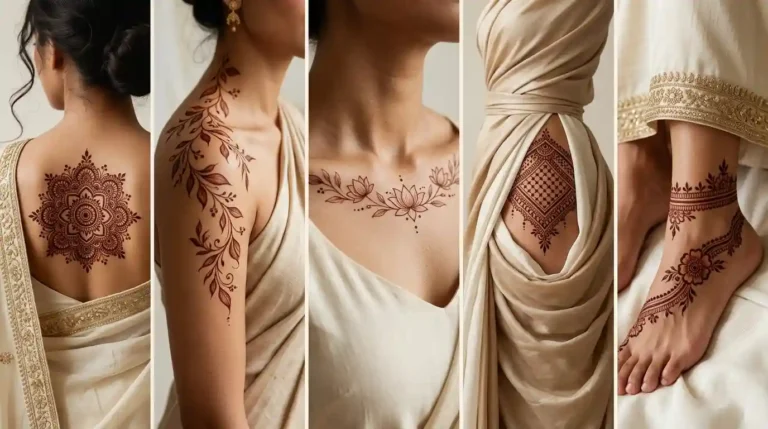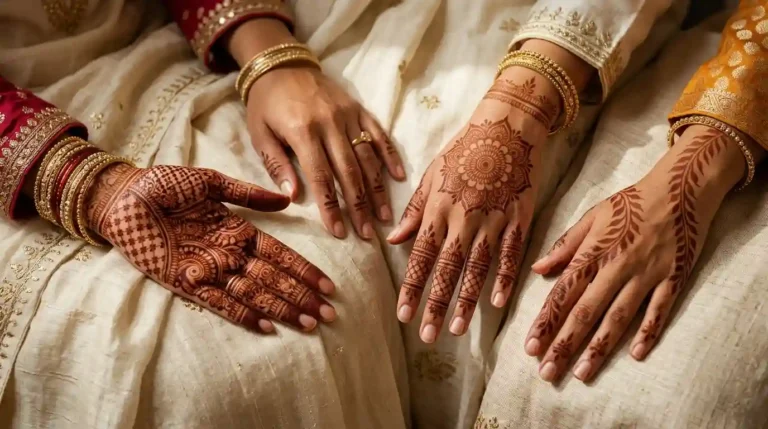
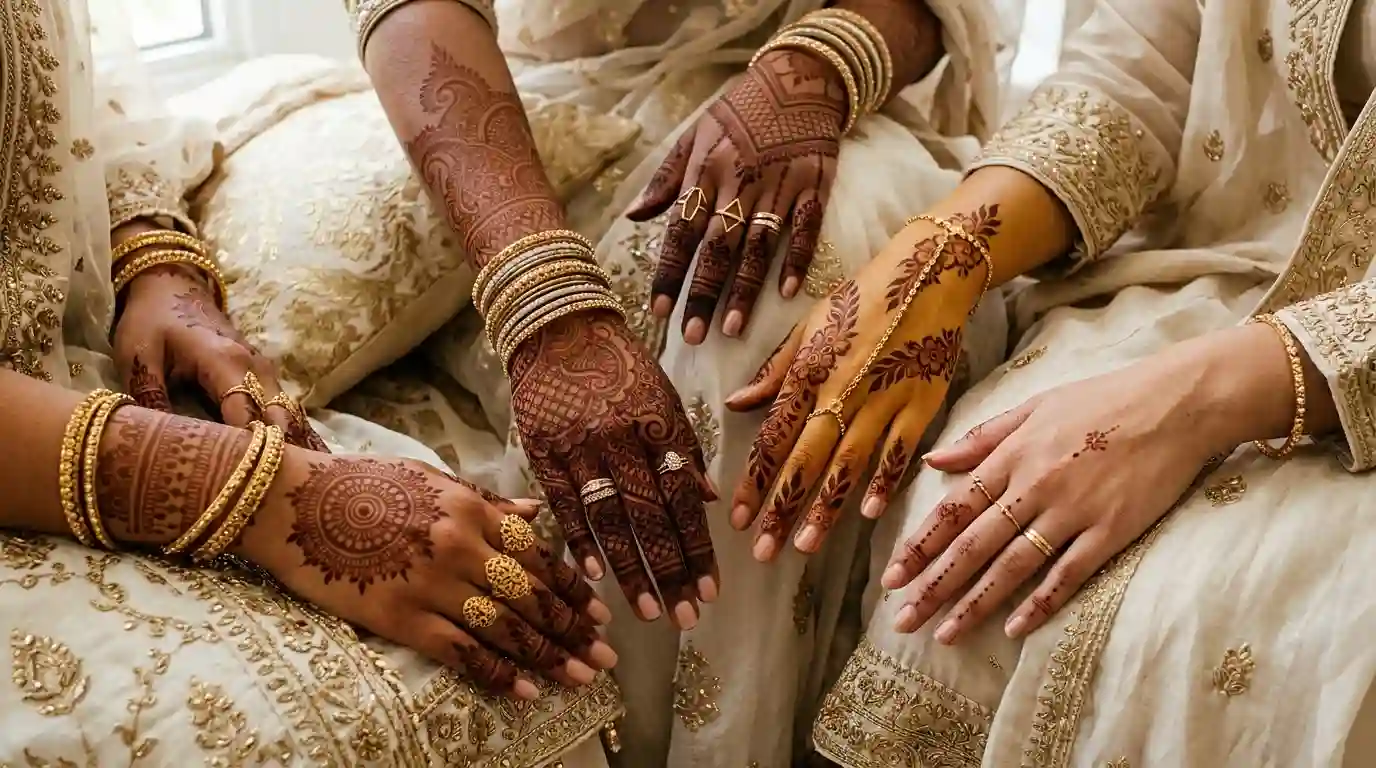
Mehndi Designs for Women: Beautiful Styles and Ideas
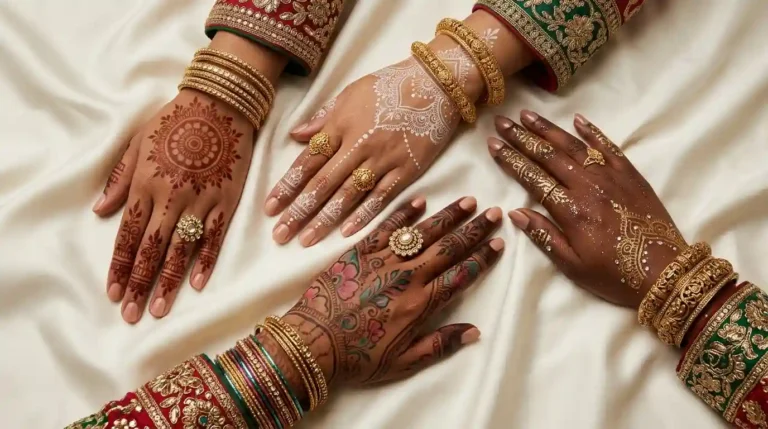
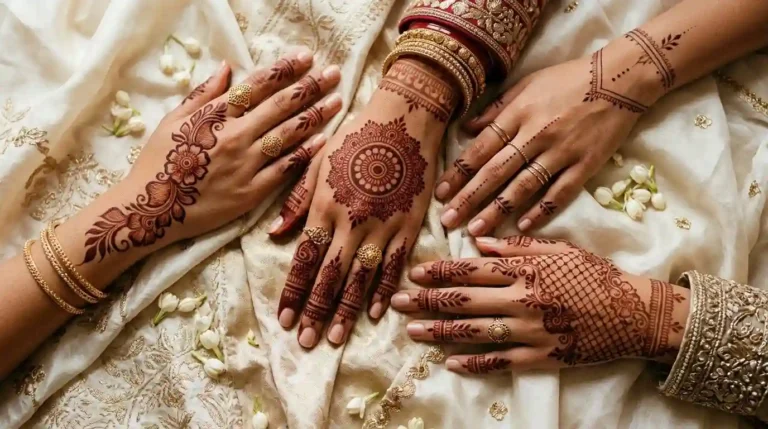
Mehndi designs for women offer a beautiful way to express personal style, celebrate cultural traditions, and add elegant decoration to hands and feet. From delicate floral vines and simple finger patterns to elaborate bridal mehndi, traditional Indian mandalas, Pakistani floral designs, and graceful Arabic henna, there are countless styles for every occasion. Whether you are preparing for Eid, Diwali, Karwa Chauth, an engagement, a wedding, or a casual family gathering, the right mehndi design can complement your outfit, jewelry, and personality. Some women prefer minimalist patterns with plenty of open space, while others love full-hand coverage featuring paisleys, peacocks, intricate jaal work, and personalized wedding details. Modern geometric motifs, bracelet-inspired patterns, and decorative back-hand designs provide even more creative possibilities. This complete guide explores popular mehndi styles, placements, motifs, bridal ideas, and beginner-friendly patterns. You will also discover how to compare designs, choose an experienced mehndi artist, estimate application time, and care for your henna stain while keeping skin safety in mind.patterns for hands.
Table of Contents
- Why Mehndi Remains Popular Among Women
- Mehndi Design Styles for Women
- Mehndi Designs by Placement
- Mehndi Motifs and Pattern Ideas
- Bridal and Wedding Mehndi Designs
- Mehndi Designs for Different Occasions and Lifestyles
- Mehndi Design Comparison Guide
- How to Choose the Right Mehndi Design
- A Visual Glossary of Mehndi Patterns
- Beginner-Friendly Mehndi Design Walkthrough
- Mehndi Artist Booking and Session Planner
- Mehndi Application, Stain, and Aftercare
- Frequently Asked Questions About Mehndi Designs for Women
- Final Thoughts
Why Mehndi Remains Popular Among Women
Mehndi, also called mehendi or henna, has been used as decorative body art for generations across South Asia, the Middle East, North Africa, and other regions.
Today, women enjoy mehndi for weddings, festivals, cultural ceremonies, and personal expression. Its appeal comes from the combination of artistic possibilities, traditional significance, and temporary decoration.
Mehndi for Weddings, Festivals, and Family Celebrations
Mehndi remains closely associated with weddings and festive gatherings.
Brides often choose detailed floral patterns, ornamental borders, and personalized motifs for their wedding celebrations. Family members and guests may prefer smaller designs that complement traditional clothing.
Eid, Diwali, Karwa Chauth, Teej, engagements, and family events provide additional opportunities to wear henna.
The desired design can change with the occasion. A wedding may inspire elaborate bridal artwork, while a casual celebration might call for one attractive floral motif.
For broader inspiration, explore different mehndi designs suited to traditional and contemporary occasions.
Cultural Symbolism and Personal Expression
Henna carries different cultural meanings across communities.
In many South Asian wedding traditions, mehndi is associated with celebration, happiness, blessings, and new beginnings.
Some families include a dedicated mehndi ceremony featuring music, dancing, traditional clothing, and the application of henna.
Motifs may also hold personal significance.
A lotus flower, peacock, paisley, or decorative symbol can reflect cultural associations or individual memories.
However, meanings are not universal. Many women select patterns simply because they appreciate their appearance.
Mehndi as Temporary Body Art
Traditional mehndi uses paste prepared from the henna plant, Lawsonia inermis.
The plant contains lawsone, a dye molecule responsible for henna’s characteristic temporary stain.
Natural henna commonly develops orange to reddish-brown or brown tones.
The design gradually fades as the outer layers of skin are renewed, often remaining visible for approximately one to three weeks.
This temporary nature makes henna appealing to people who enjoy experimenting with different decorative styles.
Unlike permanent tattoos, traditional mehndi does not involve depositing pigment into the skin using needles.
Mehndi and Traditional or Modern Fashion
Mehndi can complement sarees, lehengas, salwar suits, shararas, kurtis, and contemporary fusion clothing.
Traditional paisleys and mandalas often look attractive with richly embroidered outfits.
Minimal floral motifs and geometric patterns may complement simpler clothing and modern accessories.
Jewelry also influences the overall appearance.
Back-hand henna can frame rings, while decorative wrist patterns may resemble bracelets or bangles.
Choosing patterns that work with your outfit and accessories can make even a small design feel thoughtfully styled.
Mehndi Design Styles for Women
Different henna traditions offer distinctive artistic approaches.
Some emphasize dense detailing and elaborate symbolism, while others focus on flowing vines, geometric shapes, and open spaces.
Understanding these styles helps you select artwork that feels appropriate for your occasion.
Traditional Indian Mehndi
Traditional Indian mehndi frequently features paisleys, mandalas, floral motifs, peacock designs, and detailed ornamental borders.
Bridal patterns may include intricate linework, symmetrical compositions, and miniature decorative elements.
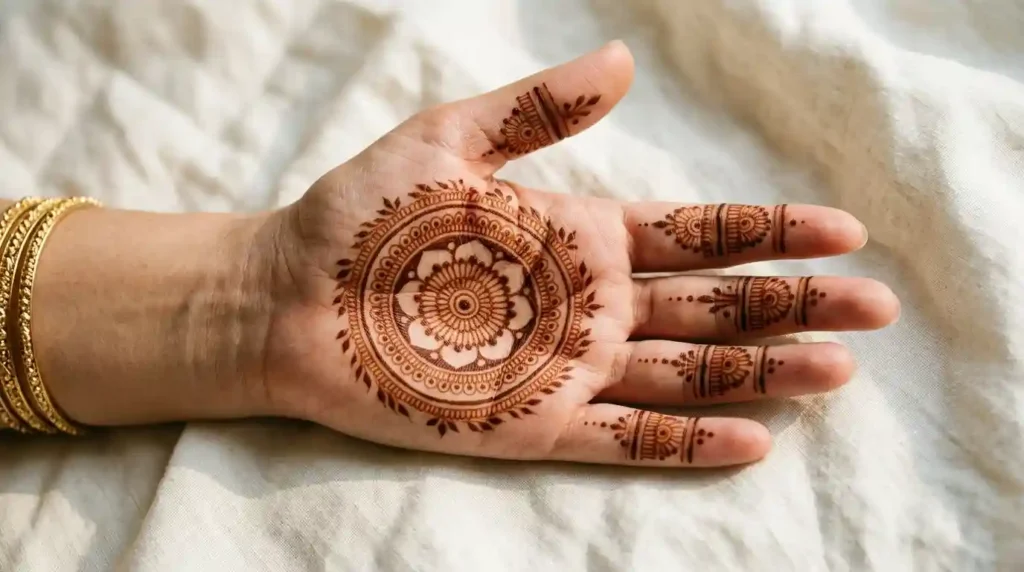
A large mandala on the palm surrounded by floral borders creates a recognizable traditional appearance.
For a richer design, the fingers can feature alternating paisley and geometric patterns.
Indian-style henna is particularly attractive for weddings, Diwali, Karwa Chauth, and other traditional celebrations.
Pakistani Mehndi
Pakistani mehndi commonly combines floral vines, paisleys, tikki motifs, delicate jaal patterns, and ornamental wrist designs.
Some compositions feature dense floral decoration, while others use open spaces to emphasize individual motifs.
A traditional Pakistani palm design might include a large circular tikki surrounded by fine leaves and patterned fingers.
Back-hand designs often connect decorative wrist bands to flowers using thin vines or dotted chains.
This style works beautifully with traditional shalwar kameez, embroidered outfits, and bridal jewelry.
Arabic Mehndi
Arabic mehndi is widely admired for its bold flowers, curved outlines, leafy vines, and flowing compositions.
Many designs follow a diagonal arrangement from the wrist toward the fingers.
A large rose surrounded by leaves can form the central motif.
Smaller flowers, dots, and decorative curves complete the pattern.
Arabic mehndi often leaves visible skin between the main elements, creating a light and graceful appearance.
It is a popular choice for Eid, weddings, engagements, and casual celebrations.
Rajasthani Mehndi
Rajasthani mehndi is associated with elaborate traditional bridal artwork.
Common motifs include peacocks, paisleys, flowers, decorated elephants, and ornamental bride-and-groom imagery.
Some designs incorporate architectural borders or miniature wedding scenes.
A detailed Rajasthani composition may extend from the fingertips to the forearms.
For a regal appearance, combine prominent traditional motifs with fine decorative backgrounds.
This style is especially suitable for brides who enjoy richly ornamented henna and traditional wedding attire.
Moroccan Mehndi
Moroccan mehndi often emphasizes geometric shapes, diamonds, triangles, angular lines, and repeated decorative patterns.
Compared with flowing floral artwork, these designs may appear more structured.
A geometric wrist band can feature alternating diamonds and parallel borders.
Finger designs may repeat the same shapes at a smaller scale.
For a contemporary look, combine one strong geometric motif with carefully positioned open spaces.
Consistent spacing is important because uneven lines become noticeable in structured patterns.
Khaleeji and Gulf Mehndi
Khaleeji mehndi refers broadly to henna traditions and styles associated with the Arabian Gulf.
Preferences differ between regions, families, and individual artists.
Gulf-inspired designs may feature prominent floral arrangements, graceful vines, bold outlines, and decorative finger patterns.
A large flower extending toward the wrist can create an elegant composition.
Fine dotted borders and smaller leaves add detail.
These styles are well suited to festive clothing and jewelry.
Indo-Arabic Fusion Mehndi
Indo-Arabic mehndi combines the flowing floral structure often associated with Arabic henna and the finer decorative details common in Indian patterns.
A large flower may serve as the central feature, surrounded by miniature paisleys, delicate net patterns, and ornamental borders.
This fusion creates contrast between bold and fine linework.
For a balanced back-hand design, use a diagonal floral trail connected to patterned fingers.
Indo-Arabic mehndi is attractive for brides who want decorative richness without completely covering every part of the hand.
Minimalist and Simple Mehndi
Minimalist mehndi focuses on limited coverage and carefully arranged motifs.
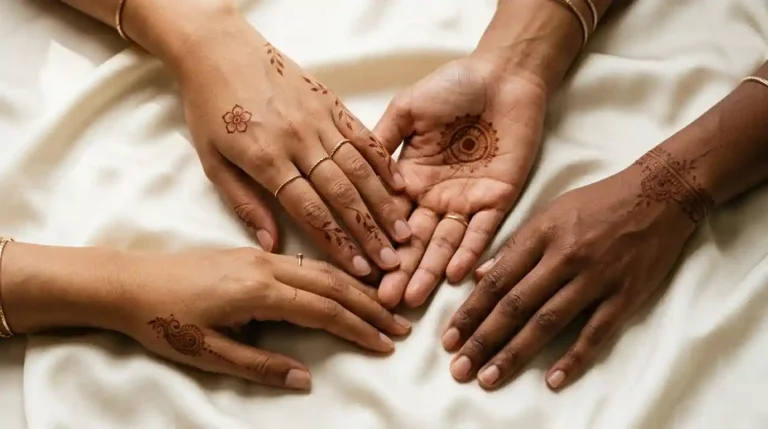
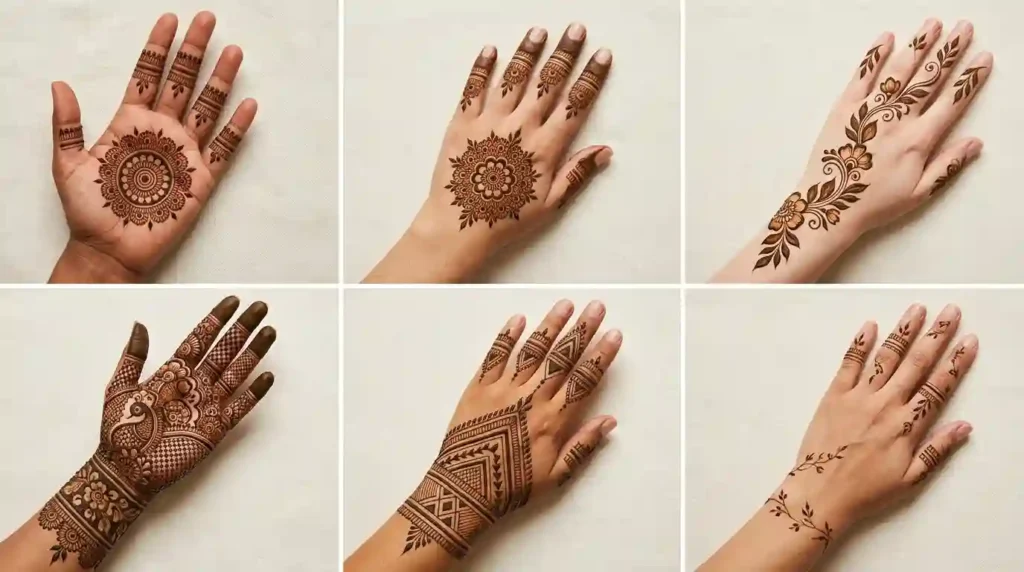
A small flower near the wrist, a decorative finger band, or a single leafy vine can create an elegant appearance.
Simple designs are especially useful for beginners and women who prefer understated decoration.
They can also be convenient for everyday occasions.
An attractive minimalist design often uses one recognizable motif supported by a few dots or delicate lines.
Leaving open space helps the pattern feel clean and refined.
Contemporary and Geometric Mehndi
Contemporary mehndi introduces abstract shapes, asymmetrical compositions, clean lines, and unconventional placement.
A modern design might feature one oversized flower connected to narrow finger patterns.
Another approach combines geometric wrist bands with small botanical motifs.
Explore modern mehndi designs for additional inspiration involving negative space and creative arrangements.
These patterns complement contemporary bridal clothing, fusion outfits, and minimalist accessories.
Glitter and White Mehndi
White and glitter mehndi-style artwork offers a decorative alternative to traditional henna stains.
White mehndi is usually created using cosmetic body paint rather than natural henna.
Glitter patterns may use cosmetic glitter or suitable decorative products.
These styles are especially attractive for fashion photography and short-duration events.
Explore colored mehndi designs for ideas involving white, gold, silver, and other cosmetic colors.
Always verify that the products are appropriate for the intended skin application.
Mehndi Designs by Placement
The placement of a mehndi pattern influences its overall shape, visibility, and decorative possibilities.
Hands provide space for traditional motifs, while wrists and forearms accommodate elongated designs.
Feet can also be decorated with coordinated floral and ornamental artwork.
Front-Hand and Palm Mehndi
Front-hand mehndi refers to designs applied to the palm and inner fingers.
Circular mandalas, tikki patterns, paisleys, and symmetrical flowers are popular choices.
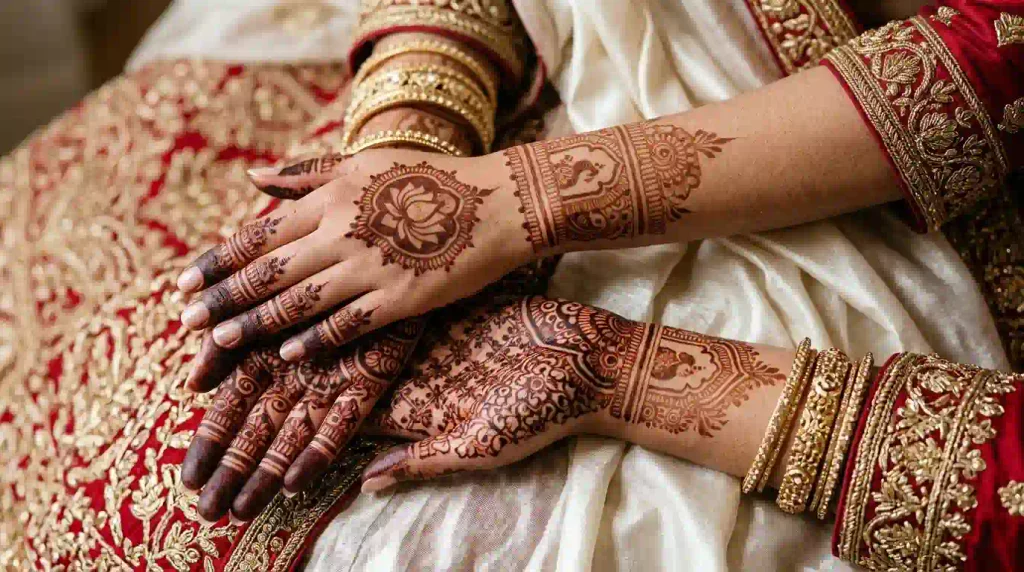
A large central lotus surrounded by small dots can create an elegant traditional appearance.
For greater coverage, connect the central motif to detailed finger borders.
Women who prefer lighter artwork can choose one small flower with generous open space.
Front-hand designs are particularly attractive for wedding and festival photography.
Back-Hand Mehndi
Back-hand mehndi emphasizes flowing patterns that remain visible while the hands rest naturally.
Arabic floral trails, diagonal vines, mandalas, and bracelet-inspired designs are common options.
A large flower near the center of the hand can connect to the middle finger through a leafy stem.
Decorative dots may fill selected spaces.
Back-hand mehndi works beautifully with rings and bangles.
For a coordinated look, repeat one motif from the wrist decoration in the finger patterns.
Full-Hand and Half-Hand Mehndi
Full-hand mehndi typically decorates the palms, fingers, and backs of the hands.
Some bridal designs also extend toward the forearms.
Half-hand mehndi covers selected sections, such as the fingers and central palm or one side of the back of the hand.
Full coverage is often preferred for elaborate bridal looks.
Half-hand patterns can create a balanced appearance with less application time.
The choice depends on the occasion, desired level of detail, and personal comfort.
Finger Mehndi
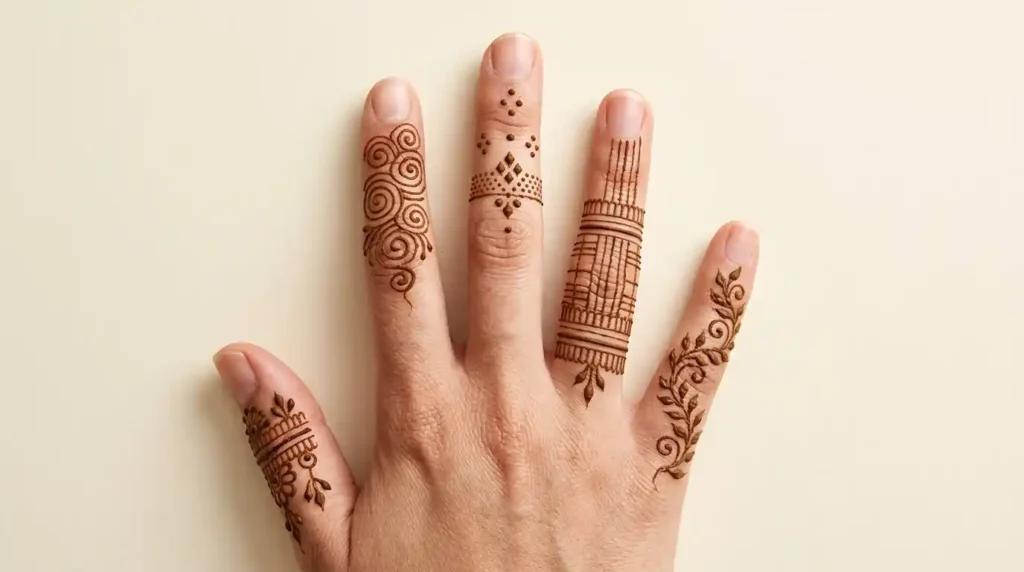
Finger mehndi uses small flowers, leaves, dots, geometric bands, and ornamental lines.
A delicate pattern may decorate only the index and ring fingers.
Another approach uses matching floral details on every finger.
Finger-only designs are popular because they provide visible decoration without requiring complete hand coverage.
For a contemporary appearance, combine fine dotted rings with small leafy trails.
Keep motifs separated enough to remain recognizable as the henna stain develops.
Wrist and Bracelet-Style Mehndi
Bracelet-style mehndi creates the appearance of decorative jewelry.
Artists may use scalloped borders, miniature flowers, geometric bands, and hanging bead patterns.
A broad floral cuff can wrap around the wrist.
Thin dotted chains may connect the cuff to finger motifs.
This creates a jewelry-inspired hand design without requiring physical accessories.
Wrist mehndi is especially suitable for women who enjoy delicate ornamental patterns and coordinated festive styling.
Forearm and Elbow-Length Mehndi
Forearm mehndi provides space for long vines, ornamental panels, mandalas, and elaborate decorative borders.
A floral trail may begin near the wrist and extend toward the elbow.
Traditional bridal compositions can include paisleys, peacock motifs, and detailed net backgrounds.
Elbow-length designs are particularly attractive with short-sleeved outfits.
For a balanced appearance, use smaller motifs near the wrist and larger decorative elements along the forearm.
This creates a natural transition between the different areas.
Foot and Leg Mehndi
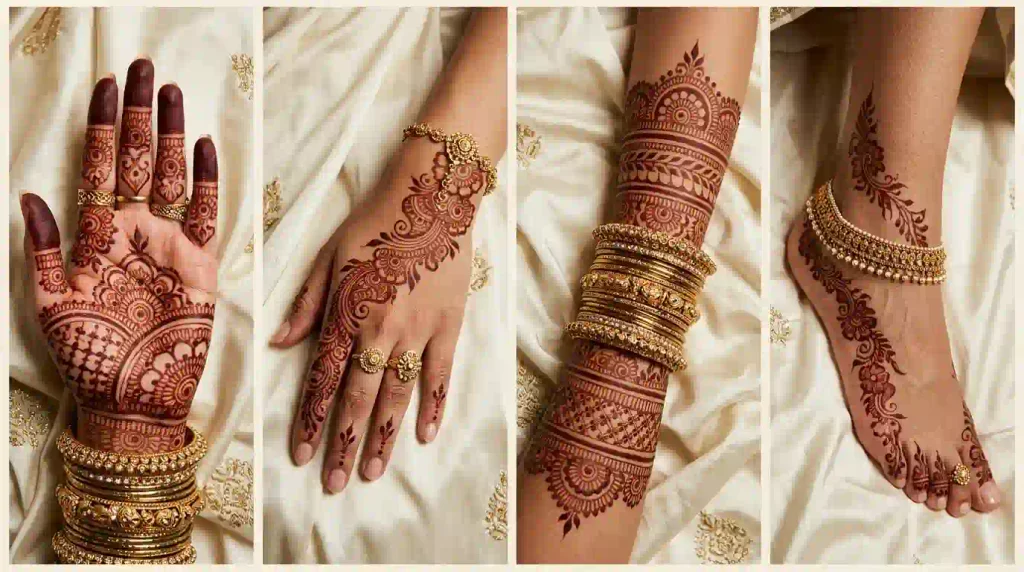
Foot mehndi often includes floral trails, decorative ankle bands, paisleys, and ornamental patterns extending toward the toes.
A diagonal leafy vine from the ankle to the outer toes can create an elegant appearance.
Leg mehndi offers space for longer botanical arrangements and decorative borders.
Women interested in placements beyond the hands can explore body mehndi designs for additional inspiration.
Choose footwear carefully because straps and tight shoes may rub against freshly applied artwork.
Mehndi for Both Hands and Feet
Coordinated hand and foot mehndi creates a unified appearance for bridal and festive celebrations.
The designs do not need to be identical.
A large lotus on the palm can be complemented by smaller lotus motifs near the ankles.
Matching paisley borders or floral vines also help connect the artwork.
For elaborate bridal styling, maintain a consistent line thickness and decorative theme across the hands and feet.
This allows each placement to look distinctive while contributing to one overall design.
Mehndi Motifs and Pattern Ideas
Individual motifs are the building blocks of beautiful henna artwork.
Flowers create soft focal points, geometric shapes introduce structure, and vines connect different decorative sections.
Learning how these motifs work makes it easier to develop a cohesive design.
Floral Mehndi, Roses, and Lotus Motifs
Floral mehndi is one of the most versatile styles for women.
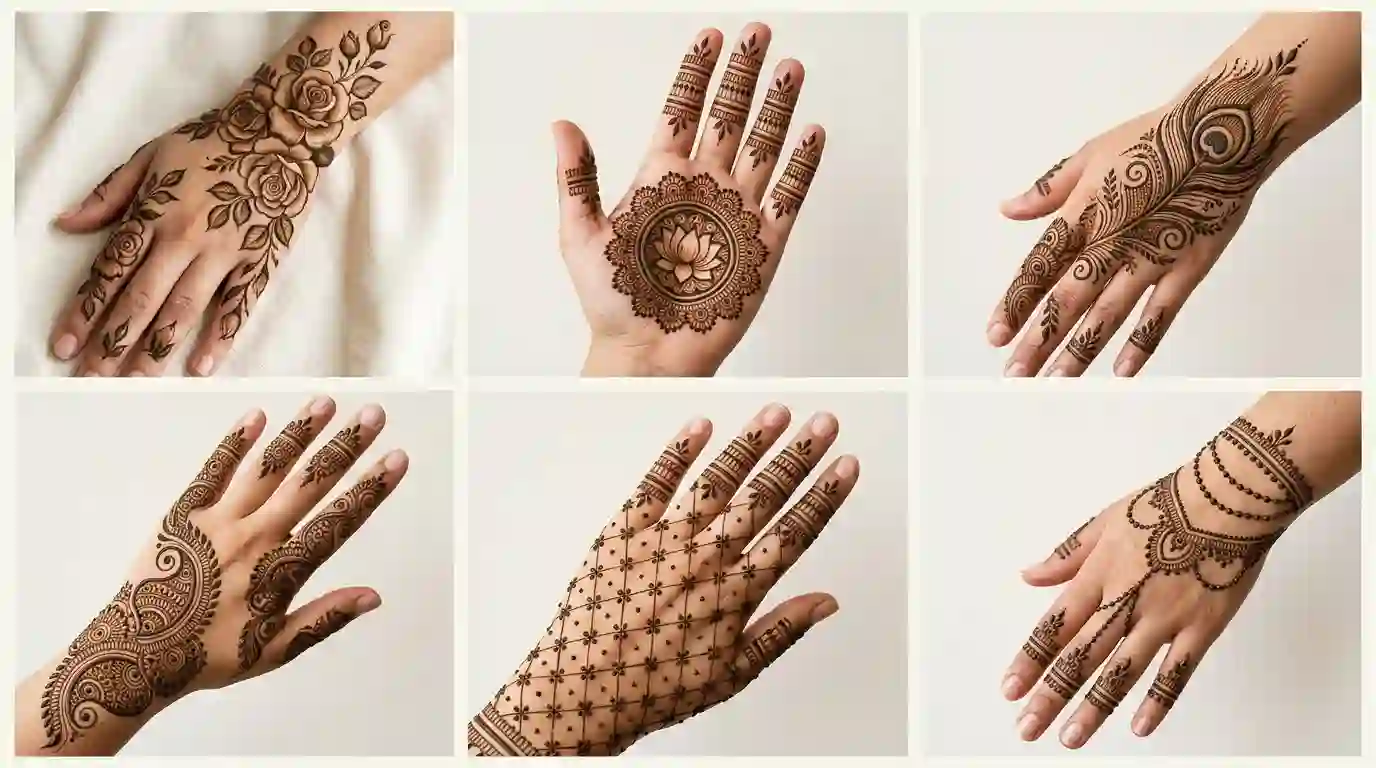
Roses, lotus flowers, sunflowers, daisies, and miniature blossoms can be arranged as individual motifs or connected patterns.
A rose may feature a small spiral center surrounded by curved petals.
A lotus often uses symmetrical layers of elongated petals.
For a graceful back-hand arrangement, connect two flowers through a fine leafy vine.
A larger mandala-style flower can become the central feature of a traditional palm design.
Peacock and Bird Motifs
Peacock motifs are admired for their flowing shapes and ornamental feather details.
A large peacock can decorate the palm or forearm, with the feather patterns extending into the surrounding artwork.
Smaller bird-inspired motifs may include delicate silhouettes or individual feathers.
These patterns work particularly well in traditional bridal compositions.
For a balanced design, surround the central bird with small paisleys and floral borders.
Avoid making the main motif so small that its features become difficult to recognize.
Paisley and Vine Patterns
Paisley motifs feature curved teardrop shapes that can contain flowers, spirals, dots, and miniature leaves.
They are frequently used in traditional Indian and Pakistani mehndi.
Vines create flowing connections between motifs.
A paisley near the wrist can be connected to a floral palm design through a delicate leafy trail.
Repeating paisleys in different sizes creates movement and variety.
These patterns are suitable for both simple festive henna and elaborate bridal artwork.
Mandala and Tikki Designs
Mandala designs use concentric circles and repeated decorative elements.
A central flower can be surrounded by petals, scalloped borders, and dots.
Tikki mehndi usually focuses on a circular motif in the center of the palm.
A simple tikki may contain only a few decorative rings.
More elaborate versions include miniature paisleys and fine geometric borders.
Circular designs are particularly attractive when matched with patterned fingers and a decorative wrist cuff.
Jaal, Mesh, and Lace Patterns
Jaal and mesh mehndi create net-like backgrounds through repeated crossing lines.
The resulting diamond or square spaces may contain dots, miniature flowers, or leaves.
Lace patterns combine fine ornamental borders with delicate mesh sections.
These designs are popular for bridal hands and decorative finger coverage.
Women who enjoy detailed linework can explore intricate mehndi designs for more complex pattern ideas.
Consistent spacing helps the finished artwork remain neat and recognizable.
Geometric and Grid Patterns
Geometric mehndi uses diamonds, triangles, squares, straight lines, and repeated decorative bands.
The structured appearance makes these patterns attractive for contemporary styling.
A diamond grid can cover selected fingers, while a broader geometric motif decorates the wrist.
For a softer composition, combine angular shapes with small floral details.
Geometric designs require careful spacing because uneven lines are more noticeable.
They work well as standalone patterns or as borders around larger motifs.
Symmetrical and Mirrored Designs
Symmetrical mehndi repeats matching elements on both sides of a central axis.
A palm mandala with matching floral borders creates a balanced traditional appearance.
Mirrored designs use corresponding patterns on the left and right hands.
For example, a floral vine on one hand can be reversed on the other.
These compositions are especially attractive for bridal photographs.
Small variations can be introduced without losing the overall sense of coordination.
Alternating Patterns and Mixed-Size Motifs
Alternating designs combine different patterns in a repeated sequence.
One finger may feature leaves, the next a geometric band, and another miniature flowers.
Mixed-size motifs create a similar sense of variety.
A large central lotus can be surrounded by smaller paisleys and tiny dots.
The difference in scale gives the artwork visual depth.
Maintain consistent borders or line thickness to keep the various elements connected.
Jewellery-Inspired Mehndi
Jewellery-inspired henna imitates bracelets, rings, bangles, and decorative hand chains.
A floral wrist cuff may connect to a finger motif through dotted lines.
Small hanging details can resemble decorative beads.
These patterns work particularly well with traditional jewelry and embroidered clothing.
For a minimalist version, create one narrow wrist band and two decorative finger rings.
For a formal appearance, add a central flower and more intricate ornamental chains.
Bold Statement Designs
Bold mehndi features large flowers, thick outlines, broad paisleys, and prominent decorative shapes.
These motifs remain recognizable even when photographed from a distance.
A large lotus can occupy most of the palm, with smaller patterns filling the surrounding space.
Some women prefer densely decorated heavy mehndi designs for weddings and formal celebrations.
Others choose one large statement motif with open space around it.
The latter approach creates visual impact without extensive coverage.
Open-Space and Negative-Space Patterns
Negative space refers to areas of uncovered skin intentionally left between decorative elements.
These spaces create contrast and prevent intricate patterns from appearing crowded.
A floral mandala may be surrounded by a narrow open border.
Similarly, a decorative wrist band can be separated from the palm design by an uncovered section.
Negative-space mehndi is particularly attractive in contemporary and minimalist compositions.
It also helps major motifs remain recognizable as the henna stain develops.
Individual Motifs and Interconnected Designs
Individual motifs are standalone patterns such as small flowers, hearts, leaves, stars, or mandalas.
They are suitable for women who prefer limited coverage.
Interconnected designs use vines, dotted chains, and decorative borders to combine several motifs into one composition.
For example, a wrist flower can connect to finger patterns through a leafy trail.
The choice depends on whether you want a subtle decorative appearance or a more elaborate connected design.
Eyes and Other Symbolic Motifs
Eye motifs, crescent moons, stars, hearts, and abstract symbols can add personal meaning to henna artwork.
Some people choose symbols because of cultural associations.
Others simply appreciate their appearance.
A small eye-inspired motif can be surrounded by geometric borders or delicate dots.
Crescent shapes may be combined with floral patterns for a contemporary look.
The meaning of a symbol should be considered in its cultural context rather than assuming it represents the same thing for everyone.
Bridal and Wedding Mehndi Designs
Bridal mehndi is among the most elaborate forms of traditional henna decoration.
Women may choose full-hand artwork, personalized portraits, ornamental borders, or minimalist motifs depending on their wedding style.
A successful bridal design complements the outfit while remaining meaningful to the wearer.
Bridal and Dulhan Mehndi
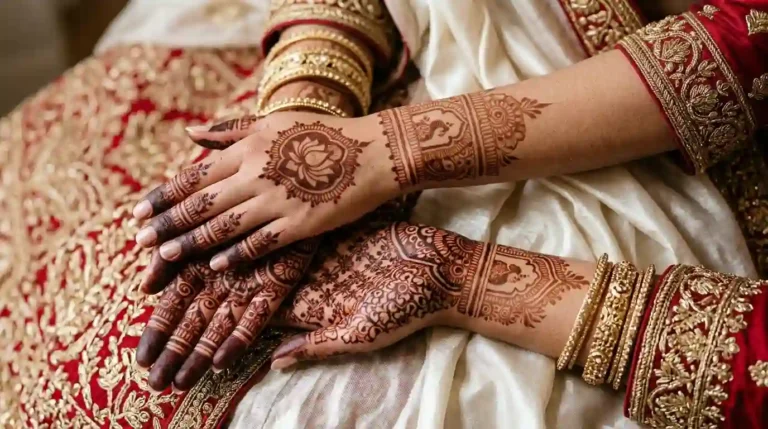
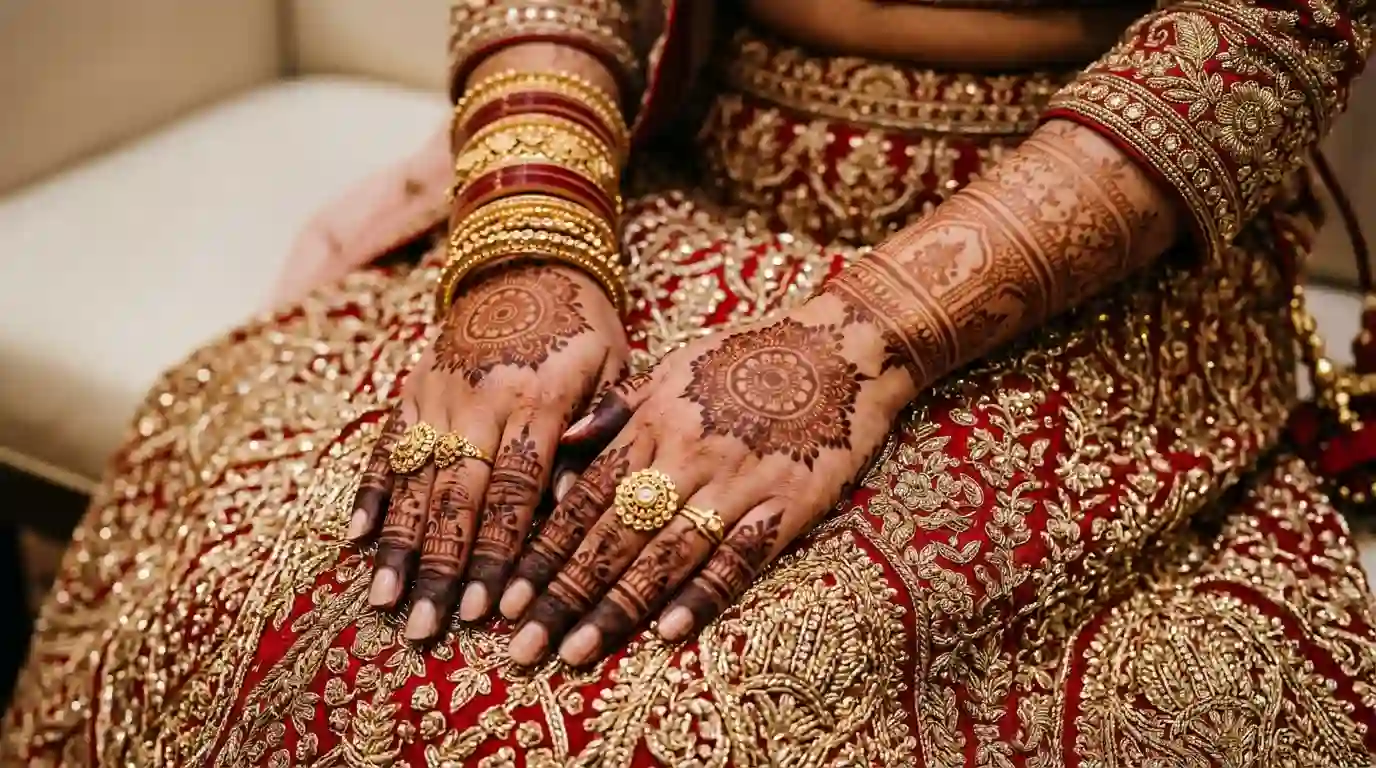
Dulhan mehndi often combines traditional floral patterns, paisleys, mandalas, and decorative wrist details.
The designs may extend across the palms, fingers, backs of the hands, and forearms.
A central lotus or mandala can serve as the main motif.
Smaller flowers, geometric borders, and ornamental vines fill the surrounding areas.
The final composition should feel cohesive across both hands.
Traditional bridal henna is particularly attractive with sarees, lehengas, and elaborate jewelry.
Heavy Full-Coverage Bridal Mehndi
Full-coverage bridal mehndi emphasizes extensive decoration and detailed pattern arrangements.
Large flowers may be surrounded by miniature paisleys, jaal backgrounds, and ornate finger patterns.
Some designs extend toward the elbows and include matching foot artwork.
For a balanced result, choose recognizable focal motifs before adding smaller details.
A narrow open border around major flowers can prevent the composition from appearing overcrowded.
Extensive designs require more application time, so discuss the desired coverage with your artist before booking.
Simple and Minimal Bridal Mehndi
Not every bride prefers elaborate full-hand henna.
Simple bridal designs may include a small central mandala, delicate finger details, or an elegant back-hand flower.
A minimalist floral wrist pattern can complement contemporary bridal jewelry.
This style works especially well with pastel clothing and understated accessories.
Even a small design can feel meaningful when it includes personal initials or a favorite motif.
The key is thoughtful placement rather than extensive decoration.
Mughal-Inspired and Royal Designs
Mughal-inspired mehndi incorporates ornamental arches, decorative floral borders, latticework, and architectural motifs.
Jharokha-inspired frames can create traditional royal compositions.
A bride may choose a large ornamental arch on the palm surrounded by paisleys and flowers.
For greater detail, small geometric patterns can fill the surrounding spaces.
Royal-inspired henna complements richly embroidered wedding clothing and traditional jewelry.
These designs are especially attractive when the architectural elements remain clearly visible within the overall composition.
Bride-and-Groom Portraits and Wedding Scenes
Bride-and-groom portraits add a personalized element to wedding henna.
One palm may feature the bride, while the other includes the groom.
The portraits can be surrounded by flowers, ornamental arches, and decorative borders.
Some elaborate designs incorporate wedding scenes, including a Baraat procession or a Jaimala ceremony.
These motifs require considerable artistic skill.
Choose an artist experienced in miniature portraits and detailed figurative henna.
Hidden Names, Initials, and Wedding Dates
Hidden initials and names are popular personalized bridal details.
A groom’s initial may be placed inside a paisley or floral center.
Wedding dates can be integrated into ornamental wrist bands.
The lettering should remain legible without interrupting the decorative composition.
For subtle personalization, use small letters that follow the surrounding curves.
For a more noticeable feature, place the initials inside a framed mandala or arch.
Storytelling and Personalized Designs
Storytelling mehndi incorporates meaningful symbols, memories, or details from a couple’s relationship.
A design might feature a favorite flower, shared hobby, significant date, or symbolic location.
These details can be combined with traditional paisleys and floral borders.
Brides seeking unique mehndi designs can develop a personalized theme around one or two important symbols.
A consistent design concept is generally more effective than including numerous unrelated details.
Matching Couple Mehndi
Matching couple mehndi can feature shared initials, dates, floral motifs, or symbolic patterns.
The designs do not have to be identical.
A bride may choose an elaborate floral composition containing a small symbol.
The groom may wear a simpler version of the same element on the wrist or palm.
This creates a meaningful connection while allowing each person to choose comfortable coverage.
Matching designs can also be incorporated into engagement celebrations.
Bridesmaid and Wedding-Party Mehndi
Bridesmaids and wedding guests often prefer medium-coverage designs.
A floral back-hand pattern, decorative wrist cuff, or miniature mandala can look elegant without extensive application time.
For a coordinated wedding party, select one shared motif and vary the surrounding details.
For example, each person might wear a small lotus flower with different finger decoration.
This creates a cohesive appearance while preserving individual preferences.
Coordinating Designs for Hands, Feet, and Outfits
Bridal mehndi becomes more cohesive when the hands, feet, and clothing share selected motifs.
A floral pattern from the lehenga embroidery may inspire the main palm design.
Matching flowers can then appear on the feet.
Jewelry can also influence the arrangement.
Traditional bangles may complement ornamental wrist borders, while elaborate rings can be framed by delicate back-hand patterns.
For additional styling inspiration, explore celebrity mehndi designs and identify elements that suit your own wedding theme.
Mehndi Designs for Different Occasions and Lifestyles
Mehndi can be adapted for celebrations, everyday styling, and different personal routines.
The best design depends on the event, available application time, and desired level of decoration.
Mehndi for Weddings and Engagements
Weddings and engagements often inspire floral mandalas, decorative finger patterns, and ornamental wrist borders.
Brides may prefer extensive artwork, while guests often choose partial-hand designs.
For engagement celebrations, consider leaving enough space around the ring finger to showcase jewelry.
A large back-hand flower with delicate surrounding details creates an attractive formal appearance.
Coordinate the design with your outfit rather than relying only on what is currently fashionable.
Mehndi for Eid and Other Festivals
Eid al-Fitr, Eid al-Adha, Diwali, Karwa Chauth, and Teej are popular occasions for decorative henna.
Arabic floral vines work beautifully for Eid, while circular mandalas and paisleys complement traditional festival clothing.
For family gatherings, a simple wrist band or back-hand vine may be enough.
In some communities, henna application is itself part of the celebration.
Design preferences differ across regions, religions, and families, so choose motifs that feel meaningful and appropriate to you.
Mehndi for Work, College, and Everyday Wear
Everyday mehndi can be subtle and practical.
A small wrist flower, finger vine, or minimalist back-hand motif provides decoration without extensive coverage.
College students and working women may prefer patterns that do not interfere with frequent hand use.
For teenagers looking for simple mehndi designs for girls, delicate flowers, small mandalas, and narrow finger bands are approachable options.
Age alone does not determine the right style.
For children, use particular caution with skin-applied products, especially those with unknown ingredients, and avoid black henna.
Quick Designs for Women with Limited Application Time
Busy schedules do not necessarily prevent you from enjoying mehndi.
A small flower, simple leafy branch, or dotted wrist pattern can often be applied relatively quickly by an experienced artist.
Women looking for easy mehndi designs for girls, moms, students, or beginners can start with a few recognizable motifs.
Explore small mehndi designs for ideas suited to limited coverage.
Remember that quick application does not mean instant stain development.
Natural henna still requires time for the paste to process and the color to deepen.
Mehndi Design Comparison Guide
Comparing designs by placement, coverage, complexity, and occasion makes it easier to choose the right pattern.
The following tables provide practical starting points.
Compare Styles by Coverage, Placement, and Occasion
| Mehndi Style | Typical Coverage | Popular Placement | Suitable Occasions |
| Traditional Indian | Medium to full | Palms, fingers, forearms | Weddings, Diwali, festivals |
| Pakistani | Partial to full | Front hands, back hands, wrists | Weddings, Eid, family events |
| Arabic | Often partial | Back hands, wrists, fingers | Eid, engagements, parties |
| Rajasthani | Often extensive | Full hands and forearms | Bridal ceremonies |
| Moroccan | Small to medium | Fingers, wrists, back hands | Contemporary celebrations |
| Indo-Arabic | Medium to full | Hands and forearms | Weddings, formal events |
| Minimalist | Small | Fingers, wrists, palms | Everyday wear, casual events |
| Geometric | Small to medium | Fingers, wrists, back hands | Parties, modern styling |
These are common tendencies rather than strict rules. Any style can be adapted to different placements and coverage levels.
Compare Designs by Detail Level and Application Time
| Design Type | Detail Level | Approximate Application Time |
| Small flower or finger motif | Beginner | 5–15 minutes |
| Simple wrist vine | Easy | 10–25 minutes |
| Floral back-hand design | Easy to intermediate | 20–45 minutes |
| Detailed palm mandala | Intermediate | 30–60 minutes |
| Both hands, medium coverage | Intermediate to advanced | 1–3 hours |
| Full-hand bridal mehndi | Advanced | 2–5 hours |
| Elbow-length bridal artwork | Advanced | 3–6+ hours |
| Detailed bridal hands and feet | Professional | 4–8+ hours |
These estimates refer to drawing time rather than the additional time needed for paste processing and stain development.
Actual duration depends on complexity, coverage, and artist experience.
How to Choose the Right Mehndi Design
Choosing the right pattern involves balancing appearance, occasion, placement, and practicality.
A design may look beautiful in a reference photograph but require adjustments to suit your hands and outfit.
Match the Design to Your Outfit and Jewellery
Begin by examining your clothing.
Floral embroidery may pair beautifully with roses, lotus flowers, and leafy vines.
Geometric borders can complement Moroccan-inspired patterns.
A heavily embroidered lehenga may suit traditional paisleys and ornamental wrist details.
Jewelry also matters.
If you plan to wear statement rings, consider a back-hand pattern that frames them.
For traditional bangles, a decorative wrist cuff can create a coordinated appearance.
Choose Coverage and Detail for Your Occasion
A wedding may justify elaborate full-hand henna, while a casual gathering may suit one small floral motif.
Consider how long you want the design to remain visible.
Natural henna typically fades gradually rather than disappearing immediately after the event.
For office celebrations or everyday styling, limited coverage may be more convenient.
For formal weddings, detailed forearm patterns can create a more dramatic appearance.
Your preferences matter more than any fixed rule about what a particular occasion requires.
Adapt Motif Size and Direction to Your Hands
Hand shape can influence the composition.
Large mandalas generally work best where sufficient surface area is available.
Narrow fingers are more suitable for miniature leaves, dots, and geometric bands.
A diagonal floral vine can visually emphasize the length of the hand.
For smaller hands, reducing the number of major motifs may create a cleaner appearance.
Instead of shrinking every detail, retain the most important flower or paisley and simplify supporting patterns.
Select Patterns for Fingers, Palms, and Wrists
Different placements benefit from different motifs.
Palms are well suited to circular mandalas and floral medallions.
Fingers accommodate narrow vines, dots, decorative rings, and small geometric patterns.
Wrists provide space for bracelet-inspired borders.
A complete hand design can connect these sections through fine leafy trails.
For a balanced appearance, keep motif sizes proportional to the placement and maintain consistent line thickness.
Compare Mehndi Artist Portfolios
Before booking, review photographs of the artist’s previous work.
Look for clear lines, balanced compositions, and consistent spacing.
If you want bridal portraits, select an artist with experience in figurative henna.
For fine floral artwork, examine close-up examples of petals, leaves, and latticework.
Ask about the products used, appointment duration, and design customization.
A strong portfolio should demonstrate the artist’s ability to reproduce the level of detail you want.
Share Reference Photos and Brief Your Artist
Reference images help communicate your preferences.
Choose photographs showing the placement, motif size, detail level, and amount of coverage you want.
Explain which elements are essential and which can be modified.
For example, you might want a large lotus on the palm but prefer simpler finger patterns.
Discuss initials, names, and other personal details before the application begins.
Clear communication helps the artist build a cohesive composition suited to your hands.
A Visual Glossary of Mehndi Patterns
Understanding common mehndi terminology makes it easier to compare reference designs and communicate with an artist.
Many traditional patterns use specific names for decorative shapes, backgrounds, and connecting elements.
Jaal and Mesh
Jaal refers to a net or lattice pattern created using crossing lines.
It commonly forms diamond or square-shaped spaces.
Artists may decorate these spaces with dots, small flowers, or miniature leaves.
Mesh patterns are particularly attractive on fingers and the backs of the hands.
They also work well as backgrounds surrounding larger floral motifs.
Bel and Vine
Bel generally refers to a decorative vine or flowing trail.
A bel may contain leaves, flowers, paisleys, and small ornamental details.
It can extend diagonally across the hand or follow the natural curve of the wrist.
Bel patterns are useful for connecting individual motifs.
They also create graceful movement within Arabic and Indo-Arabic compositions.
Tikki and Mandala
Tikki usually describes a central circular motif.
A simple tikki may consist of a circle surrounded by dots or petals.
A mandala typically contains more elaborate concentric patterns and symmetrical details.
Both work beautifully on the palm.
For a traditional appearance, combine a central circular design with decorative fingertips and a narrow ornamental border.
Fillers, Borders, and Connecting Motifs
Fillers are small decorative elements used between larger motifs.
They include dots, miniature leaves, spirals, and tiny flowers.
Borders define the edges of a pattern and separate decorative sections.
Connecting motifs, such as vines or dotted chains, create visual flow.
Together, these elements help transform separate flowers and paisleys into one complete henna design.
Beginner-Friendly Mehndi Design Walkthrough
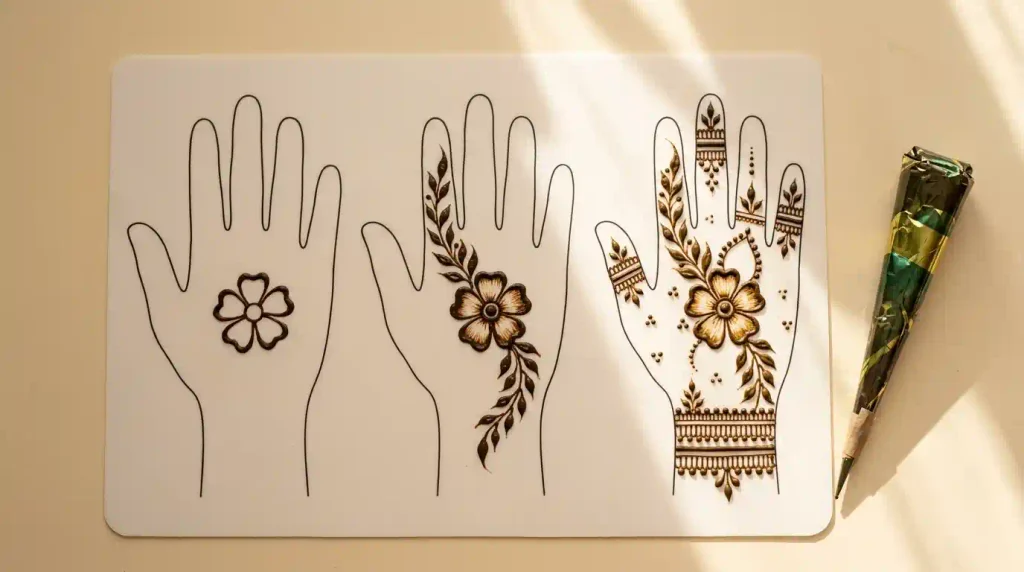
Beginners can create attractive mehndi patterns by combining a few simple shapes.
The easiest approach is to begin with one central motif and gradually add supporting details.
Practice on paper or a reusable practice surface before applying any product to skin.
Plan the Central Motif
Start by choosing a recognizable central element.
A five-petal flower, small mandala, or simple paisley is a good option.
Sketch the motif and decide where it should sit.
For a back-hand design, place the flower near the center.
For a palm design, a circular mandala may fit more naturally.
Avoid adding too many details during the initial stage.
The central motif should remain the most recognizable part of the composition.
Add Connecting Lines and Motifs
Once the main flower is complete, draw a curved vine extending toward the wrist or one finger.
Add small leaves along the stem.
Keep the leaves similar in size and maintain consistent spacing.
You can create a second short branch if the design needs more balance.
For a simple Arabic-inspired composition, use one large flower connected to two smaller buds.
This creates visual movement without requiring extensive coverage.
Finish with Fillers and Borders
Complete the design using dots, small curved lines, and miniature leaves.
Place fillers only where they improve the overall arrangement.
A narrow dotted border can emphasize the central flower.
For a wrist design, add one or two parallel lines to create a decorative band.
Avoid filling every open space.
A clean composition with consistent lines often looks more attractive than a complicated pattern with uneven details.
Mehndi Artist Booking and Session Planner
Planning your mehndi appointment helps ensure enough time for application, drying, and stain development.
The required schedule depends on design complexity, coverage, and whether multiple areas will be decorated.
Estimate Session Time by Design Coverage
Small motifs can often be completed relatively quickly by an experienced artist.
Full-hand and elbow-length bridal designs require considerably more time.
Ask for a duration estimate based on your exact reference photographs.
Portrait artwork and miniature latticework may take longer than broad floral patterns.
If several family members want henna during the same event, coordinate the schedule in advance.
Booking sufficient time helps prevent rushed application.
Plan Application for Multiple Areas
When decorating both hands and feet, discuss the order of application.
An artist may begin with the palms and backs of the hands before moving to the feet.
The sequence depends on the design, seating arrangements, and available assistance.
Consider how you will remain comfortable while the paste dries.
Avoid scheduling activities that require frequent hand movement immediately afterward.
For bridal events, plan separate time for detailed feet or forearm artwork when necessary.
Prepare for a Long Mehndi Appointment
Wear loose, comfortable clothing that allows access to the intended areas.
Eat beforehand and arrange water or refreshments.
Remove jewelry that may interfere with the application.
Keep reference photographs ready so the artist can begin without lengthy last-minute decisions.
Discuss the paste ingredients and any previous skin reactions before the appointment.
For inspiration while planning, browse our Mehndi Design Ideas collection and organize suitable patterns by placement and style.
Mehndi Application, Stain, and Aftercare
Proper application and aftercare influence the final appearance of natural henna.
However, product safety is more important than achieving an unusually dark stain.
Natural henna, cosmetic body paint, and products marketed as black henna may contain very different ingredients.
How Long Mehndi Takes to Apply and Dry
Application time depends on motif complexity and coverage.
A small floral pattern may require only a few minutes, while elaborate bridal artwork can take several hours.
Drying is a separate process.
The paste may become dry to the touch before the staining process is complete.
Different formulations require different handling and processing times.
Follow the specific product instructions rather than assuming every henna paste should remain on the skin for the same duration.
Avoid using excessive heat or irritating methods to accelerate drying.
When to Apply Mehndi Before an Event
Many women schedule traditional henna application approximately one or two days before an important celebration.
Natural henna stains may deepen during the first 24–48 hours after paste removal.
For weddings involving several events, consider when the stain should appear most prominent.
The timing varies with skin characteristics, paste formulation, and application conditions.
A professional artist can recommend an appropriate schedule for the product being used.
Allow enough time for both application and stain development.
How the Henna Stain Develops
Natural henna contains lawsone, which stains the outer layers of the skin.
After paste removal, the initial stain may appear orange or light brown.
It often develops into a deeper reddish-brown or brown shade during the following day or two.
The final color depends on several factors, including the formulation, skin, placement, and processing time.
Palms may develop deeper stains than some other areas.
A design with extensive coverage can look visually darker, but greater coverage does not automatically mean a stronger individual stain.
Aftercare for a Darker, Longer-Lasting Stain
Follow the manufacturer’s directions and your artist’s appropriate care instructions.
Remove the paste gently once the recommended processing time has passed.
Avoid aggressive scraping or rubbing.
Minimize unnecessary friction while the stain develops.
Traditional aftercare methods sometimes involve lemon-sugar mixtures, natural oils, or clove steam.
These methods are not essential, and acidic ingredients, fragrances, or hot steam can irritate or injure the skin.
Do not use harsh substances to force a darker stain.
Natural henna generally remains visible for approximately one to three weeks before gradually fading.
Natural Henna and Skin-Safety Considerations
Natural henna typically produces orange to reddish-brown or brown stains.
Products marketed as black henna may contain para-phenylenediamine, commonly called PPD.
PPD-containing temporary skin decorations can cause serious allergic reactions, including redness, blistering, and swelling.
The U.S. Food and Drug Administration’s information about henna and black henna explains these concerns and notes that henna is approved as a hair-color additive, not for direct skin decoration, in the United States.
Check product ingredients carefully and avoid suspicious products promising instant jet-black results.
A patch test cannot guarantee that a product is safe, and suspected PPD-containing black henna should not be tested on the skin.
Avoid application on irritated or broken skin.
For young children, pregnant women, or people with a history of skin allergies, extra caution is appropriate; a qualified healthcare professional can advise on individual risks.
If significant irritation, swelling, or blistering develops, stop using the product and seek medical advice.
Frequently Asked Questions About Mehndi Designs for Women
What Are the Most Popular Mehndi Designs for Women?
Popular styles include Indian, Pakistani, Arabic, floral, mandala, paisley, minimalist, and bridal mehndi designs.
Which Mehndi Designs Are Best for Beginners?
Small flowers, leafy vines, dots, simple mandalas, and decorative wrist bands are good starting points.
Which Mehndi Designs Are Best for the Front Hand?
Circular mandalas, tikki motifs, lotus flowers, and symmetrical paisley patterns work beautifully on palms.
Which Mehndi Designs Are Best for the Back Hand?
Arabic floral vines, bracelet patterns, decorative finger details, and small mandalas are attractive back-hand options.
Can Women Choose Simple Mehndi for Weddings?
Yes, minimalist bridal designs with delicate flowers, mandalas, or personalized details can be elegant wedding choices.
What Are the Best Mehndi Designs for College Girls?
Small floral motifs, narrow finger bands, minimalist vines, and simple wrist patterns suit understated everyday styling.
Are Mehndi Designs Suitable for Teenage Girls?
Simple flowers and small decorative motifs may appeal to teenagers, but skin-product safety and individual sensitivity remain important.
Can Young Children Wear Mehndi?
Henna skin application is not risk-free, especially for young children; avoid black henna and consult a healthcare professional when suitability is uncertain.
What Are Easy Mehndi Designs for Mothers?
Small wrist flowers, palm tikki designs, leafy vines, and simple Arabic patterns are convenient options.
Do Older Women Need Different Mehndi Designs?
No, women of any age can choose simple or elaborate patterns according to their preferences and comfort.
How Long Does Bridal Mehndi Take?
Bridal mehndi commonly takes several hours, depending on the coverage, complexity, and artist’s experience.
How Long Does Natural Mehndi Last?
Natural henna stains often remain visible for approximately one to three weeks, depending on placement and aftercare.
Can Mehndi Be Applied on Feet?
Yes, floral foot patterns, decorative ankle bands, and ornamental toe designs are common bridal and festive options.
What Is the Difference Between Arabic and Indian Mehndi?
Arabic mehndi often emphasizes bold flowing flowers, while traditional Indian mehndi frequently incorporates denser decorative details.
Can Mehndi Include Names and Wedding Dates?
Yes, names, initials, dates, and meaningful symbols can be incorporated into personalized bridal patterns.
Are White and Glitter Mehndi Designs Natural Henna?
No, white and glitter styles generally use cosmetic body-art products rather than traditional henna stains.
When Should I Apply Mehndi Before a Wedding?
Many brides schedule natural henna one or two days before the wedding to allow time for stain development.
How Can I Choose the Best Mehndi Artist?
Review the artist’s portfolio, check their experience with your preferred style, and discuss ingredients, coverage, timing, and pricing.
Final Thoughts
Mehndi designs for women offer countless ways to combine artistic creativity, cultural traditions, and personal expression. From graceful Arabic vines and simple floral patterns to elaborate Indian bridal mehndi, Pakistani tikki designs, geometric artwork, and decorative wrist motifs, there is a style for almost every occasion. Whether you prefer minimalist finger decoration or full-hand bridal coverage, the best design is one that complements your outfit, fits your schedule, and reflects your personal preferences.
Before choosing your next henna pattern, compare placements, save reference images, and discuss detailed artwork with an experienced artist. Always prioritize safe ingredients and appropriate aftercare.
Explore Mehndi Designs Studio for more creative patterns, and bookmark this guide to mehndi designs for women whenever you need inspiration for your next celebration.