
Beautiful Mehndi Designs: Aesthetic Patterns and Ideas
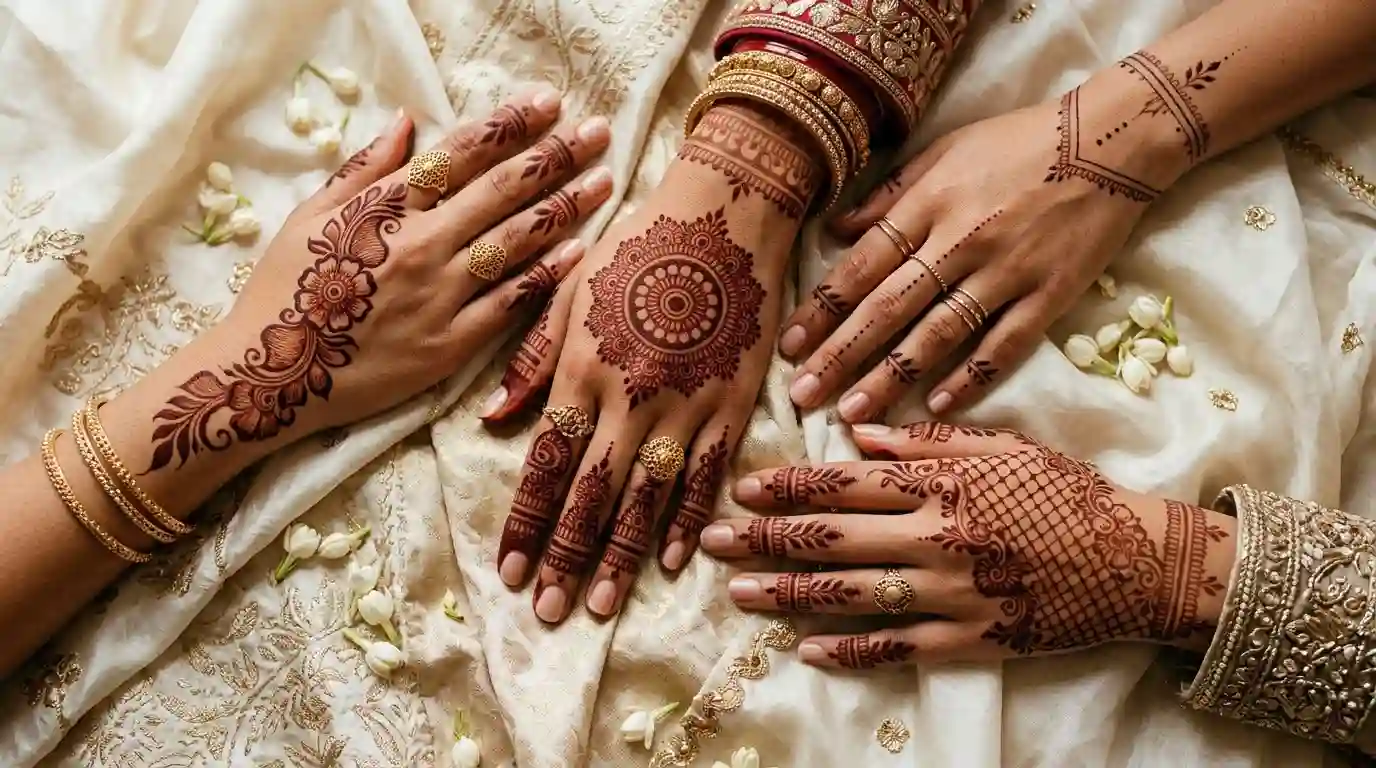
Beautiful mehndi designs bring together creativity, elegance, and cultural traditions, transforming ordinary hands and feet into eye-catching works of art. Whether you prefer delicate floral vines, graceful Arabic henna, traditional Indian bridal patterns, or modern minimalist designs, there are countless ways to express your personal style through mehndi. Some patterns feature intricate paisleys, peacock feathers, and symmetrical mandalas, while others use simple roses, butterflies, geometric shapes, and fine leafy trails for a softer aesthetic. From elaborate bridal mehndi and festive Eid designs to quick finger patterns and decorative ankle artwork, the right design can complement your outfit and enhance any celebration. You can also explore personalized henna featuring initials, meaningful symbols, and jewelry-inspired details. In this guide, you will discover attractive mehndi designs for different occasions, placements, age groups, and skill levels. You will also learn how to choose a design, understand popular artistic styles, care for your henna stain, and communicate your ideas to a professional mehndi artist.
Table of Contents
- Beautiful Mehndi Designs for Brides
- Mehndi Designs for Eid and Other Celebrations
- Mehndi Designs by Style
- Mehndi Style Comparisons
- Mehndi Designs by Motif
- Mehndi Designs by Placement
- Mehndi Designs by Application Time, Coverage, and Difficulty
- Mehndi Designs for Different Age Groups
- Mehndi Designs for Men
- How to Choose a Mehndi Design
- Henna Design Meanings and Cultural Significance
- Applying and Caring for Mehndi
- Finding and Learning from Mehndi Artists
- Mehndi Designs FAQs
- Final Thoughts
Beautiful Mehndi Designs for Brides
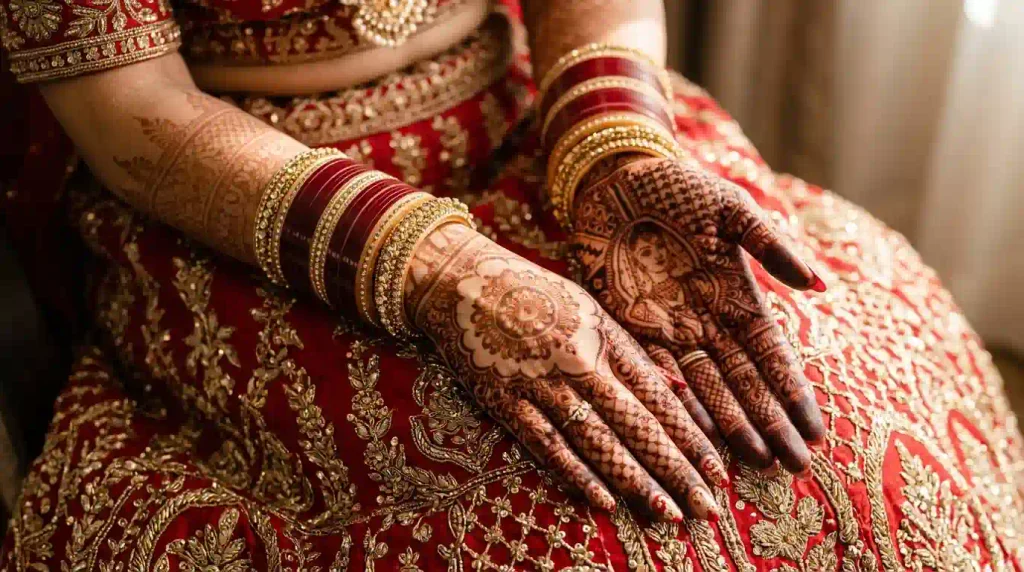
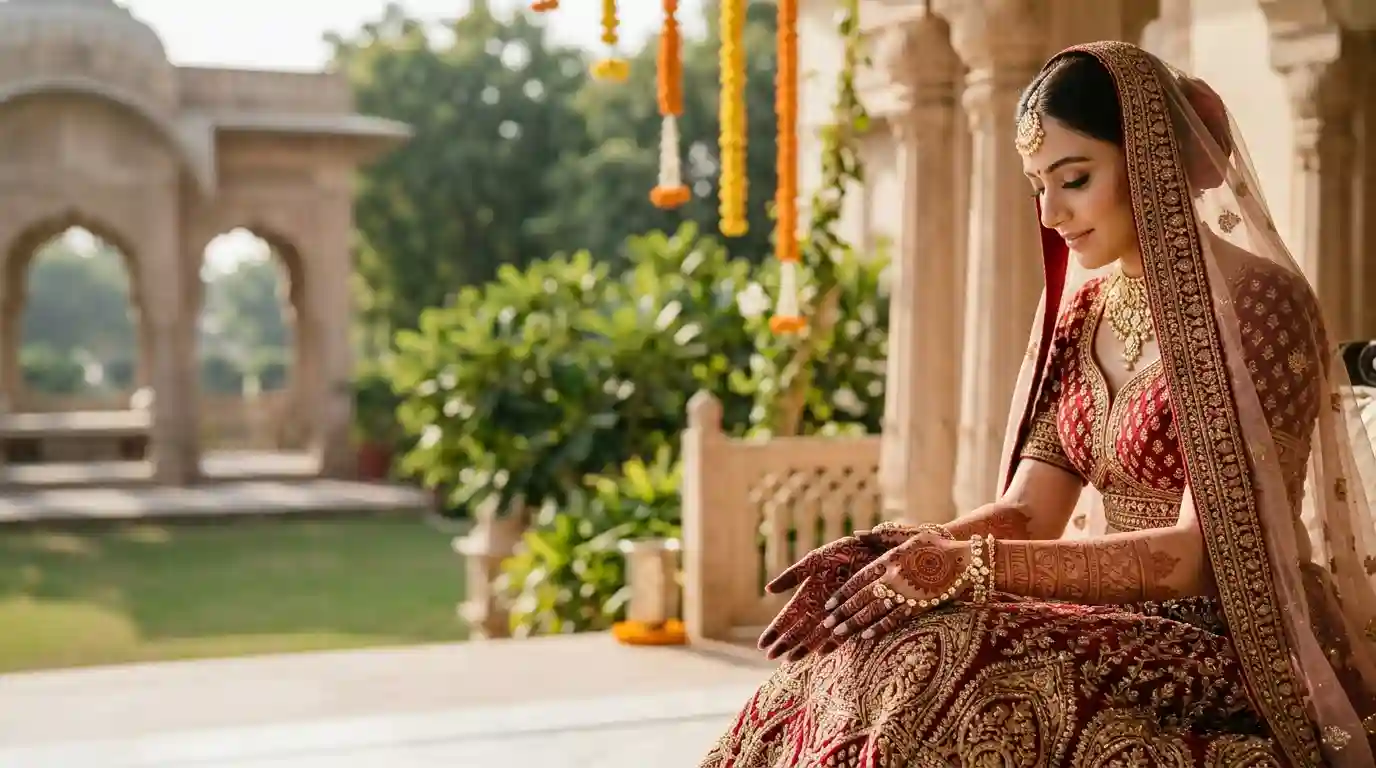
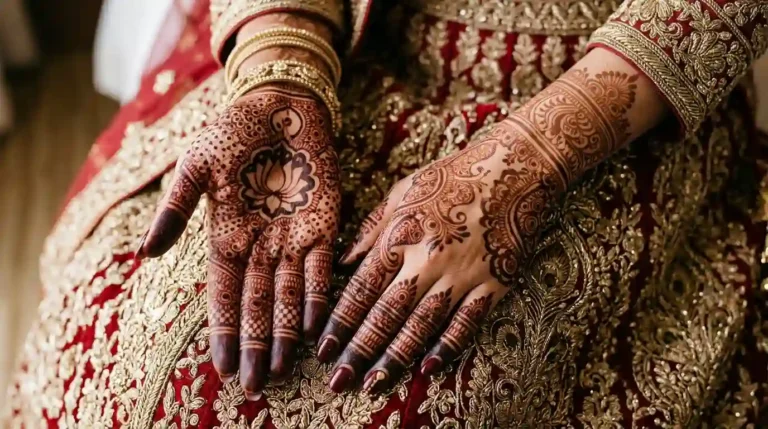
Bridal mehndi is one of the most admired forms of henna body art. It combines detailed patterns, traditional symbols, and personalized decorative elements to create a memorable wedding look.
The most beautiful bridal designs are not necessarily the ones with the greatest coverage. Balanced placement, carefully arranged motifs, and meaningful details can make even a relatively simple pattern feel special.
Bridal Mehndi Designs
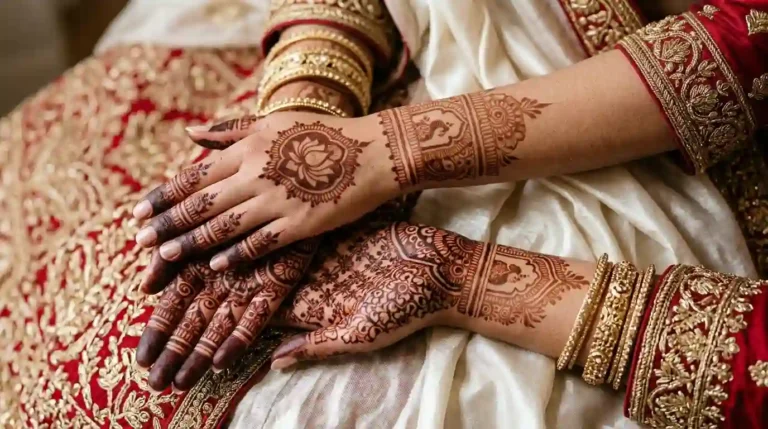
Bridal mehndi designs often combine flowers, paisleys, mandalas, leafy vines, and ornamental borders into one coordinated composition.
A traditional design may feature a central floral mandala surrounded by smaller paisleys and detailed finger patterns. Other brides prefer open spaces between large flowers, creating a softer contemporary appearance.
For a balanced bridal look, consider using one dominant motif on each palm and connecting the surrounding elements through delicate vines, dots, and decorative borders.
The result feels cohesive rather than crowded, especially when the artwork complements the bride’s jewelry and wedding outfit.
Full-Hand Bridal Mehndi Designs
Full-hand bridal mehndi extends across the palms, fingers, backs of the hands, wrists, and sometimes the forearms.
These designs may feature dense floral arrangements, intricate jaali patterns, elaborate paisleys, and decorative fingertip detailing.
Brides seeking a richly ornamented appearance can explore heavy mehndi designs for inspiration.
A particularly attractive approach is to combine bold central flowers with smaller background patterns. This creates visual depth and helps the major elements remain recognizable.
Full-hand mehndi generally requires more application time, so it is important to discuss the design’s complexity with the artist before scheduling an appointment.
Bridal Mehndi for the Legs and Feet
Beautiful bridal henna is not limited to the hands. The feet, ankles, and lower legs can also feature detailed decorative patterns.
Popular options include symmetrical floral arrangements on the upper feet, leafy ankle trails, paisleys near the toes, and intricate bands resembling traditional anklets.
For a coordinated appearance, repeat selected hand motifs in the foot designs.
For example, a large lotus motif on the palm can be complemented by smaller lotus flowers near the ankles.
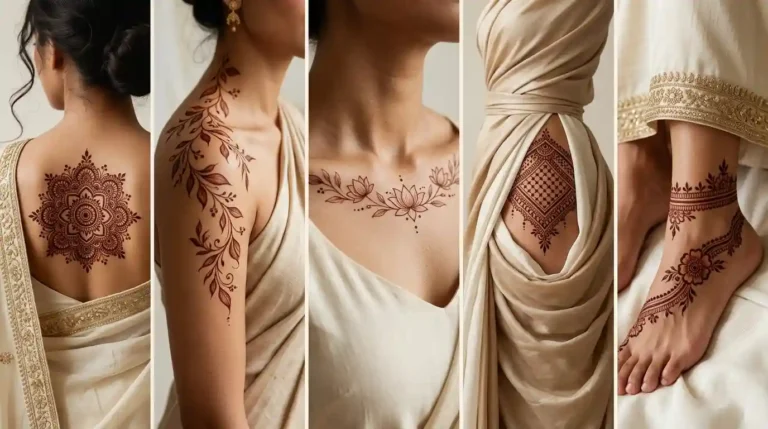
Brides interested in decorative placements beyond the hands can find inspiration in body mehndi designs.
Raja-Rani Mehndi Designs
Raja-Rani mehndi features decorative representations of a king and queen or traditional bride-and-groom figures.
These artistic portraits are frequently incorporated into elaborate wedding henna.
An artist may place one figure on each palm, surrounding the portraits with floral borders, paisleys, and delicate geometric patterns.
The two images can form a meaningful visual connection when the hands are positioned together.
Because portrait mehndi requires careful linework and proportion, it is best handled by an artist experienced in detailed figurative designs.
Coordinating Bride and Groom Mehndi
Coordinating bride and groom mehndi adds a personalized element to wedding celebrations.
Couples can choose matching initials, small floral motifs, geometric symbols, or meaningful dates.
The designs do not need to be identical. A bride might incorporate a hidden initial within a detailed mandala, while the groom chooses a simple matching symbol near the wrist.
Repeating one recognizable element creates a connection between the two designs while allowing each person to express their own preferences.
Matching Wedding Party Mehndi
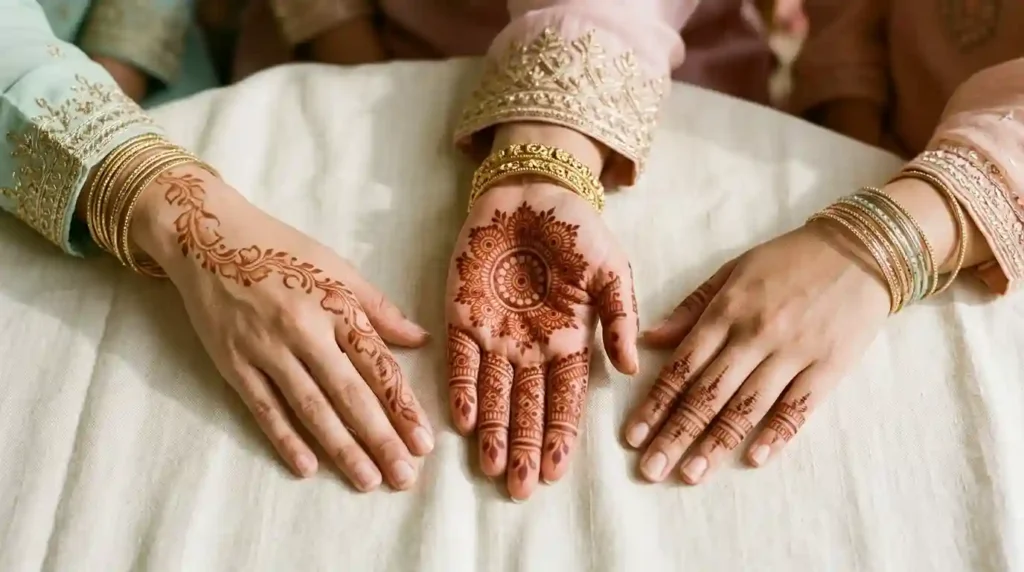
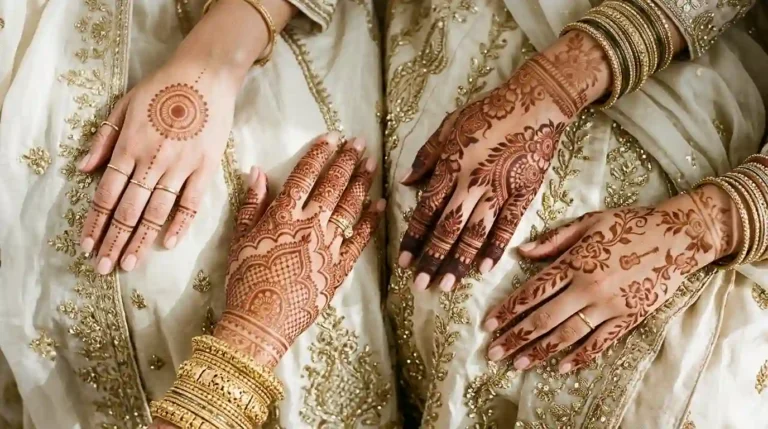
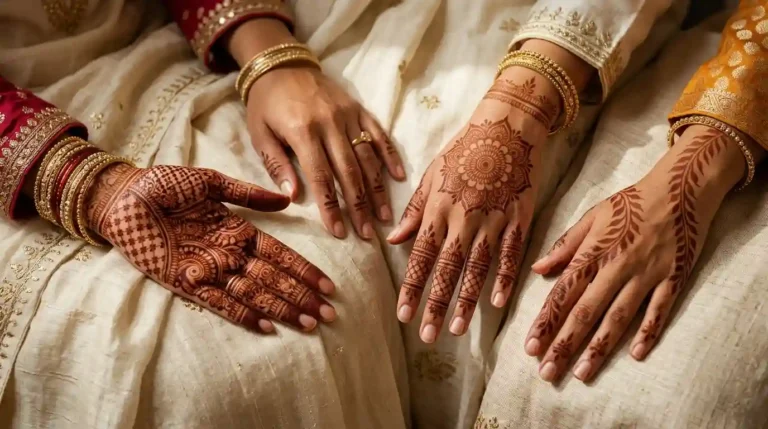
Matching wedding party mehndi is an attractive option for bridesmaids, sisters, cousins, and close friends.
A shared floral vine, bracelet-style pattern, or miniature mandala can provide a coordinated look for the celebration.
One approach is to use the same central flower for everyone while allowing different finger decorations.
This keeps the designs visually connected without making them completely identical.
Small and medium-coverage patterns are particularly practical when several guests want their henna applied during the same event.
Personalized Mehndi with Names and Initials
Personalized mehndi transforms decorative patterns into meaningful artwork.
Names, initials, important dates, and small symbolic details can be incorporated into floral arrangements or geometric borders.
A popular bridal idea is to hide the groom’s initials inside the pattern.
The letters may appear within a paisley, alongside a curved vine, or inside an ornamental wrist band.
The most aesthetic personalized designs integrate these details naturally so they become part of the overall composition rather than looking like separate additions.
Mehndi Designs Inspired by Wedding Attire
Wedding clothing offers valuable inspiration for beautiful henna patterns.
A bride wearing a heavily embroidered lehenga might choose paisley borders and detailed floral arrangements that reflect the fabric’s ornamentation.
A pastel saree with delicate botanical embroidery may pair beautifully with graceful rose vines and fine leafy patterns.
Geometric embroidery can inspire latticework or structured finger designs.
Some brides also examine celebrity mehndi designs to discover creative ways of coordinating henna with wedding attire.
The goal is to complement the clothing rather than reproduce every decorative detail.
Mehndi Designs for Eid and Other Celebrations
Festivals and family celebrations provide wonderful opportunities to experiment with attractive henna designs.
From simple finger motifs to elaborate palm patterns, festive mehndi can be adapted to suit the occasion, available application time, and personal preferences.
Mehndi Designs for Eid al-Fitr and Eid al-Adha
Eid celebrations are closely associated with decorative henna in many Muslim communities.
For Eid al-Fitr and Eid al-Adha, popular choices include Arabic floral trails, graceful back-hand designs, mandalas, leafy vines, and decorative fingertip patterns.
Chand Raat, the evening before Eid, is especially associated with henna application in parts of South Asia.
A flowing floral vine extending from the wrist toward the fingers can look elegant with traditional shalwar kameez, embroidered kurtis, or festive dresses.
Simple Mehndi Designs for Eid
Simple Eid mehndi is perfect for those who prefer light decoration without extensive hand coverage.
A small flower near the thumb, a wrist bracelet made of dots and leaves, or a delicate back-hand vine can create a polished festive look.
You can also choose small mehndi designs that focus on individual motifs and carefully arranged open spaces.
A simple circular tikki in the center of the palm is another timeless option.
Surrounding the central circle with miniature petals creates an attractive design without adding unnecessary complexity.
Quick Mehndi Designs for Eid
Quick mehndi designs are useful when preparing for celebrations with limited time.
A small leafy branch, dotted finger bands, or a single rose motif can often be applied in approximately 5–15 minutes by an experienced artist.
Actual application time depends on the artist’s speed and the complexity of the pattern.
Choose bold, recognizable shapes rather than complicated miniature details when time is limited.
Remember that even a quickly applied pattern needs additional time for the paste to dry and the stain to develop.
Full Mehndi Designs for Eid
Full Eid mehndi designs are ideal for those who enjoy elaborate festive decoration.
These patterns may combine central mandalas, fine net backgrounds, floral wrist borders, and fully decorated fingers.
A symmetrical composition covering both palms creates a traditional appearance.
For the backs of the hands, consider large floral motifs connected through leafy vines and decorative chains.
Keeping similar patterns on both hands can create a coordinated appearance, especially with matching bangles and festive jewelry.
Mehndi Designs for Weddings and Engagements
Wedding guests and engagement attendees often prefer elegant henna designs that complement formal clothing.
A large back-hand flower with a decorative wrist band can provide an attractive alternative to full bridal coverage.
Engagement mehndi may also feature delicate ring-inspired finger patterns or a small mandala near the center of the hand.
If your outfit has heavy embroidery, choose a design with enough negative space to balance the overall look.
Mehndi Designs for Festivals and Special Occasions
Diwali, Karwa Chauth, Teej, Raksha Bandhan, and other cultural celebrations inspire a wide range of decorative henna styles.
Lotus flowers, circular mandalas, paisleys, and elegant bracelet patterns are appealing choices for traditional gatherings.
For birthdays or casual celebrations, minimalist botanical motifs and small geometric patterns may feel more appropriate.
Explore different Mehndi Design Ideas to discover arrangements suitable for both traditional and contemporary events.
Mehndi Designs by Style
Henna artwork varies across cultures, artistic traditions, and contemporary design preferences.
Some styles emphasize flowing flowers and open spaces, while others feature intricate details, geometric patterns, or full-hand coverage.
Understanding these differences makes it easier to select a design that matches your aesthetic.
Traditional Indian Mehndi Designs
Traditional Indian mehndi often includes paisleys, mandalas, flowers, peacock motifs, and densely arranged ornamental patterns.
Fine linework and repeated decorative elements create richly detailed compositions.
A central palm mandala surrounded by miniature paisleys is a recognizable example.
Traditional Indian designs are especially associated with weddings, festivals, and family celebrations.
However, the style is flexible enough to accommodate both simple and elaborate arrangements.
Pakistani Mehndi Designs
Pakistani mehndi often combines floral motifs, leafy trails, paisleys, decorative net patterns, and intricate finger details.
The compositions may feature dense ornamentation or flowing designs with open spaces.
A floral back-hand arrangement connected to a detailed wrist cuff is an elegant example.
Pakistani bridal styles frequently blend traditional decorative elements with contemporary artistic choices, creating designs that feel both familiar and distinctive.
Arabic Mehndi Designs
Arabic mehndi is admired for its bold floral shapes, flowing vines, curved outlines, and relatively open compositions.
Rather than filling the entire hand, many Arabic designs follow a diagonal arrangement from the wrist toward the fingers.
A large rose surrounded by leaves and decorative dots creates a graceful focal point.
Arabic henna is especially suitable for Eid, weddings, engagements, and occasions where a striking but relatively light design is preferred.
Rajasthani Mehndi Designs
Rajasthani mehndi is often associated with elaborate traditional wedding artwork.
Common motifs include peacocks, paisleys, ornate floral patterns, decorative portraits, and intricate borders.
Bride-and-groom imagery may be incorporated into detailed bridal compositions.
These designs can feature extensive coverage and multiple layers of fine ornamentation.
The result is rich, expressive artwork that complements traditional wedding attire and jewelry.
Moroccan Mehndi Designs
Moroccan mehndi is commonly recognized for geometric arrangements involving diamonds, triangles, zigzags, angular shapes, and repeated line patterns.
These structured elements create a distinctive appearance compared with flowing floral designs.
A Moroccan-inspired finger design might use repeated diamonds connected through parallel lines.
For a balanced composition, combine a broad geometric wrist border with smaller matching patterns on the fingers.
Floral Arabic Bridal Mehndi
Floral Arabic bridal mehndi combines large decorative blossoms with extended leafy vines.
Roses, lotus-inspired flowers, and curved petal clusters may serve as the main motifs.
The spaces between flowers can be decorated with dots, fine shading, or miniature leaves.
For bridal applications, artists may increase the level of detail by adding ornamental borders and repeated floral elements across the wrists.
This produces a rich appearance while preserving the flowing character of Arabic artwork.
Geometric Arabic Mehndi
Geometric Arabic mehndi blends the graceful movement of Arabic patterns with diamonds, triangles, line bands, and repeated shapes.
A floral vine may be framed by angular borders, or geometric fingertip patterns may complement a curved wrist design.
The contrast between rounded and structured elements makes the composition visually interesting.
Consistent spacing helps prevent the artwork from appearing crowded.
Indo-Arabic Mehndi Designs
Indo-Arabic mehndi combines the prominent floral elements associated with Arabic henna and the fine detailing commonly found in Indian patterns.
Large flowers may be surrounded by miniature paisleys, delicate jaali backgrounds, and patterned fingertips.
This fusion is particularly attractive for brides who want an elaborate design without covering every available area.
The combination creates a balance between bold focal points and refined ornamentation.
Minimalist Mehndi Designs
Minimalist mehndi uses limited coverage, clean lines, and carefully positioned motifs.
A tiny flower near the wrist, one graceful finger vine, or a delicate circular pattern can create a beautiful effect.
Open skin is an important part of the composition.
Minimalist designs work particularly well with understated jewelry, contemporary clothing, and occasions where subtle decoration is preferred.
Modern and Trendy Mehndi Designs
Contemporary mehndi frequently incorporates abstract lines, botanical motifs, asymmetrical compositions, and unconventional placements.
One oversized flower on the back of the hand can be connected to fine decorative finger lines for a fashionable appearance.
Other modern mehndi designs incorporate geometric borders, negative space, and delicate tattoo-inspired artwork.
The defining idea is creative arrangement rather than adherence to one traditional pattern structure.
Simple Mehndi Designs
Simple mehndi designs are ideal for beginners and anyone who wants attractive artwork without extensive detailing.
Flowers, leaves, dots, spirals, and small paisleys can be combined into elegant arrangements.
For example, a leafy vine following the edge of the palm creates a graceful design using only a few basic shapes.
Simple patterns are also easy to modify by adding or removing decorative elements.
Intricate Mehndi Designs
Intricate henna involves detailed linework, miniature motifs, fine latticework, layered borders, and carefully connected decorative patterns.
These designs require precision because small inconsistencies can affect the overall appearance.
You can find inspiration in intricate mehndi designs that combine multiple motif families.
A successful detailed composition usually includes recognizable focal points surrounded by smaller supporting patterns.
Western-Style Mehndi Designs
Western-style mehndi often reflects contemporary temporary body-art aesthetics.
Common motifs include small botanical branches, celestial symbols, abstract shapes, geometric bands, and delicate wrist decoration.
These designs may use unusual placements such as the forearm, ankle, or side of the hand.
The result often feels closer to minimalist decorative body art while still using traditional henna-inspired techniques.
Mehndi Style Comparisons
Although different mehndi traditions share flowers, leaves, and ornamental patterns, their typical arrangements can vary.
Comparing the styles helps identify which elements suit your preferences.
Indian vs. Pakistani Mehndi Designs
Indian and Pakistani mehndi share many traditional motifs, including florals, paisleys, mandalas, and jaali patterns.
Some Indian bridal designs emphasize densely filled compositions, detailed figurative artwork, and elaborate symmetry.
Pakistani styles may combine intricate ornamentation with flowing floral arrangements and decorative wrist patterns.
However, these differences are broad tendencies rather than strict cultural rules. Regional traditions and individual artists create considerable overlap.
Arabic vs. Indo-Arabic Mehndi Designs
Arabic mehndi often uses bold floral outlines and sweeping vines, leaving visible open spaces between elements.
Indo-Arabic designs combine these larger motifs with smaller, more detailed patterns.
For example, an Arabic rose trail may remain relatively simple, while an Indo-Arabic version might include miniature paisleys and fine net backgrounds.
Choose Arabic artwork for a lighter flowing look or Indo-Arabic henna when you prefer additional detail.
Traditional vs. Modern Mehndi Designs
Traditional mehndi draws from established motifs such as paisleys, mandalas, peacocks, and decorative floral borders.
Modern mehndi often explores abstract layouts, negative space, minimalist symbols, and asymmetrical placement.
Both approaches can create beautiful results.
A traditional lotus motif, for example, can become part of a contemporary back-hand design when paired with clean lines and generous open spaces.
| Style | Typical Features | Suitable Preferences |
| Indian | Dense patterns, paisleys, mandalas | Traditional and bridal looks |
| Pakistani | Floral details, jaali, ornamental borders | Elegant festive and wedding designs |
| Arabic | Bold flowers, leafy vines, open spaces | Flowing and graceful artwork |
| Indo-Arabic | Bold motifs with intricate details | Balanced fusion designs |
| Moroccan | Diamonds, angles, geometric repetition | Structured modern patterns |
| Minimalist | Fine lines and limited coverage | Subtle everyday decoration |
Mehndi Designs by Motif
Individual motifs give henna artwork its visual personality.
A large flower can create a soft focal point, while repeated geometric shapes produce a structured appearance.
Combining motifs thoughtfully allows you to develop patterns that look original and balanced.
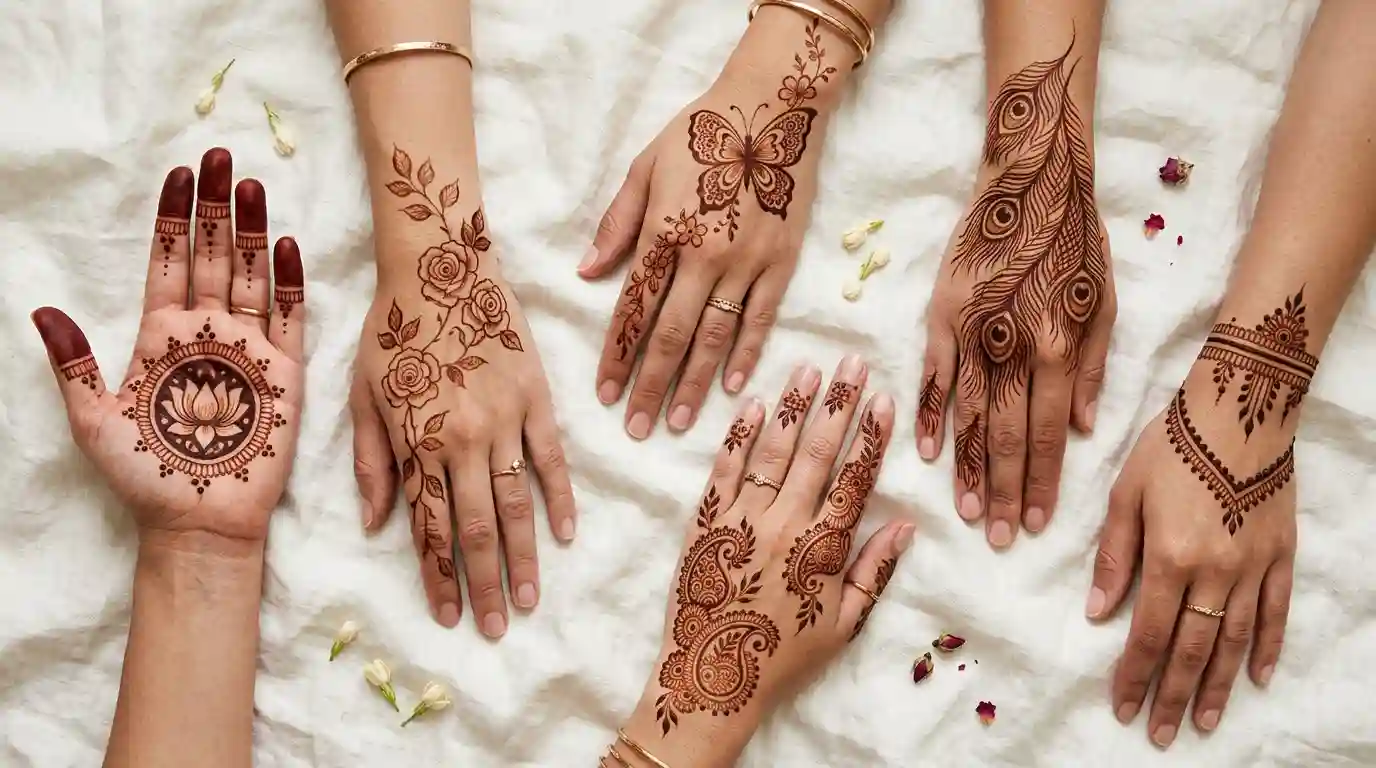
Floral Mehndi Designs
Floral mehndi is among the most versatile decorative styles.
Flowers can appear as large central motifs, miniature scattered blossoms, or connected arrangements along leafy vines.
A simple floral design might feature one five-petal flower with small dots and leaves.
More elaborate compositions combine several flower sizes with decorative borders and fine shading.
Floral patterns work beautifully on palms, wrists, fingers, and feet.
Rose Mehndi Designs
Rose-inspired mehndi uses curved petals arranged around a compact central spiral.
A large rose can become the main feature of an Arabic back-hand design.
For a delicate appearance, use a small rose with two buds and a slender leafy stem.
Roses also pair naturally with decorative dotted chains and ornamental wrist bands.
The soft curved shapes make them attractive for engagement ceremonies and formal occasions.
Lotus Mehndi Designs
Lotus motifs are especially beautiful in symmetrical palm designs.
An artist may draw several layers of petals around a circular center to create a floral mandala.
A simple lotus can also be positioned near the wrist or along the back of the hand.
Lotus-inspired patterns are popular in traditional Indian henna and can complement festive clothing.
For an elegant composition, surround the main lotus with small leaves and evenly spaced decorative dots.
Butterfly Mehndi Designs
Butterfly mehndi introduces a playful and delicate element to henna artwork.
A butterfly can feature symmetrical wings filled with flowers, dots, and small decorative lines.
It works well as a standalone design near the wrist or as part of a botanical arrangement.
For a more aesthetic appearance, combine a butterfly with a thin leafy branch and several tiny flowers.
The motif is particularly appealing for teens and people who enjoy decorative nature-inspired designs.
Peacock and Bird Mehndi Designs
Peacock motifs are traditional decorative elements in many elaborate South Asian henna compositions.
The curved body, flowing feathers, and ornamental details create a recognizable focal point.
Peacock feathers can also be used individually as smaller decorative elements.
Other bird-inspired motifs may include simple silhouettes or delicate feather arrangements.
These designs are attractive when combined with paisleys, floral borders, and traditional bridal artwork.
Paisley Mehndi Designs
Paisley motifs feature curved teardrop shapes that can be filled with smaller decorative elements.
Artists often use spirals, leaves, petals, and dots inside the main paisley outline.
Large paisleys look especially attractive on the palm, while miniature versions can decorate fingers and wrists.
Repeating paisleys in different sizes creates movement and variety.
The motif is suitable for both traditional and fusion henna compositions.
Mandala Mehndi Designs
Mandala mehndi features circular patterns arranged around a central point.
A typical design may begin with a small circle and expand outward through petals, scallops, dots, and decorative rings.
These beautiful circle mehndi designs create a naturally symmetrical appearance.
A simple central circle with surrounding petals is often called a tikki-style design in South Asian henna contexts.
More elaborate mandalas may incorporate lotus-like petals and multiple fine decorative borders.
Raja-Rani and Bridal Portrait Mehndi
Bridal portrait motifs transform henna into personalized figurative artwork.
A Raja-Rani composition may place traditional figures on opposite palms.
The portraits can be framed with flowers, paisleys, decorative arches, and ornamental borders.
These patterns are particularly effective for elaborate wedding henna because they provide a meaningful focal point.
A skilled artist should plan the proportions carefully to keep the figures recognizable.
Geometric Mehndi Patterns
Geometric designs use diamonds, triangles, parallel lines, zigzags, and repeated shapes.
These patterns can create a contemporary look when combined with clean negative space.
For a structured back-hand design, use a central diamond surrounded by smaller angular motifs.
Geometric borders also work well on fingers and wrists.
Consistent spacing and line thickness are essential for a neat result.
Leaf and Vine Mehndi Designs
Leafy vines create graceful movement across the skin.
A curved branch extending from the wrist toward the fingers can form the foundation of a beautiful back-hand pattern.
Small pointed leaves may alternate along the stem, while tiny dots fill selected spaces.
You can also create bell-shaped floral clusters along the vine for a softer botanical appearance.
This style is attractive because it adapts naturally to different hand shapes and placements.
Bracelet, Bangle, and Jewelry-Inspired Designs
Jewelry-inspired mehndi imitates decorative accessories through curved bands, hanging chains, bead patterns, and ornamental borders.
A bangle design may wrap around the wrist with repeated flowers and scalloped lines.
Finger-ring motifs can be connected to wrist decoration through dotted chains, creating the appearance of hand jewelry.
These patterns complement festive bangles, rings, and embroidered sleeves.
Anklet and Payal Mehndi Designs
Anklet-inspired mehndi recreates the appearance of decorative payal jewelry around the ankles.
The pattern may feature fine bands, hanging bead shapes, miniature flowers, or repeated geometric borders.
A small floral trail extending toward the toes can complete the design.
This style works especially well with sandals and traditional footwear that leave the upper foot visible.
For bridal events, matching wrist and ankle motifs can create a coordinated appearance.
Hand-Glove Mehndi Designs
Hand-glove mehndi creates the appearance of decorative lace covering the back of the hand and fingers.
Fine net patterns, floral borders, and delicate ornamental details are often connected into one composition.
The design may extend from the wrist toward the fingertips, resembling an elegant fabric glove.
Leaving small areas of bare skin helps the decorative details remain visible.
Glove-inspired patterns are particularly attractive for formal celebrations and elaborate bridal looks.
Henna Designs with Symbols and Personal Details
Symbols can make mehndi artwork more personal.
Initials, dates, small hearts, stars, meaningful flowers, and customized geometric motifs can be incorporated into larger designs.
Some people choose symbolic artwork based on personal memories, while others simply appreciate the appearance.
For a distinctive result, explore unique mehndi designs that combine familiar motifs in creative arrangements.
Mehndi Designs by Placement
The placement of a henna pattern strongly influences its final appearance.
A design that looks attractive on the palm may need adjustments when placed on the back of the hand or along the ankle.
Choosing the right placement helps the artwork follow the natural shape of the body.
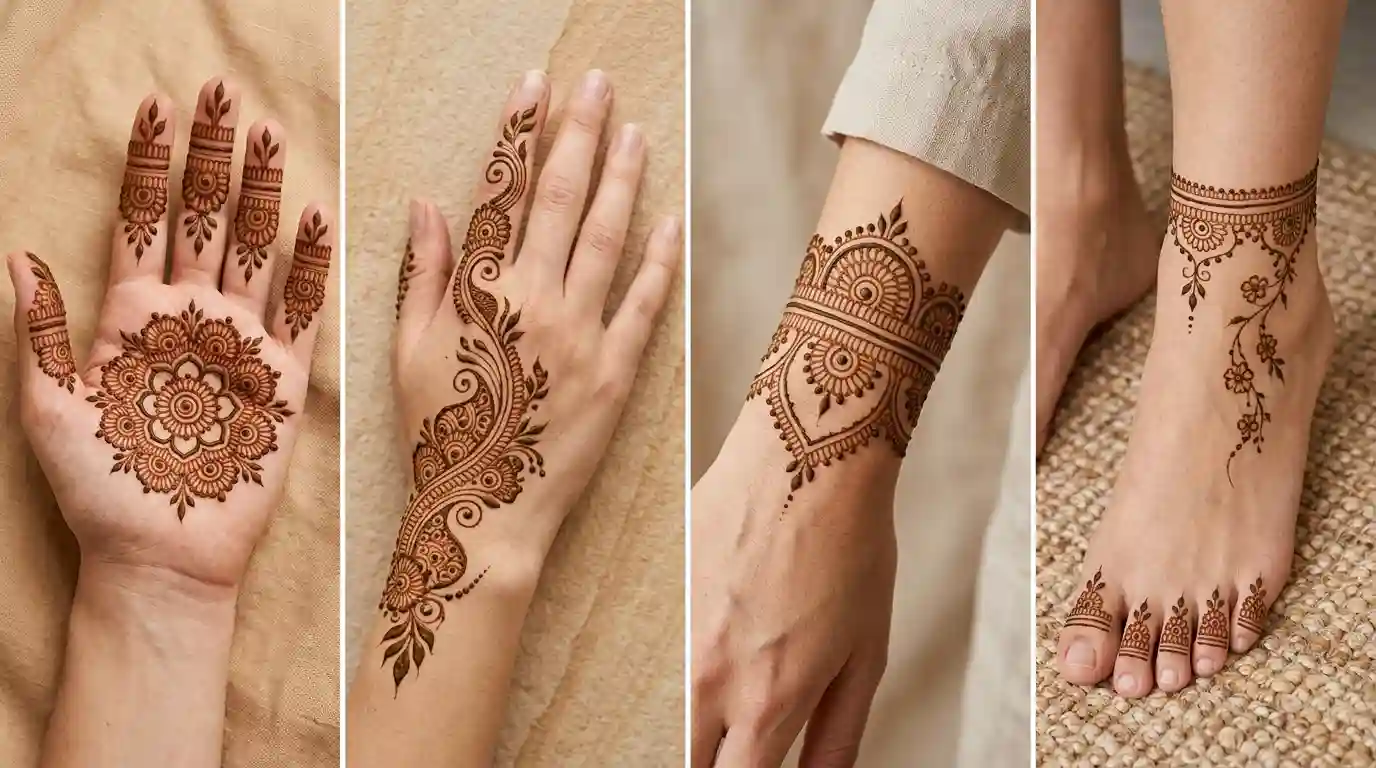
Palm Mehndi Designs
Palm mehndi commonly features circular mandalas, tikki designs, floral arrangements, and symmetrical decorative patterns.
A large central flower surrounded by smaller petals creates a balanced composition.
For a minimalist appearance, leave most of the palm open and decorate only the center.
For a traditional look, extend the central motif toward the fingers through paisley borders and leafy vines.
The palm is also a popular placement because natural henna can develop a relatively strong stain there.
Front-Hand Mehndi Designs
Front-hand mehndi covers the palm and inner fingers.
Popular arrangements include central mandalas, diagonal floral vines, paisley clusters, and ornamental fingertip patterns.
Beautiful mehndi designs for the left hand and right hand can be identical or complementary.
Mirrored patterns create symmetry, while different but coordinated motifs add artistic variety.
For example, one palm may feature a lotus mandala and the other a matching floral paisley arrangement.
Back-Hand Mehndi Designs
Back-hand mehndi often emphasizes graceful movement from the wrist toward the fingers.
Arabic floral vines, bracelet patterns, small mandalas, and decorative chains are popular choices.
A diagonal composition can visually lengthen the hand.
For a balanced design, place one large flower near the center and connect it to selected fingers using fine lines and leaves.
Open spaces help maintain a light, elegant appearance.
Finger and Fingertip Mehndi Designs
Finger mehndi uses small decorative elements suited to narrow spaces.
Popular patterns include rings, tiny flowers, leaf trails, dots, net details, and shaded fingertips.
Aesthetic finger designs may decorate every finger or focus on only two or three.
Repeating one element, such as a leaf or miniature diamond, creates a cohesive appearance.
Fingers-only patterns are particularly appealing for casual celebrations and minimalist styling.
Wrist and Forearm Mehndi Designs
Wrist and forearm placements offer more room for decorative bands, long vines, and elaborate floral compositions.
A wrist cuff can resemble a bracelet, while a forearm design may extend upward through repeating ornamental motifs.
For formal occasions, consider combining a detailed wrist border with a lighter floral trail.
This creates a natural transition between dense and open areas.
Forearm designs also provide space for personalized symbols or larger botanical patterns.
Leg, Foot, and Ankle Mehndi Designs
Foot and ankle henna can feature floral arrangements, decorative bands, paisley trails, and geometric borders.
A diagonal vine extending from the ankle toward the toes creates a graceful appearance.
Bridal designs may cover a larger portion of the upper foot, while casual patterns can focus on a small ankle motif.
Choose a placement that will remain visible with your footwear and avoid excessive rubbing while the stain develops.
Mehndi Designs by Application Time, Coverage, and Difficulty
The application time and complexity of a pattern matter when choosing henna for a particular event.
A small decorative flower requires less work than a dense bridal composition.
Understanding the differences helps you select a realistic design for your schedule.
Designs That Take 15 Minutes or Less
Quick henna designs generally use a small number of bold, recognizable motifs.
Examples include a miniature flower, a simple wrist vine, fingertip dots, or a small circular tikki.
An experienced artist may complete these designs in 15 minutes or less.
Beginners may require considerably more practice and application time.
Remember that a short application does not mean the stain develops instantly. Natural henna still requires appropriate processing and aftercare.
Designs for Partial-Hand Coverage
Partial-hand mehndi leaves substantial areas of the skin uncovered.
A diagonal Arabic vine, decorative finger bands, or a wrist-to-middle-finger trail are popular options.
These patterns create an elegant appearance while requiring less application time than complete hand coverage.
Partial designs are particularly attractive when you want to highlight jewelry or maintain a minimalist aesthetic.
Designs for Full-Hand Coverage
Full-hand mehndi includes detailed artwork across the palms, fingers, backs of the hands, and sometimes forearms.
These compositions may combine flowers, mandalas, paisleys, and dense net patterns.
A professional artist can arrange the motifs so the design remains balanced despite the extensive coverage.
Full-hand patterns are especially suitable for brides and people who enjoy richly decorated traditional henna.
Mehndi Designs by Application Difficulty
Mehndi designs can be grouped into general skill levels.
| Difficulty | Common Patterns | Approximate Application Time |
| Beginner | Dots, small flowers, simple leaves | 5–20 minutes |
| Easy | Short vines, finger bands, small mandalas | 15–30 minutes |
| Intermediate | Floral trails, wrist cuffs, geometric patterns | 30–60 minutes |
| Advanced | Detailed palms, intricate jaali and paisleys | 1–3 hours |
| Professional bridal | Extensive full-hand and forearm coverage | 2–6+ hours |
These are broad estimates. Actual application time varies with the artist, design size, detail level, and whether both hands or additional placements are included.
Mehndi Designs for Different Age Groups
Beautiful mehndi can be adapted to suit different ages, preferences, and occasions.
The most important factors are comfort, personal style, and the suitability of the product being applied.
Mehndi Designs for Children
Children’s mehndi is usually most practical when it features small, recognizable motifs.
Tiny flowers, butterflies, stars, and simple hearts are common design ideas.
A small flower near the wrist or a short leafy vine may be easier to accommodate than a detailed full-hand pattern.
Skin safety deserves particular attention. Avoid products with unclear ingredients, especially black henna, and do not apply henna to irritated skin. For very young children or anyone with sensitive skin, skipping skin-applied henna may be the better choice.
Mehndi Designs for Teens
Teens often enjoy expressive designs featuring butterflies, miniature roses, geometric finger bands, and delicate botanical motifs.
A small mandala on the back of the hand can create a fashionable appearance.
Asymmetrical designs are another option.
For example, one finger may feature a leafy trail while another carries a decorative dotted band.
These patterns can be adapted to match school celebrations, family occasions, and personal preferences.
Mehndi Designs for Older Women
Elegant mehndi styles can appeal to older women who prefer traditional motifs, delicate decoration, or moderate coverage.
Floral wrist bands, paisley borders, circular palm designs, and graceful finger patterns are attractive options.
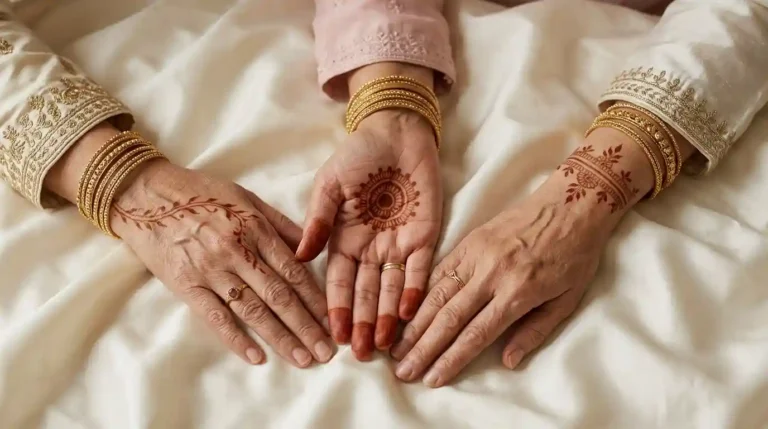
Those interested in mehndi designs for older women can explore both subtle and elaborate approaches.
There is no need to limit design complexity based on age. The best pattern is one that reflects the individual’s preferences and feels comfortable to wear.
Mehndi Designs for Men
Mehndi is also worn by men in various cultural and celebratory settings.
Designs may range from small symbolic patterns to traditional wedding henna and geometric body art.
Simple Hand and Wrist Mehndi Designs
Simple henna for men can include small wrist bands, initials, minimal geometric shapes, or decorative palm motifs.
A single diamond-shaped design surrounded by fine lines creates a neat, structured appearance.
Small personalized symbols may also be used for wedding celebrations.
For those who prefer limited decoration, a simple wrist motif provides a subtle option without extensive coverage.
Traditional and Geometric Mehndi Designs for Men
Traditional designs for men can incorporate paisleys, flowers, and cultural motifs according to personal preference.
Geometric artwork may feature triangles, repeated diamonds, parallel bands, and angular borders.
A bold wrist design combined with minimal finger decoration can create a balanced composition.
Some grooms also choose matching symbols or initials that coordinate with their partner’s bridal mehndi.
How to Choose a Mehndi Design
Choosing the right design involves more than selecting an attractive reference image.
Consider the occasion, your outfit, the amount of coverage you want, and the style that reflects your personality.
Choose a Design for Your Occasion and Personal Style
A wedding may call for elaborate floral patterns, detailed mandalas, or traditional paisley compositions.
For Eid, delicate Arabic vines and decorative finger designs are appealing choices.
For casual gatherings, minimalist motifs may feel more appropriate.
If you are comparing different mehndi designs for women, consider how each style fits the wearer’s preferences rather than following trends alone.
A design becomes more memorable when it feels personal.
Match Mehndi with Your Outfit
Your outfit can help guide the motif selection and overall design density.
Floral embroidery pairs naturally with botanical henna, while geometric borders can complement contemporary patterns.
A heavily ornamented saree or lehenga may look attractive with traditional wrist and finger designs.
For a minimalist dress, fine lines and open spaces can create an elegant balance.
Natural henna develops warm orange, reddish-brown, or brown shades, so consider the final stain when planning the overall appearance.
Customize a Design with a Mehndi Artist
A professional mehndi artist can adapt a design to suit your hand size, preferred coverage, and personal taste.
Bring several reference images showing the motifs and placements you like.
Explain whether you want bold outlines, fine detailing, symmetrical patterns, or open spaces.
An artist can combine selected elements into one cohesive composition.
Customization is especially useful when you want an original design or need to coordinate mehndi with wedding jewelry and clothing.
Henna Design Meanings and Cultural Significance
Henna has a long history of decorative use in different cultures.
Although many motifs are chosen mainly for their appearance, some are also associated with symbolic meanings and traditional celebrations.
Interpretations can vary across communities and individuals.
Common Mehndi Motifs and Their Meanings
Floral motifs are often associated with beauty, growth, and celebration.
Lotus flowers may represent purity or spiritual significance in certain cultural contexts.
Peacock imagery can symbolize beauty, elegance, and ornamental richness.
Paisleys, vines, and mandalas are frequently appreciated for their traditional or decorative value.
However, there is no universal meaning assigned to every henna pattern.
A design may carry personal significance for one person while serving a purely aesthetic purpose for another.
Mehndi in Wedding and Festival Traditions
Mehndi is an important decorative tradition in many South Asian weddings and cultural celebrations.
Wedding mehndi ceremonies often bring relatives and friends together for music, conversation, and the application of henna.
In some communities, bridal mehndi is associated with happiness, blessings, and new beginnings.
Henna is also used for celebrations such as Eid, Diwali, and Karwa Chauth.
These traditions vary by region, family, and individual preference, making mehndi both a shared cultural practice and a personal form of artistic expression.
Applying and Caring for Mehndi
Understanding how henna works can help you achieve a more attractive result and avoid common application problems.
The quality of the product, skin preparation, drying time, and aftercare all influence the appearance of the finished stain.
What Is Henna?
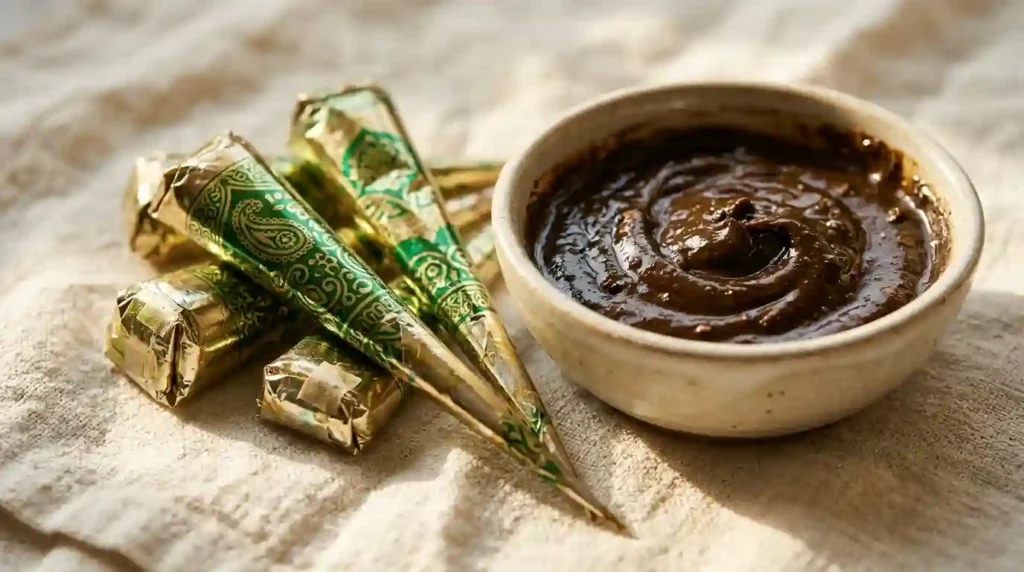
Henna is a plant-derived coloring material made from the leaves of Lawsonia inermis.
The leaves contain lawsone, a naturally occurring dye molecule responsible for henna’s characteristic staining properties.
Henna powder can be mixed into a paste and used for traditional decorative applications.
Natural henna typically develops orange to reddish-brown or brown stains rather than an instant jet-black color.
The shade varies depending on the formulation, skin characteristics, application conditions, and time allowed for the stain to develop.
How Long Does Henna Last?
A natural henna design commonly remains visible for approximately one to three weeks.
The duration depends on several factors, including skin turnover, placement, washing, friction, and the original stain intensity.
Henna on the palms may initially appear deeper because of the characteristics of the skin in that area.
Frequent handwashing and contact with cleaning products can contribute to faster fading.
The stain gradually disappears as the outer skin layers naturally shed.
How to Prepare for Mehndi Application
Good preparation begins with clean, dry skin.
Avoid applying heavy lotions or oils immediately before the appointment unless your artist specifically recommends them.
These products may interfere with paste contact.
If you usually exfoliate, do so gently in advance rather than aggressively scrubbing shortly before application.
Choose comfortable clothing that provides easy access to the area being decorated.
For bridal appointments, remove jewelry that could interfere with the artist’s work and discuss any known skin sensitivities before starting.
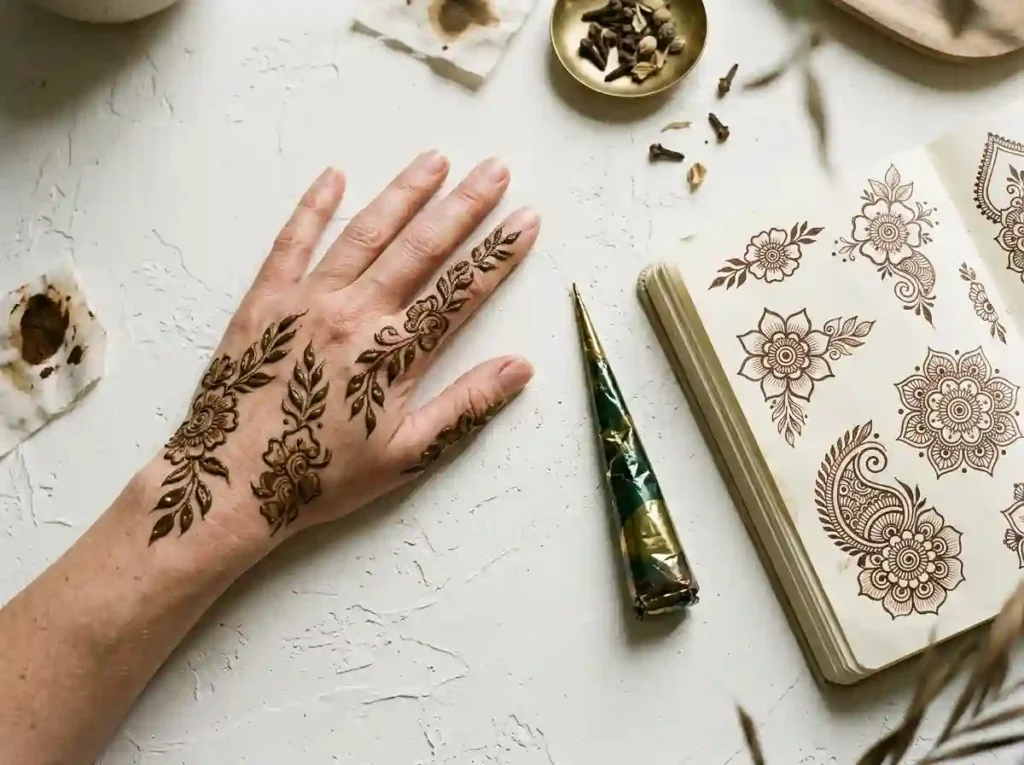
How to Apply Mehndi at Home
Beginners should begin with a small design and use a suitable henna cone from a transparent, reputable source.
First, practice drawing straight lines, dots, curves, and simple petals on paper or a reusable practice sheet.
When ready, follow this basic process:
- Clean and thoroughly dry the intended area.
- Choose a small reference design with clear outlines.
- Apply the paste using gentle, consistent pressure on the cone.
- Begin with the central flower or main motif.
- Add leaves, curved lines, and decorative dots.
- Allow the paste to dry and follow the product-specific instructions for removal and stain development.
A tiny flower with a short leafy vine is a good starting point.
Avoid attempting a complex full-hand design before developing control over line thickness and spacing.
Henna Aftercare Tips
Appropriate aftercare can help preserve the appearance of your henna stain.
Allow the paste to remain undisturbed for the period recommended by the product instructions and your artist.
Once the paste is ready to be removed, gently loosen it rather than aggressively rubbing the skin.
Avoid excessive friction and prolonged water exposure immediately afterward when practical.
Some traditional aftercare routines use lemon juice, sugar mixtures, or natural oils. However, these methods are not essential, and acidic or fragranced ingredients may irritate sensitive skin.
Choose gentle care and prioritize your skin’s comfort.
How to Remove Henna
Natural henna cannot usually be removed instantly because the dye stains the outer layers of skin.
The safest approach is generally to allow the design to fade naturally.
Regular gentle washing can help as the skin renews.
Avoid harsh scrubbing, strong bleaching products, or irritating chemical treatments intended to force the stain off.
If you want the design to disappear before an event, plan for gradual fading rather than relying on aggressive removal methods.
Henna Safety and Possible Skin Reactions
Henna products are not all formulated the same way.
Some products marketed as black henna contain para-phenylenediamine, commonly called PPD, which can cause serious allergic reactions, blistering, and skin irritation.
Natural henna does not ordinarily create an instant jet-black stain.
Products advertised as colored mehndi designs may use cosmetic body paints or other decorative materials rather than traditional henna paste. Their safety depends on the specific ingredients and intended use.
The U.S. Food and Drug Administration’s information on henna and black henna explains the risks associated with certain temporary skin-coloring products, including PPD-containing black henna. In the United States, henna is not approved by the FDA as a color additive for direct skin application.
Always ask what ingredients are being applied to your skin. A patch test cannot guarantee that an unknown or unsafe product is harmless, and it should never be used to justify applying suspected PPD-containing black henna.
If you experience burning, swelling, blistering, or a significant rash, stop using the product and seek medical advice. A dermatologist can help assess possible allergic reactions and provide appropriate care.
Finding and Learning from Mehndi Artists
Beautiful henna requires a combination of artistic planning, consistent linework, and suitable application techniques.
Whether you want to book a professional or improve your own skills, reference images and careful practice are valuable tools.
How to Choose a Mehndi Artist
Begin by reviewing the artist’s portfolio.
Look for clear photographs showing finished patterns, consistent line thickness, balanced spacing, and neatly arranged details.
If you want bridal portraits or extensive jaali artwork, choose someone who has demonstrated experience with those techniques.
Ask about appointment duration, design customization, ingredients, hygiene practices, and pricing.
An experienced artist should be able to explain how a reference design can be adapted to your preferred coverage and placement.
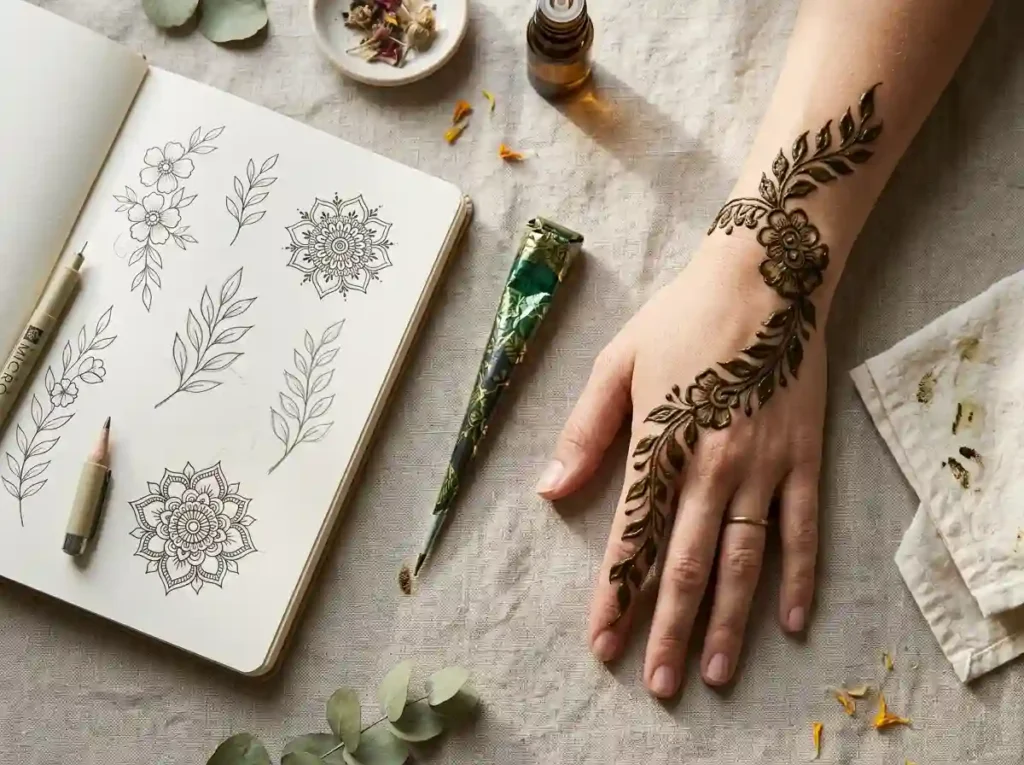
Learning to Draw Mehndi Designs
Beginners can learn mehndi by practicing a few fundamental shapes.
Start with dots, straight lines, curves, spirals, petals, and leaves.
Once you can draw these consistently, connect them into flowers, paisleys, and simple vines.
Practice on paper or a suitable non-skin practice surface before trying more complicated arrangements.
Beautiful pencil sketches of mehndi designs can also help you understand symmetry and composition before using a cone.
Gradual practice develops confidence and makes detailed artwork easier to approach.
Save and Organize Mehndi Reference Images
Collect reference images according to style, placement, and difficulty.
Create separate collections for Arabic designs, bridal patterns, floral motifs, finger mehndi, and foot artwork.
When saving images, pay attention to the design’s structure rather than only its decorative appearance.
For example, note where the main flower is placed and how the surrounding vines connect.
Organizing references makes it easier to compare patterns and explain your preferences to an artist.
Show Your Mehndi Artist the Placement and Details You Want
A useful reference should clearly show the exact area you want decorated.
If you prefer back-hand henna, avoid sharing only palm images without explaining the difference.
Point out the specific motifs you admire, such as rose flowers, paisleys, thin leafy trails, or decorative finger bands.
Also explain the details you want to avoid.
Mention whether you prefer full coverage, moderate decoration, or substantial open space.
Clear communication helps prevent misunderstandings during the application.
Adapt a Reference Design to Your Hand or Foot
Not every reference design will fit every hand or foot in exactly the same way.
Finger length, available surface area, natural curves, and placement can affect the final composition.
An artist may need to adjust flower sizes, shorten vines, or reposition a central mandala.
For example, a large floral back-hand pattern might be simplified into a smaller design with the same main flower and decorative details.
The objective is to preserve the original design’s character while making it look balanced on the intended placement.
Mehndi Designs FAQs
What Are the Most Popular Bridal Mehndi Designs?
Popular bridal styles include Indian, Pakistani, Arabic, Indo-Arabic, floral, mandala, paisley, Raja-Rani, and full-hand mehndi designs.
How Long Does Bridal Mehndi Take to Apply?
Bridal mehndi typically takes around 2–6 hours, although elaborate designs covering both hands and feet may require longer.
How Long Does a Henna Design Last?
Natural henna stains commonly last about 1–3 weeks, depending on placement, skin turnover, washing, and aftercare.
How Much Does Bridal Mehndi Cost?
Bridal mehndi pricing varies widely by location, artist experience, design complexity, coverage, and appointment duration; request a personalized quote.
Final Thoughts
Beautiful mehndi designs combine artistic creativity, cultural traditions, and personal expression in countless attractive ways. Whether you love delicate roses, elegant Arabic vines, intricate bridal patterns, geometric artwork, or minimalist finger designs, there is a style for nearly every occasion. The most appealing designs often balance detailed motifs with thoughtful placement, suitable coverage, and carefully chosen decorative elements.
Before choosing your next henna design, consider your outfit, celebration, available application time, and personal preferences. Save reference images, explore different styles, and discuss customization with an experienced artist when necessary. With the right inspiration, even a small floral motif can become a memorable piece of artwork.
Explore more inspiration at Mehndi Designs Studio and discover new patterns to complement your next celebration.
2 Comments