
Colored Mehndi Designs: Beautiful Patterns and Ideas
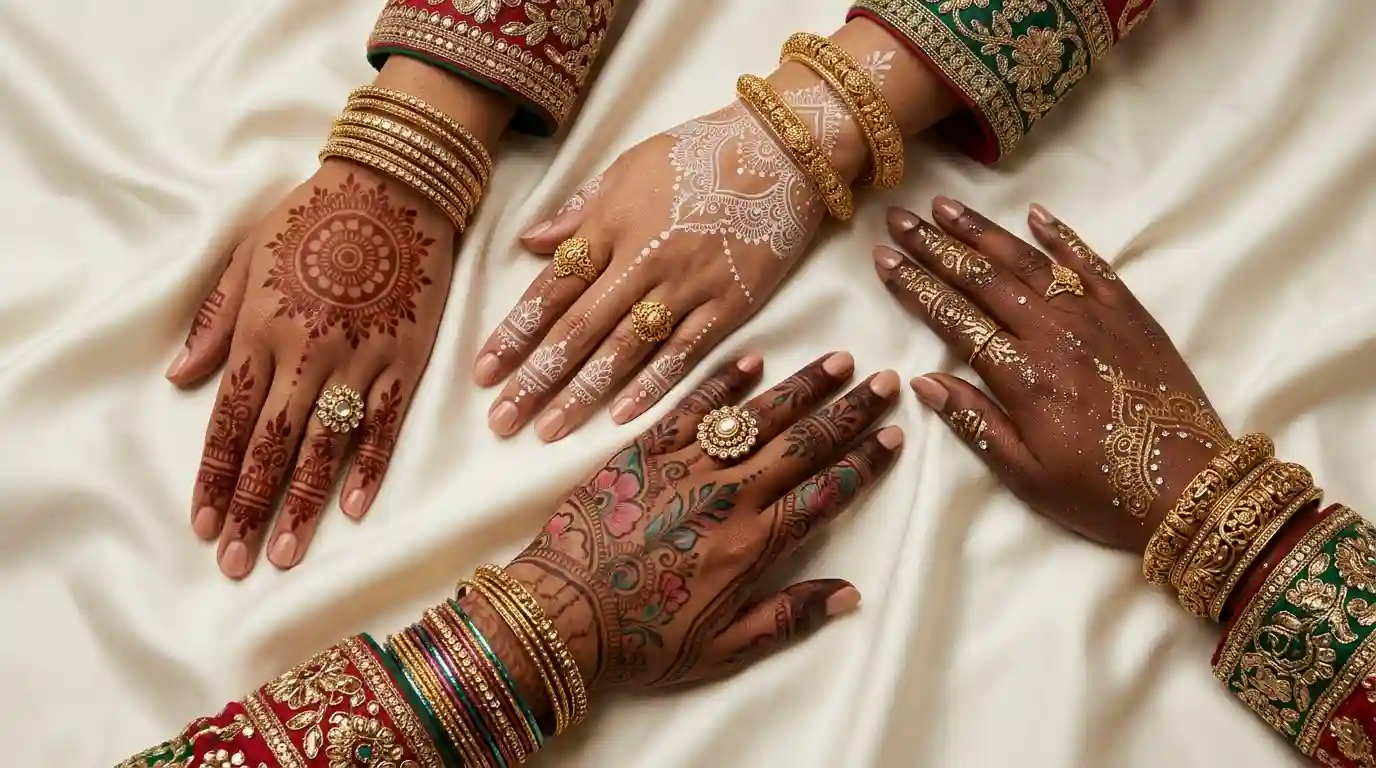
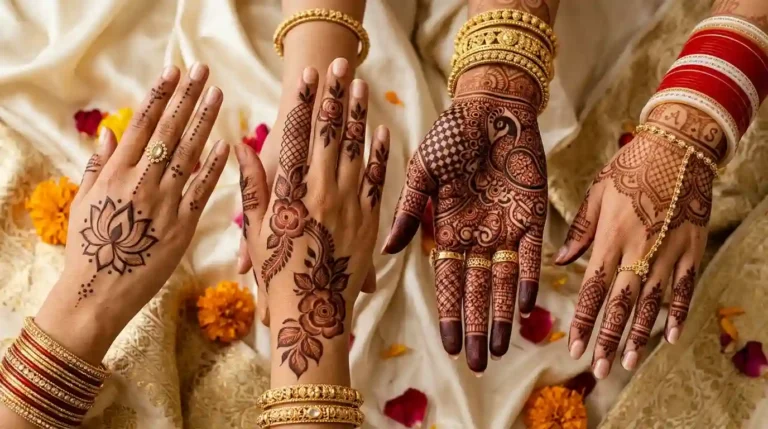
Colored mehndi designs bring a vibrant and creative twist to traditional henna artwork, making them an eye-catching choice for weddings, Eid celebrations, festivals, parties, and special occasions. From elegant white mehndi and sparkling gold patterns to colorful floral designs in pink, blue, green, and red, these artistic styles offer countless ways to decorate your hands and feet. You can choose delicate Arabic vines, traditional Indian mandalas, Pakistani bridal patterns, geometric artwork, or modern minimalist designs enhanced with glitter, rhinestones, and decorative details. Unlike natural henna, which typically produces orange to reddish-brown stains, many colorful mehndi-style designs use temporary cosmetic body paints, glitter gels, or other products specifically formulated for decorative skin application. Understanding this difference helps you select suitable materials and achieve the appearance you want. In this guide, you will explore popular colored mehndi styles, beautiful patterns, placement ideas, color combinations, bridal inspiration, application techniques, and aftercare. You will also learn how to choose appropriate products, understand wear time, and avoid potentially harmful ingredients.
Table of Contents
- What Are Colored Mehndi Designs?
- Colored Mehndi Design Styles
- Colored Mehndi Patterns and Motifs
- Colored Mehndi Designs by Color and Detail
- Colored Mehndi Designs by Placement and Occasion
- How to Choose a Colored Mehndi Design
- How to Choose Colored Mehndi Products
- How to Prepare and Apply Colored Mehndi
- How Long Colored Mehndi Designs Last
- How to Make Colored Mehndi Last Longer
- How to Remove Colored Mehndi
- Photographing Colored Mehndi Designs
- Frequently Asked Questions About Colored Mehndi Designs
- Conclusion
What Are Colored Mehndi Designs?
Colored mehndi designs are decorative patterns inspired by traditional henna artwork but created or enhanced using different colors, cosmetic materials, and artistic techniques.
Unlike conventional henna, these designs may include white, pink, blue, green, gold, silver, or glittering details.
Some are created entirely with surface-applied cosmetic body paint, while others combine an existing natural henna stain with separately applied decorative products.
Understanding the difference is essential because the materials do not behave the same way on the skin.
Natural Henna vs. Colored Body Art
Traditional henna comes from the leaves of Lawsonia inermis, a plant containing the naturally occurring dye molecule lawsone.
Henna paste is commonly used to create temporary decorative patterns on the hands and feet.
Natural henna typically develops orange, orange-brown, reddish-brown, or brown stains. The exact color depends on the formulation, skin, placement, and application conditions.
Natural henna does not produce blue, green, white, or metallic silver stains.
Products sold under names such as colored henna or rainbow mehndi may contain cosmetic pigments, adhesives, or other substances rather than traditional henna.
For traditional pattern inspiration, explore our collection of mehndi designs featuring different artistic styles and placements.
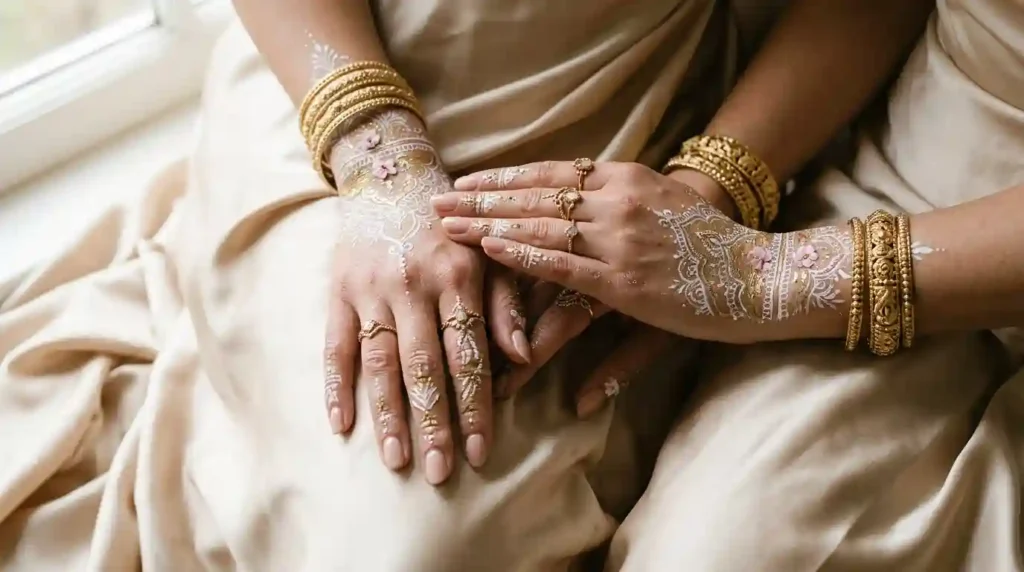
White Mehndi, Glitter Mehndi, and Colored Body Paint
White mehndi is a popular decorative style for contemporary bridal looks.
Despite its name, white mehndi is generally not made from the traditional henna plant. It usually involves a white cosmetic body paint or another temporary decorative product.
Glitter mehndi adds sparkling details to floral motifs, geometric borders, or jewelry-inspired patterns.
Colored body paint offers additional possibilities, allowing artists to use shades such as pink, blue, green, red, gold, and silver.
The important distinction is that these products generally remain on the surface of the skin rather than producing a traditional henna stain.
Their wear time, removal method, and suitability for different body areas depend on the specific formulation.
How Colored Designs Differ from Traditional Mehndi
Traditional henna develops a stain within the outer layers of skin, while most colorful cosmetic patterns sit on the surface.
This difference affects the finished appearance and durability.
Natural henna may remain visible for one to three weeks. Many surface-applied colored designs are intended for shorter wear.
Colored body art also allows greater creative flexibility.
Artists can combine metallic outlines, pastel flowers, glittering borders, and decorative rhinestones within one composition.
However, color variety does not automatically indicate product safety.
Each pigment, glitter, adhesive, and cosmetic product must be suitable for the intended skin application.
Colored Mehndi Design Styles
Colored mehndi-style artwork can draw inspiration from traditional Indian, Pakistani, Arabic, Punjabi, and Moroccan patterns.
Each style uses recognizable motifs that can be interpreted through contrasting colors, temporary body paints, or carefully placed decorative accents.
The most attractive combinations preserve the character of the original artistic style while introducing colors thoughtfully.
Indian Mehndi Designs
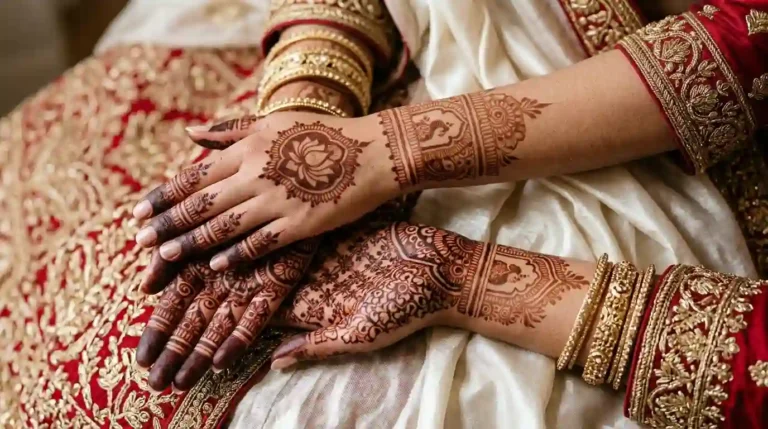
Indian mehndi frequently features mandalas, paisleys, lotus flowers, peacock motifs, and detailed decorative borders.
For a colored interpretation, an artist might create a large floral mandala using a red cosmetic outline with small gold accents.
Another option is a traditional paisley pattern decorated with pink and green floral elements.
A colorful lotus mandala can become the central feature of the palm.
Use one dominant color and a smaller number of accent shades to keep the arrangement organized.
This style suits weddings, Diwali, Karwa Chauth, and other formal celebrations.
Pakistani Mehndi Designs
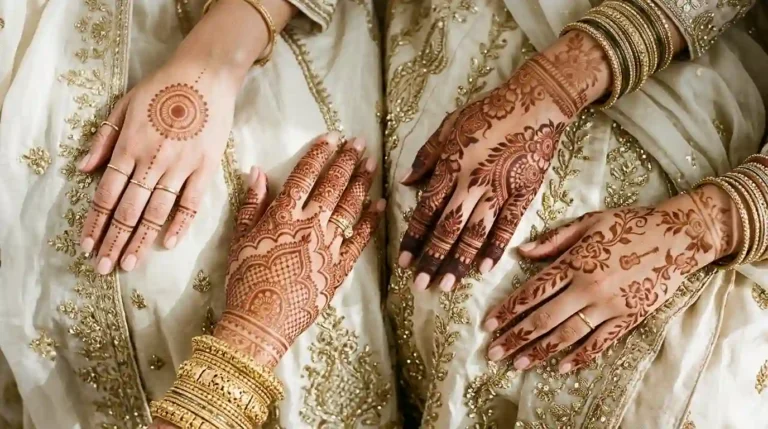
Pakistani mehndi commonly combines floral patterns, ornamental wrist borders, decorative fingers, and intricate latticework.
A colored interpretation might feature white floral outlines with delicate gold cosmetic accents.
For a festive appearance, pink flower centers can be combined with green leaves and fine decorative dots.
A large central flower surrounded by geometric borders creates a balanced design.
Pakistani bridal styling often includes elaborate jewelry, so consider how the colors will appear alongside bangles, rings, and embroidered sleeves.
Arabic Mehndi Designs
Arabic mehndi is recognized for its flowing floral vines, bold outlines, and curved decorative elements.
These patterns translate particularly well into colorful body-art designs.
A large pink flower with green leaves can extend diagonally across the back of the hand.
White body paint can also be used to create delicate Arabic-inspired vines.
For a festive design, fine gold cosmetic details can highlight selected petals and borders.
The open spaces associated with many Arabic patterns help different colors remain visually distinct.
Punjabi Mehndi Designs
Punjabi-inspired mehndi can feature traditional floral ornamentation, decorative palm patterns, and jewelry-like motifs.
For a colorful interpretation, combine bold floral shapes with fine borders and sparkling accents.
Red-and-gold-inspired decorative artwork can complement traditional Punjabi bridal attire and bangles.
Another option is a circular palm motif with colored floral details extending toward the fingers.
Keep the overall design coordinated with the bride’s chuda, kaleere, and other wedding accessories.
Moroccan Mehndi Designs
Moroccan-inspired henna often emphasizes geometric shapes, angular lines, diamonds, triangles, and repeated patterns.
These structured compositions work beautifully with contrasting cosmetic colors.
For example, create alternating blue and silver diamond borders on the back of the hand.
A white geometric wrist band can also look elegant against a deeper skin tone.
Consistent spacing is especially important because uneven lines are noticeable in geometric designs.
Avoid adding too many unrelated colors to a pattern that already contains substantial decorative detail.
Traditional and Contemporary Designs
Traditional colored mehndi concepts retain familiar patterns such as mandalas, paisleys, lotus flowers, and ornamental wrist details.
Contemporary styles experiment with abstract shapes, asymmetrical arrangements, pastel palettes, and geometric accents.
Both approaches can create beautiful artwork.
A traditional floral motif can look contemporary when painted in white and accented with small gold details.
Similarly, an elaborate mandala can feel modern when surrounded by generous negative space.
Modern Fusion Mehndi
Fusion mehndi combines motifs from different artistic traditions.
An artist may use Arabic floral vines with Indian mandala centers or Moroccan geometric borders.
Color can help distinguish the various elements.
For example, white geometric outlines might frame pastel floral motifs.
Explore modern mehndi designs for ideas involving creative placement, negative space, and contemporary pattern arrangements.
The best fusion artwork usually shares a consistent line weight or decorative theme.
Minimalist Mehndi
Minimalist colored mehndi focuses on simple patterns and limited coverage.
A single white flower near the wrist, a narrow gold band, or three small pink blossoms can create an attractive design.
These patterns are particularly useful for casual celebrations and contemporary outfits.
Small designs also require fewer colors and decorative materials.
For a refined appearance, select one or two shades and maintain generous open space around the central motif.
Bridal Mehndi
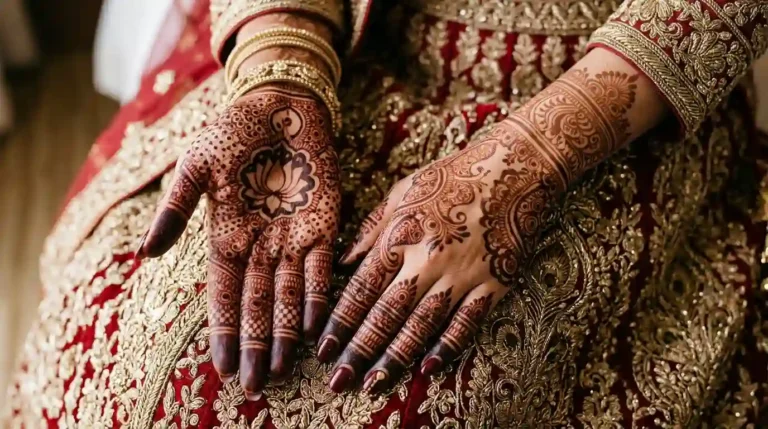
Colored bridal mehndi-inspired artwork can complement wedding clothing, jewelry, and decorative themes.
White lace patterns work beautifully with pastel outfits, while gold accents can coordinate with traditional bridal accessories.
Some brides prefer natural henna for the main wedding stain and add temporary cosmetic decorations separately.
Others choose fully painted designs for a shorter event or photo session.
When selecting beautiful mehndi designs, consider whether you want a traditional long-lasting stain or a colorful cosmetic look intended for shorter wear.
Personalized and Portrait Mehndi
Personalized colored mehndi can incorporate initials, wedding dates, symbols, or decorative portraits.
A bride-and-groom motif may be surrounded by colored flowers and ornamental borders.
For a simpler approach, create a small initial inside a pastel mandala.
Colored cosmetic accents can highlight selected features without covering the entire composition.
Portrait designs require greater precision, so professional assistance may be worthwhile.
Colored Mehndi Patterns and Motifs
The motifs used in colored mehndi determine its visual personality.
Floral patterns produce a soft decorative appearance, geometric artwork creates structure, and metallic details add an ornamental finish.
Combining motifs carefully helps the design remain attractive without becoming visually crowded.
Floral and Lotus Designs
Flowers are among the most adaptable motifs in colorful mehndi.
Roses, lotus flowers, miniature blossoms, and leafy branches can be recreated in different cosmetic shades.
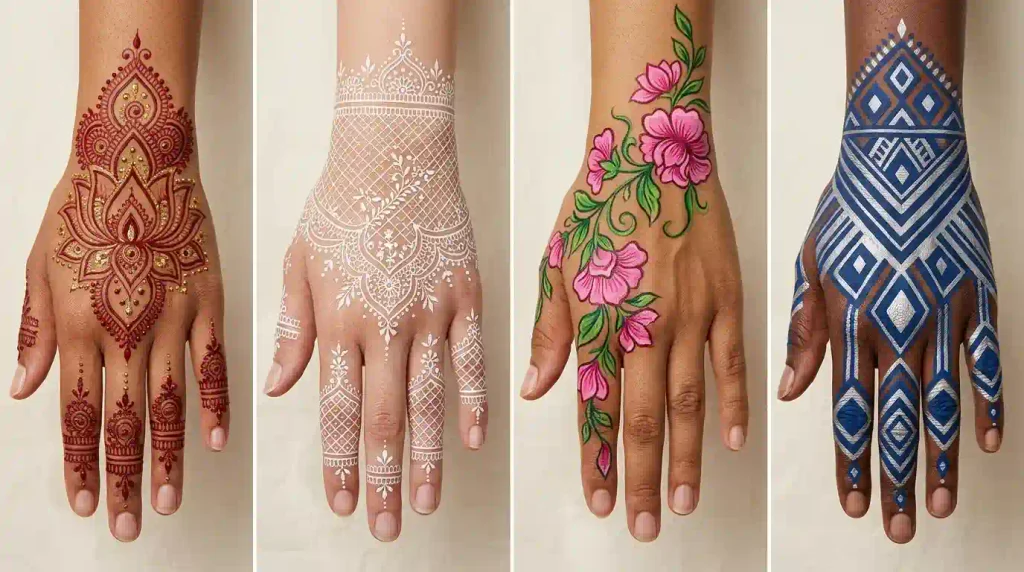
A pink lotus with green leaves creates a botanical appearance.
White floral outlines with fine gold centers can produce a delicate bridal design.
For a fuller composition, place one large flower at the center and connect it to smaller blossoms using curved vines.
Paisley and Peacock Motifs
Paisley motifs feature curved teardrop shapes that can be filled with colored petals, dots, and fine ornamental lines.
Peacock-inspired designs offer opportunities for blue, green, and gold decorative details.
A large peacock feather can serve as the focal point of a back-hand composition.
For a balanced appearance, surround the main motif with smaller paisleys and leaves.
Traditional shapes remain recognizable even when the colors are contemporary.
Mandala Designs
Mandala designs feature circular patterns built around a central point.
Artists can create alternating colored petals, decorative rings, and small dotted borders.
A white-and-gold mandala can look elegant for a wedding, while a pink-and-blue arrangement creates a playful festive appearance.
The repeated shapes should remain consistent in size and spacing.
A circular palm design works particularly well when the surrounding skin remains mostly uncovered.
Geometric Patterns
Geometric patterns use diamonds, triangles, squares, parallel lines, and repeated decorative shapes.
Contrasting colors help emphasize the structure.
A blue geometric band with fine silver highlights can decorate the wrist.
Pink and green diamond arrangements can create a colorful back-hand pattern.
Use a limited palette when the design contains many repeated shapes.
Too many competing shades can make intricate geometric artwork difficult to distinguish.
Net and Lace Designs
Net and lace patterns imitate delicate fabric through crossing lines, miniature flowers, and ornamental borders.
White cosmetic body paint is especially attractive for lace-inspired designs.
A fine white lattice can cover selected fingers and connect to a decorative wrist cuff.
For a more detailed appearance, add small gold dots at selected intersections.
Artists interested in intricate mehndi designs can adapt traditional jaali patterns to temporary cosmetic artwork.
Shaded Mehndi
Shaded mehndi-inspired body art uses variations in color intensity to create depth.
An artist might use a deeper pink near the center of a flower and a lighter shade toward the outer petals.
Similarly, blue leaves can contain subtle gradients for a painted botanical effect.
Shading works best with products designed to blend or layer on skin.
Not every cosmetic paint supports gradients, so check the product’s application instructions.
A small number of carefully shaded motifs often looks more polished than heavily blended colors across the entire hand.
Negative-Space Designs
Negative space refers to areas of uncovered skin intentionally left between decorative elements.
These spaces help colored motifs remain distinct.
For example, a large white flower can be surrounded by open skin before a narrow gold border begins.
A geometric pattern may alternate colored bands with bare sections.
This creates contrast without requiring more pigments.
Negative-space designs are particularly attractive for minimalist bridal artwork and contemporary festival styling.
Jewellery and Lacy-Glove Designs
Jewellery mehndi imitates decorative rings, bracelets, bangles, and connected chains.
Gold or silver cosmetic body paint can create the appearance of fine ornaments.
A lacy-glove design may cover the back of the hand with white net patterns extending toward the fingers.
Small cosmetic rhinestones can be added using a suitable skin-use adhesive.
Keep embellishments away from areas where they could be easily dislodged or interfere with movement.
These patterns pair beautifully with formal clothing and wedding accessories.
Bold and Thick Patterns
Bold mehndi-style patterns use broad lines, large flowers, and clearly defined decorative shapes.
A thick floral vine can be created with white or colored cosmetic body paint.
Large mandalas and broad paisley borders are also attractive choices.
If you prefer substantial coverage, explore heavy mehndi designs for inspiration involving dense ornamentation.
When recreating these patterns in cosmetic paint, remember that a thick application may crack or transfer more easily than thin, flexible layers.
Bride-and-Groom and Couple Designs
Couple designs can feature matching initials, hearts, symbols, or small personalized motifs.
A bride might choose a gold floral border containing the groom’s initial.
The groom could wear a smaller coordinating symbol on the wrist.
For decorative portraits, use carefully selected colors to emphasize clothing or surrounding ornaments.
The designs should share a recognizable visual theme without requiring identical coverage.
Colored Mehndi Designs by Color and Detail
Choosing colors is one of the most enjoyable parts of designing temporary body artwork.
Different shades create different visual effects, especially when combined with jewelry, clothing, and skin-tone contrast.
Remember that colorful designs generally require appropriate cosmetic materials rather than ordinary natural henna.
Red Mehndi Designs
Red mehndi designs can refer to two different appearances.
Traditional henna may naturally develop a reddish-brown stain, while bright red decorative artwork generally requires an appropriate cosmetic pigment.
A red floral mandala can complement bridal clothing and gold jewelry.
Red cosmetic outlines can also frame large paisleys or decorative wrist patterns.
Some searches for black and red mehndi designs refer to contrasting painted artwork. Avoid attempting this effect with products marketed as black henna, which may contain harmful chemical additives.
If you want a stronger contrast, use only independently verified cosmetic products appropriate for skin application.
Blue Mehndi Designs
Blue mehndi-inspired artwork creates a contemporary decorative appearance.
Soft blue floral patterns can complement pastel outfits, while deeper blue geometric details may produce a more dramatic result.
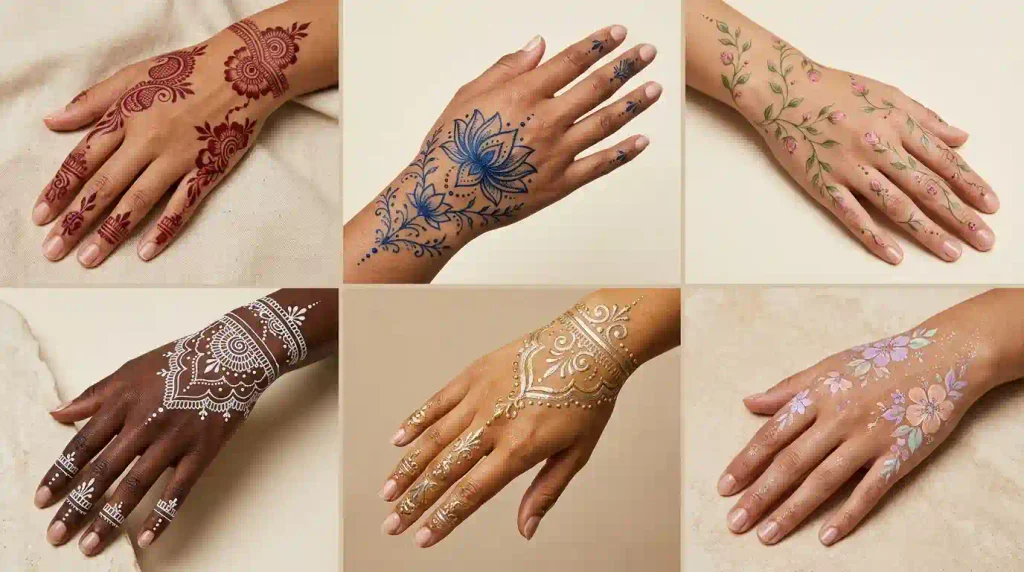
A blue lotus with silver accents is an attractive option for a formal event.
Blue and white decorative vines can also create a delicate back-hand composition.
Blue henna is not a natural color produced by the henna plant.
Choose a cosmetic body paint specifically intended for the planned skin placement rather than an unidentified product advertised as blue henna.
Pink and Green Mehndi Designs
Pink and green are especially attractive for floral body-art patterns.
Pink blossoms can be paired with green leaves to create a natural botanical theme.
A large pink rose surrounded by fine green vines makes an elegant back-hand design.
For a festive appearance, add small gold cosmetic details near the flower centers.
This combination works well for mehndi nights, Eid celebrations, and colorful wedding outfits.
Choose shades that complement the clothing without blending into its decorative embroidery.
White Mehndi Designs
White mehndi is popular for bridal styling, fashion photography, and minimalist decorative artwork.
White floral lace patterns can look especially elegant on the back of the hand.
Other options include white mandalas, delicate wrist bands, and geometric finger decorations.
White body paint creates a strong visual contrast against many medium and deeper skin tones.
However, white mehndi generally does not create a long-lasting skin stain.
Its appearance and durability depend on the cosmetic product applied.
Use a product specifically formulated for skin rather than household paint, correction fluid, or unidentified adhesive mixtures.
Gold and Silver Designs
Metallic designs can imitate decorative jewelry and ornamental embroidery.
Gold cosmetic body paint works well for bracelet patterns, floral borders, and miniature decorative dots.
Silver accents can complement geometric motifs and white lace designs.
A gold wrist cuff with delicate hanging chains can create the appearance of hand jewelry.
For a coordinated bridal look, match the metallic shade with selected accessories.
Products with a metallic appearance should still be checked for their intended skin use, especially if applied near sensitive areas.
Glitter and Stone-Studded Designs
Glitter mehndi adds sparkle to selected decorative elements.
A floral design may feature fine cosmetic glitter inside the petals, while small rhinestones can highlight the center.
Stone-studded patterns are particularly attractive for parties and temporary bridal styling.
Use cosmetic-grade glitter specifically intended for the relevant skin application.
Craft glitter, industrial pigments, and general-purpose adhesives are not suitable substitutes.
Avoid placing loose glitter or rhinestones close to the eyes or other areas where they may create additional risks.
Colorful Floral and Geometric Designs
Colorful floral and geometric patterns combine decorative motifs with contrasting shades.
An artist might create a large pink lotus surrounded by blue geometric borders.
Another option is a green leafy vine with small gold dots and white ornamental accents.
For a balanced design, select one main color and two supporting shades.
A consistent palette helps the artwork feel coordinated.
These patterns can be adapted for weddings, festivals, cultural celebrations, and short-duration photography sessions.
Colored Mehndi Designs by Placement and Occasion
Placement affects how visible the colored artwork will be and how well it survives movement, friction, and washing.
Hands and feet remain popular, but longer decorative patterns can also extend toward the forearms.
The event should help determine the design’s coverage and intended wear time.
Simple Hand Mehndi Designs
Simple colored hand designs may feature a single flower, circular mandala, or decorative finger bands.
White leafy vines can create a delicate look, while a small pink flower with green leaves adds playful color.
For first-time users, small mehndi designs offer inspiration that can be adapted to cosmetic body paint.
Keeping the design simple also makes application and removal easier.
Full-Arm Bridal Mehndi Designs
Full-arm colored bridal artwork creates a dramatic decorative appearance.
A design may begin at the fingertips and extend toward the elbows.
Large floral patterns can be connected through geometric borders, ornamental vines, and carefully placed metallic accents.
Because extensive cosmetic body paint may transfer onto clothing, application technique and product durability are particularly important.
Discuss the design with an experienced artist before attempting complete arm coverage.
Elbow-Length Designs
Elbow-length patterns provide space for long vines, detailed mandalas, and large ornamental motifs.
A floral trail may extend from the wrist toward the forearm.
For a contemporary look, alternate white lace sections with small metallic details.
Elbow-length artwork works especially well with short sleeves or sleeveless bridal clothing.
Maintain consistent motif sizes and spacing to avoid a crowded composition.
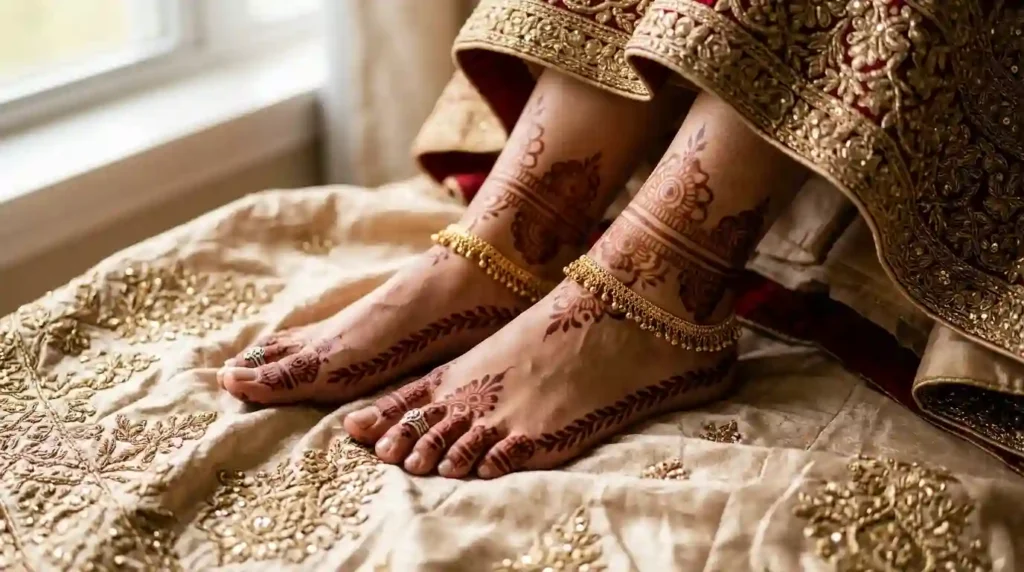
Foot Mehndi Designs
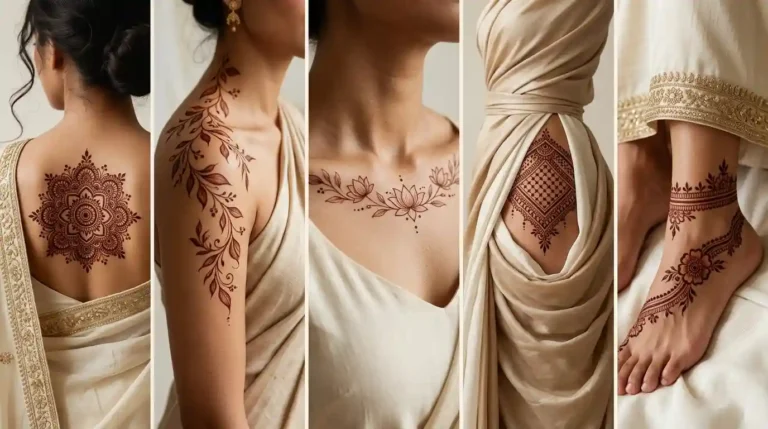
Colored foot mehndi can feature floral trails, decorative ankle bands, and small toe patterns.
White lace-inspired designs may complement open sandals and pastel outfits.
Gold cosmetic details can imitate ornamental payal jewelry.
Those interested in additional decorative placements can explore body mehndi designs for inspiration beyond the hands.
Because footwear can rub against cosmetic designs, avoid applying elaborate foot decoration immediately before putting on tight shoes.
Mehndi for Eid and Festivals
Eid, Diwali, Teej, and other festive occasions provide opportunities for colorful decorative artwork.
Arabic floral patterns in pink and green can complement vibrant clothing.
White and gold designs may feel more refined for evening celebrations.
For a quick festive look, choose a small mandala or floral wrist pattern.
Natural henna remains an option for those who prefer traditional reddish-brown stains, while colorful cosmetic decoration can be considered for shorter events.
Wedding and Bridal Mehndi
Colored wedding mehndi-style designs can be coordinated with bridal outfits, jewelry, and ceremony themes.
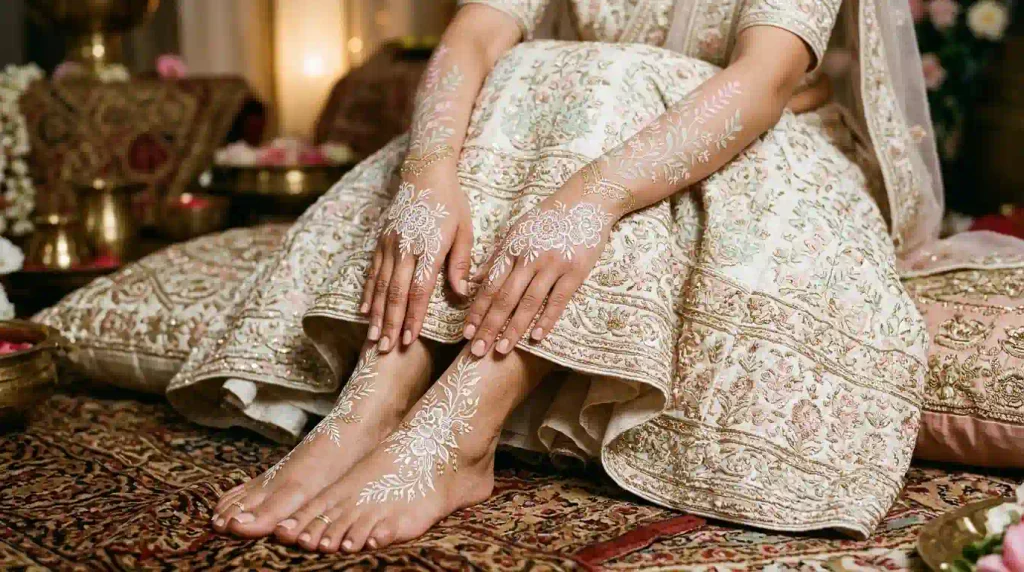
White lace patterns pair beautifully with ivory and pastel clothing.
Red and gold decorative motifs can complement traditional bridal attire.
For inspiration from well-known wedding looks, explore celebrity mehndi designs and identify the elements that suit your own style.
Remember to distinguish between traditional henna and short-wear colored cosmetics when planning the appointment.
Mirror-Image and Complementary Designs
Mirror-image designs use matching motifs on both hands.
A floral mandala on the right palm can be repeated in reverse on the left.
Complementary designs take a different approach.
One hand might feature pink flowers while the other uses matching green vines.
Both methods create coordination, but exact symmetry requires more careful planning.
For a polished result, maintain similar coverage and motif sizes even when the colors differ.
How to Choose a Colored Mehndi Design
Choosing the right colored design involves appearance, placement, product durability, and skin safety.
A beautiful pattern should complement your clothing while remaining suitable for the intended event.
Match the Design to Your Outfit
Begin by examining the colors and embroidery of your outfit.
Pink and green floral artwork can complement colorful festive clothing.
White lace-inspired designs may pair beautifully with ivory, pastel, or contemporary bridal outfits.
Gold or silver accents can coordinate with jewelry and embroidered borders.
Avoid using too many unrelated colors.
A limited palette generally creates a more cohesive appearance.
Choose Colors for Your Occasion and Personal Style
Your occasion can help determine the preferred level of decoration.
For a wedding, metallic accents and elaborate floral patterns may feel appropriate.
For Eid, pastel flowers and simple Arabic vines can create a festive look.
For casual gatherings, minimalist white or colored finger designs may be enough.
Browse Mehndi Design Ideas to compare different arrangements before selecting your palette.
Select a Design for Your Hands or Feet
The available surface affects the design’s composition.
Palms accommodate circular mandalas and larger flowers.
Fingers work better with narrow vines, dots, and geometric bands.
The backs of the hands provide space for diagonal floral arrangements.
Feet can feature decorative ankle borders and ornamental toe patterns.
Consider how much of the artwork will remain visible with your chosen clothing and footwear.
Choose a Design by Skill Level and Wear Time
Beginners should choose motifs with simple outlines and limited colors.
A small flower or geometric band is generally easier than a layered floral mandala.
Experienced artists can create complex lace patterns, decorative shading, and detailed bridal compositions.
Also consider how long the artwork needs to remain intact.
For an event lasting several hours, a suitable cosmetic paint may be practical.
For a traditional stain intended to remain visible for days or weeks, natural henna behaves differently from surface-applied color products.
Consider Skin Safety and Color Contrast
Different colors produce different visual effects across skin tones.
White, gold, and bright pink may create strong contrast on deeper complexions, while darker cosmetic shades may stand out more clearly on lighter skin.
However, color preference should not be restricted by skin tone.
Test the visual appearance on a suitable non-skin practice surface or compare photographs before choosing the final palette.
Never use potentially harmful products simply to achieve stronger color contrast.
Searches for mehndi designs for dark skin should prioritize flattering artistic contrast and safe materials rather than suggesting that only certain colors are suitable.
How to Choose Colored Mehndi Products
The product determines how a colored design is applied, how long it lasts, and how it should be removed.
Not everything marketed as colored mehndi is traditional henna or suitable cosmetic body paint.
Always evaluate the actual material rather than relying on the product name.
Check Product Labels and Intended Use
Look for complete ingredient information, manufacturer details, directions for use, and any applicable warnings.
Confirm that the product is intended for the exact area of skin where it will be applied.
A product suitable for nails, hair, or craft decoration is not automatically appropriate for skin.
Avoid unknown black dye mehndi products, black cone mehndi mixtures, and products promising an instant jet-black stain.
Some black henna products contain para-phenylenediamine, also called PPD, which can cause serious allergic reactions.
The U.S. Food and Drug Administration’s guidance on henna, black henna, and temporary tattoos explains these risks and notes that henna is approved as a hair color additive in the United States, not for direct skin decoration.
Choose Glitter and Embellishments Made for Skin
Choose cosmetic glitter and decorative products labeled for the intended skin use.
Do not use craft glitter, industrial pigments, or household adhesives.
Rhinestones should be applied only with an appropriate cosmetic adhesive, following its instructions.
Avoid areas where embellishments could be rubbed into the eyes, accidentally swallowed, or easily detached.
A delicate arrangement with a few small accents often looks more elegant than covering every motif with glitter.
DIY Colored Mehndi vs. Hiring a Professional Artist
DIY colored mehndi-style artwork can be enjoyable for simple patterns.
A small flower, wrist band, or geometric finger design requires relatively little artistic planning.
However, more elaborate designs involve several challenges.
Multiple cosmetic colors may need different drying times, and glitter or rhinestones require careful handling.
Professional artists can help with symmetrical compositions, fine lace patterns, and complex bridal artwork.
Ask the artist about their materials, hygiene practices, and experience with cosmetic body painting before booking.
How to Prepare and Apply Colored Mehndi
Application methods vary because white paint, colored cosmetic gels, glitter products, and natural henna are not interchangeable.
The following guidance is intended for cosmetic products specifically formulated and labeled for decorative skin use.
Always follow the instructions supplied with the actual product.
Prepare the Skin Before Application
Start with clean, dry skin.
Remove dirt and excess surface oil using a gentle cleanser suitable for your skin.
Avoid harsh exfoliation immediately before application.
Do not apply decorative products over cuts, rashes, sunburn, or irritated areas.
If the product requires a particular skin-preparation method, follow the manufacturer’s directions.
Choose clothing that leaves the application area accessible and prevents unnecessary rubbing.
Apply White Mehndi and Body Paint
White mehndi-inspired artwork is commonly created using cosmetic body paint.
Begin by selecting a simple floral or geometric design.
Use a suitable applicator to outline the main motif.
Add smaller petals, leaves, or dots after establishing the overall shape.
Thin, even layers often provide better flexibility than thick deposits of paint, although this depends on the formulation.
Allow each layer to dry according to the product’s instructions before adding further details.
Avoid applying unfamiliar cosmetic paints near the eyes or mouth unless specifically permitted for those areas.
Add Glitter, Gems, and Other Embellishments
Once the main painted design has dried sufficiently, decorative accents can be added if the product instructions allow them.
Use a suitable skin-use glitter product to highlight selected flowers or ornamental borders.
Small rhinestones may be attached with an appropriate cosmetic adhesive.
Avoid applying heavy embellishments to areas that bend frequently.
For example, a wrist border may be more practical with fine glitter accents than numerous raised stones.
The goal is to enhance the pattern without reducing comfort or durability.
Prevent Cracks in White Mehndi Designs
White cosmetic paint may crack when applied too thickly or used on areas with frequent movement.
Choose a flexible product intended for body painting.
Apply thin, even layers when appropriate for the formulation.
Avoid excessive stretching or bending of the decorated skin before the paint has fully set.
If the product requires a specific setting procedure, follow its instructions.
Do not attempt to prevent cracking by mixing the paint with unapproved adhesives or household substances.
For large bridal designs, test the product’s finish on a non-skin practice surface and consider the movement of the intended body area.
Follow Safety Precautions and Patch-Test Products
Patch testing may help identify some sensitivities, but it does not guarantee that a product is safe.
Follow any manufacturer-recommended allergy-testing instructions for products that are genuinely intended for skin application.
Do not patch-test suspected black henna or products that may contain PPD; even a small exposure can trigger a reaction or contribute to sensitization.
If you have a history of contact dermatitis, dye allergies, or reactions to temporary tattoos, consult a qualified healthcare professional before use.
Stop using any product that causes burning, persistent itching, swelling, or irritation.
Seek medical care for significant reactions, especially blistering or spreading inflammation.
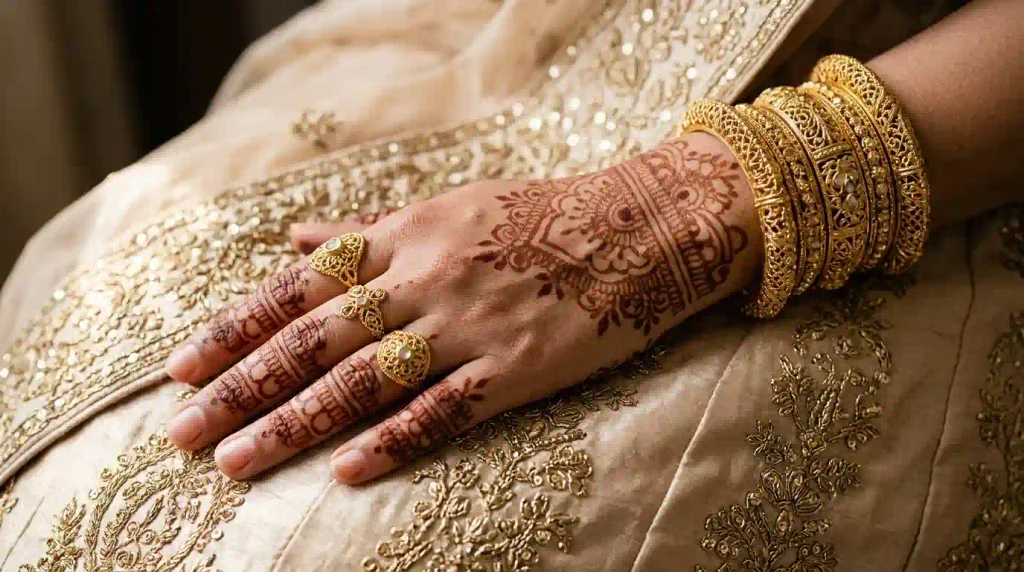
How Long Colored Mehndi Designs Last
Colored mehndi wear time depends primarily on the material used.
Natural henna, cosmetic body paint, glitter, and temporary transfers behave differently on the skin.
It is important to understand the product type before expecting a particular duration.
Wear Time by Product Type and Body Placement
Natural henna stains may remain visible for approximately one to three weeks.
Surface-applied cosmetic paints are usually intended for shorter wear.
Some are easily removed with water or cleanser, while other formulations offer greater resistance to transfer.
Glitter and adhesive embellishments may detach sooner, particularly on hands that experience frequent washing and movement.
| Design Type | General Wear Expectation | Main Consideration |
| Natural henna stain | Approximately 1–3 weeks | Gradual skin staining and fading |
| White cosmetic body paint | Often hours to a day; varies by product | Surface wear, rubbing, and washing |
| Colored cosmetic body paint | Hours to multiple days, depending on formulation | Product-specific durability |
| Cosmetic glitter design | Often a short event or day; adhesive dependent | Friction and adhesive wear |
| Decorative rhinestones | Highly variable | Adhesive strength and movement |
| Temporary cosmetic transfer | Usually days or less, but product dependent | Washing and surface adhesion |
These are general expectations rather than guarantees. Always check the manufacturer’s claims and directions.
How Washing, Friction, and Skin Preparation Affect Wear
Frequent washing can remove many surface-applied designs.
Friction from clothing, jewelry, and footwear may also cause paint to transfer or flake.
Hands typically experience more washing and movement than areas such as the upper arm.
A design on the back of the hand may therefore require more careful handling than one positioned on a less active area.
Poor skin preparation can also affect adhesion.
However, avoid aggressively exfoliating or irritating the skin in an attempt to improve cosmetic wear.
Comfort and skin health should always take priority over making the artwork last longer.
How to Make Colored Mehndi Last Longer
Proper application and gentle handling can help temporary cosmetic artwork remain attractive throughout an event.
The best approach depends on the material and the manufacturer’s instructions.
Unlike natural henna stains, most colored body paints cannot be made permanent through aftercare.
Aftercare for Surface-Applied Designs
Allow cosmetic paint to dry or set completely before touching clothing or accessories.
Avoid unnecessary rubbing against the decorated area.
Use setting products only when they are specifically compatible with the paint and intended for the relevant skin placement.
If the design contains glitter or rhinestones, check that the embellishments are secure before attending an event.
Do not apply random oils, sprays, hairspray, or household sealants to prolong wear.
These may damage the design or irritate the skin.
What to Avoid After Application
Avoid excessive friction and unnecessary water exposure when the product is not water-resistant.
Do not pick at raised decorative details or peeling paint.
Keep strong cleaning products away from the artwork.
If you notice irritation, remove the cosmetic product according to its directions rather than attempting to preserve the design.
Avoid applying multiple incompatible cosmetic layers without checking the manufacturer’s recommendations.
A beautifully maintained design should never come at the expense of skin comfort.
Plan Application Timing for Weddings and Events
Timing is especially important for colored bridal body art.
Natural henna is commonly applied one or two days before an event when the goal is to allow its stain to develop.
Surface-applied white paint or glitter is usually more suitable for application closer to the occasion.
For a wedding ceremony, consider arranging colored cosmetic artwork on the same day if the product is intended for short wear.
Allow time for the design to set before putting on formal clothing and jewelry.
If several wedding functions are planned, choose a design and product that match the desired wear time rather than assuming one application will survive every event.
How to Remove Colored Mehndi
Removing colored mehndi depends on whether the design is a traditional henna stain or surface-applied cosmetic artwork.
Natural henna fades gradually, while many cosmetic paints can be removed through gentle cleansing.
Remove Body Paint and Glitter Gently
Follow the removal instructions supplied with the cosmetic product.
Some body paints can be removed with lukewarm water and a gentle cleanser.
Others may require a suitable cosmetic makeup remover.
For glitter and adhesive embellishments, use the recommended removal method rather than pulling or scraping the skin.
Avoid acetone, harsh solvents, abrasive scrubbers, and household cleaning chemicals unless a product is specifically formulated and labeled for use on skin.
If the decoration does not lift easily, do not force it.
Repeated aggressive rubbing can cause irritation and damage the skin.
Care for Skin After Removal
After removing the decorative product, cleanse the area gently.
Pat the skin dry rather than rubbing it with a rough towel.
A fragrance-free moisturizer may help support skin comfort if appropriate for your skin.
Avoid immediately reapplying a product that caused redness or irritation.
For natural henna, remember that the stain cannot normally be removed instantly through ordinary cleansing.
It will gradually fade as the outer skin cells shed.
Do not use bleaching products or aggressive exfoliation to force natural henna stains to disappear.
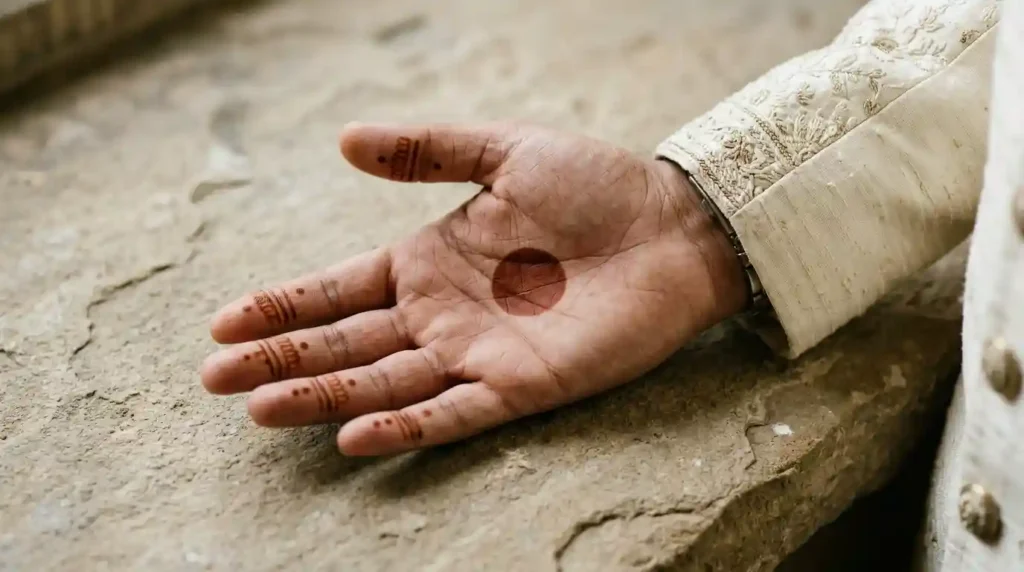
Photographing Colored Mehndi Designs
Colorful mehndi-style artwork can look especially attractive in photographs when lighting, background, and hand placement are carefully planned.
Soft natural daylight often helps reveal fine lines and subtle color differences.
Neutral backgrounds such as ivory, beige, or pale gray allow bright decorative patterns to stand out.
For white designs, use a background that provides enough contrast to separate the artwork from the surrounding clothing.
Gold and silver patterns may benefit from controlled lighting that shows their metallic appearance without creating excessive glare.
Position the hands naturally so the main motifs remain visible.
Avoid tightly curling the fingers when photographing detailed back-hand patterns.
For bridal photographs, coordinate the artwork with rings, bangles, embroidered sleeves, and other accessories.
If you are comparing different artistic approaches, explore mehndi designs for women for inspiration on hand placement and decorative compositions.
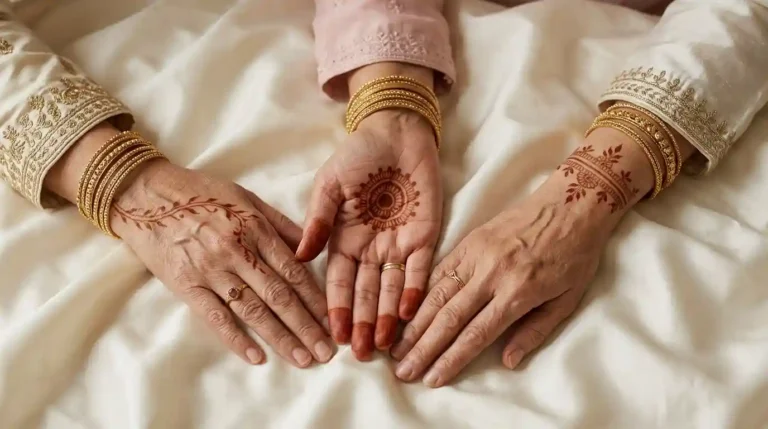
Color combinations can also be adapted to individual preferences regardless of age. For ideas with understated floral and traditional motifs, explore mehndi designs for older women.
Photographing a design shortly after the cosmetic paint has fully set can help capture clean lines before daily movement affects the finish.
For a professional presentation, capture both a close-up photograph showing the detailed pattern and a wider image showing how the artwork complements the overall outfit.
Frequently Asked Questions About Colored Mehndi Designs
What Are Colored Mehndi Designs?
Colored mehndi designs are henna-inspired decorative patterns created or enhanced using cosmetic body paints, glitter, and other temporary skin-art materials.
Is Colored Mehndi Made from Natural Henna?
Not necessarily; natural henna produces orange to reddish-brown stains, while bright colors usually require other cosmetic materials.
Is White Mehndi Real Henna?
No, white mehndi is generally cosmetic body paint or another temporary decorative material rather than traditional henna.
Can Natural Henna Produce Blue or Green Designs?
No, natural henna does not create blue or green stains.
Are Black Mehndi Designs Safe?
Some products marketed as black henna contain PPD and can cause serious skin reactions, so avoid unidentified black henna products.
What Is the Difference Between Black Henna and Black Body Paint?
Black henna may contain potentially harmful dyes, while appropriately formulated black cosmetic body paint is a separate product that must be assessed for its intended skin use.
Can I Combine Red and Black Mehndi Designs?
You can create red-and-black-inspired decorative artwork using appropriately formulated skin cosmetics, but should not use PPD-containing black henna or unknown dye mixtures.
Which Colored Mehndi Designs Are Best for Brides?
White floral lace, gold ornamental borders, pastel mandalas, and delicate glitter accents are popular bridal-inspired options.
How Long Does Colored Mehndi Last?
Surface-applied colored designs may last from hours to several days depending on the product, while natural henna stains often last one to three weeks.
Can I Apply Colored Mehndi at Home?
Yes, simple patterns can be created with cosmetic products specifically intended for skin use, following their instructions and safety precautions.
Are Glitter Mehndi Designs Suitable for Weddings?
Yes, cosmetic glitter can add decorative sparkle when used with materials appropriate for the intended skin placement.
Can Colored Mehndi Be Applied on Dark Skin?
Yes, colored body art can be created on any skin tone, with the most visible combinations depending on pigment opacity and personal preference.
How Do I Remove White Mehndi?
Most white cosmetic body paints can be removed using the product’s recommended gentle cleansing or makeup-removal method.
Can I Apply Colored Mehndi Over Traditional Henna?
Some compatible cosmetic decorations may be added after a natural henna stain has developed, but product instructions and skin condition must be considered.
What Should I Do If Colored Mehndi Irritates My Skin?
Stop using the product, remove it according to its instructions, and seek medical advice for persistent symptoms, swelling, or blistering.
Conclusion
Colored mehndi designs offer endless ways to explore creative temporary body art through elegant patterns, vibrant colors, and decorative details. From white floral lace and gold bridal motifs to pink-and-green vines, blue geometric artwork, and glittering mandalas, every style creates a different appearance. Traditional Indian, Pakistani, Arabic, and modern fusion patterns can all inspire beautiful colorful compositions for weddings, Eid, festivals, and special occasions.
The most important step is choosing materials suitable for the intended skin application. Remember that natural henna and colorful cosmetic body art are different products with different stain colors, wear times, and removal methods.
Experiment with carefully coordinated colors, select patterns that complement your outfit, and prioritize skin safety throughout the process.
For more inspiration, visit Mehndi Designs Studio and discover artistic ideas for your next celebration.
3 Comments