Unique and Creative Mehndi Designs: Patterns and Ideas
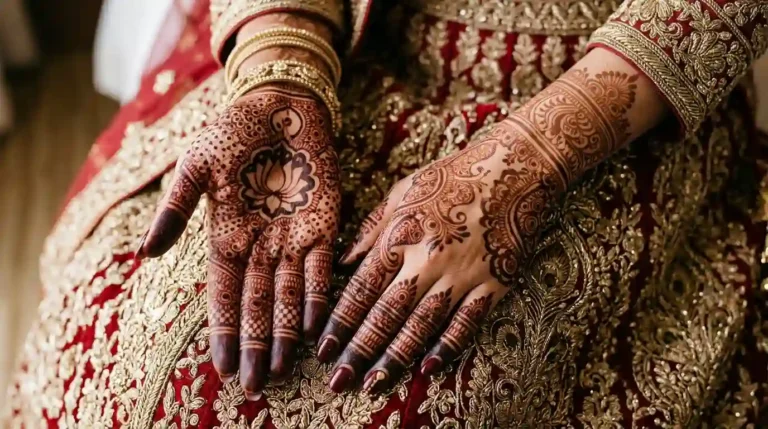
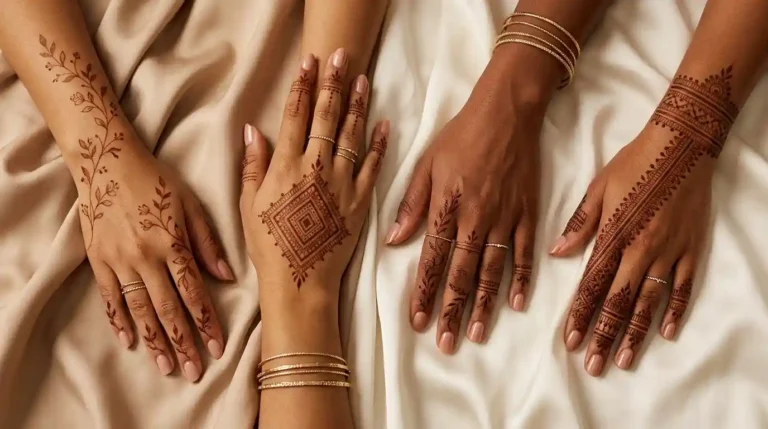
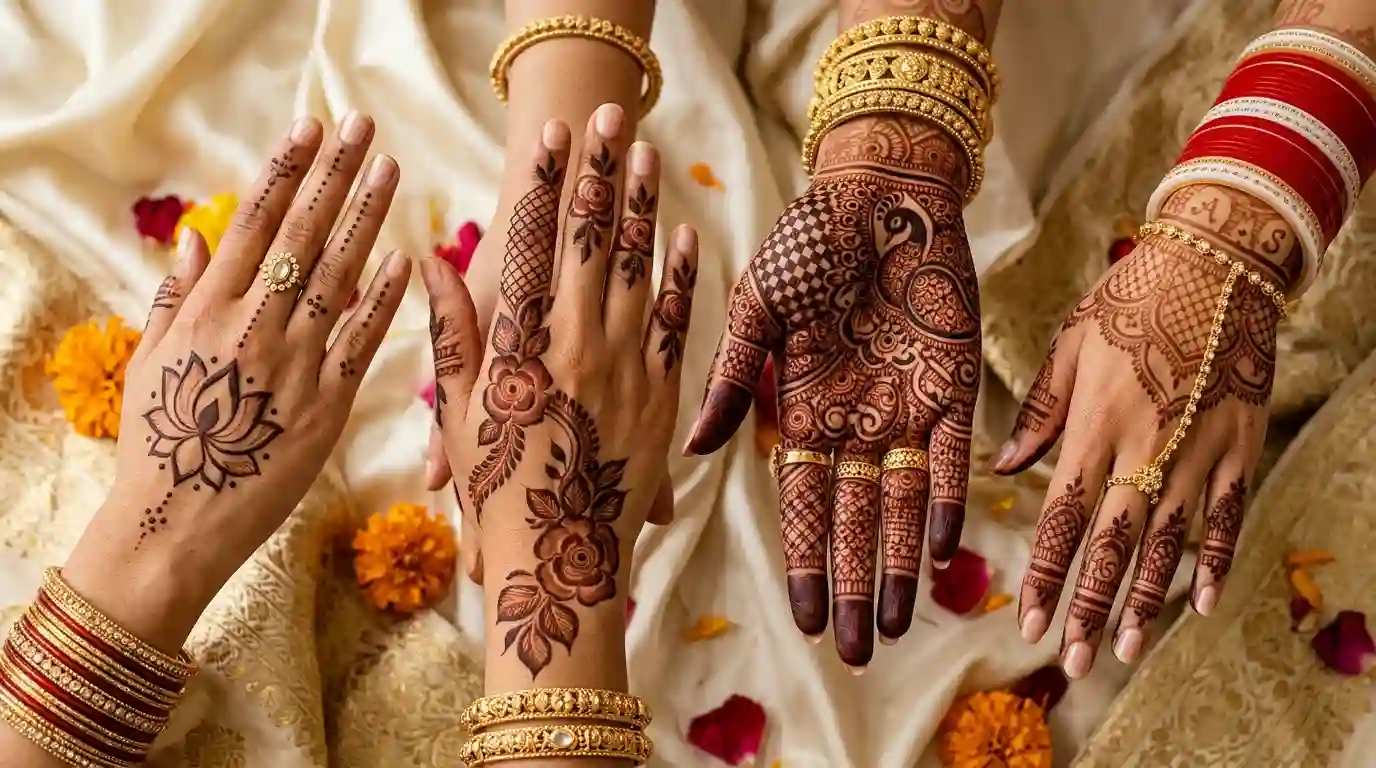
Unique mehndi designs bring creativity, cultural traditions, and personal expression together through beautiful henna artwork. From delicate floral vines and minimalist mandalas to elaborate bridal portraits, geometric patterns, and personalized wedding motifs, there are countless ways to create a design that feels different from ordinary henna. Some people prefer bold Arabic flowers with open spaces, while others enjoy traditional Indian paisleys, Pakistani floral patterns, Rajasthani royal artwork, or Moroccan geometric shapes. Creative mehndi can also feature hidden initials, meaningful symbols, lotus flowers, peacock feathers, jewelry-inspired chains, and connected designs that tell a personal story. Whether you are preparing for Eid, Diwali, a wedding, an engagement, or a casual celebration, the right combination of motifs and placement can make your henna truly memorable. In this guide, you will discover unique mehndi ideas for hands, fingers, wrists, forearms, and feet, along with creative bridal themes, popular design styles, customization techniques, and practical application tips. You will also learn how to work with a mehndi artist, choose suitable coverage, and care for your natural henna stain.
Table of Contents
- Unique Mehndi Design Ideas by Style
- Unique Mehndi Designs by Motif
- Unique Mehndi Designs by Hand and Body Placement
- Bridal and Wedding Mehndi Designs
- Mehndi Designs for Festivals and Other Occasions
- How to Make a Mehndi Design Feel Truly Unique
- Motif Meanings and Regional Influences
- How to Choose a Unique Mehndi Design
- Planning a Custom Design with a Mehndi Artist
- Mehndi Application, Stain, and Care
- Henna Products and Skin-Safety Checks
- Frequently Asked Questions About Unique Mehndi Designs
- Final Thoughts
Unique Mehndi Design Ideas by Style
Mehndi becomes distinctive when familiar patterns are arranged in unexpected ways. A traditional lotus can be combined with modern geometric borders, while a simple Arabic vine can incorporate meaningful initials or decorative symbols.
Different regional styles offer unique artistic possibilities. Indian, Pakistani, Arabic, Rajasthani, Moroccan, and Khaleeji henna each provide recognizable motifs that can be adapted to personal preferences.
Understanding these styles is the first step toward creating original artwork.
Minimal and Modern Mehndi Designs
Minimalist mehndi uses clean lines, limited coverage, and carefully positioned decorative elements.
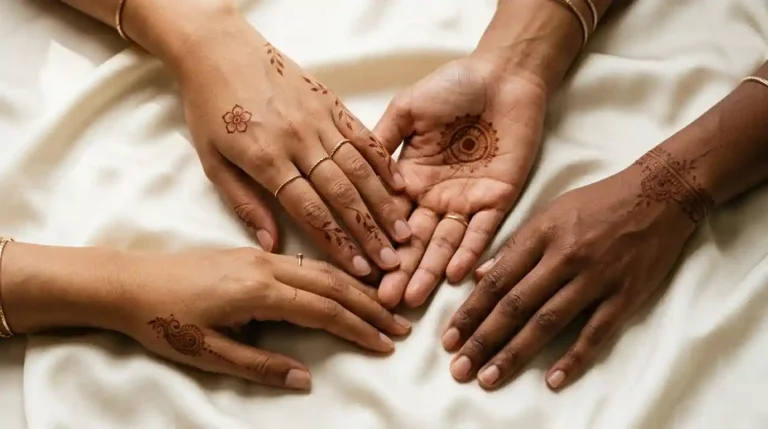
A single lotus near the wrist, a tiny mandala on the palm, or a delicate floral trail along one finger can create an elegant appearance.
What makes these patterns distinctive is their use of negative space. The uncovered skin becomes part of the overall design rather than an unfinished area.
For example, a small geometric diamond can be surrounded by a narrow open border and connected to the middle finger through fine dots.
Another option is an asymmetrical floral arrangement decorating only one side of the hand.
Explore modern mehndi designs for inspiration involving minimalist botanicals, creative placements, and contemporary geometric motifs.
Arabic Mehndi Designs and Floral Trails
Arabic mehndi is admired for its bold flowers, leafy vines, curved outlines, and flowing arrangements.
Many Arabic-inspired patterns extend diagonally from the wrist toward the fingers.
For a distinctive composition, choose one oversized rose and surround it with smaller flowers of different sizes.
A curved vine can connect the blossoms, while decorative dots provide a delicate finishing touch.
Another creative approach is to use a single continuous floral trail that moves across the back of the hand and ends near the index finger.
Large spaces between the flowers help each motif stand out.
Arabic floral designs can be adapted for weddings, Eid, engagements, and casual gatherings.
Indo-Arabic Mehndi Designs
Indo-Arabic mehndi combines bold floral elements with delicate ornamental detailing.
Large Arabic-inspired flowers may be surrounded by fine Indian-style paisleys, miniature leaves, and geometric jaali patterns.
For a creative back-hand design, place one large flower near the center and connect it to detailed finger bands.
The surrounding spaces can contain miniature paisleys and dotted borders.
This combination produces contrast between broad decorative shapes and intricate background details.
The design can be adjusted for partial-hand or full-hand coverage.
Indo-Arabic fusion is particularly attractive when the goal is to create something elaborate without losing the graceful movement of floral artwork.
Indian Mehndi Designs
Traditional Indian mehndi offers a wide variety of decorative motifs, including paisleys, mandalas, lotus flowers, peacocks, and ornamental borders.
Creative Indian henna can combine these elements in unexpected arrangements.
A large lotus mandala may decorate one palm while a peacock-inspired composition covers the other.
Alternatively, a traditional paisley can become the central motif of a contemporary geometric design.
For bridal artwork, miniature figurines and personalized wedding details can be added.
When exploring different mehndi designs, look at how traditional motifs can be rearranged rather than simply copied.
Maintaining recognizable focal points helps even complex compositions feel organized.
Pakistani Mehndi Designs
Pakistani mehndi often features floral arrangements, circular tikki patterns, paisleys, delicate vines, and decorative wrist borders.
A creative Pakistani design might combine a traditional central tikki with asymmetrical floral finger patterns.
Another idea is to use a large flower on the back of the hand surrounded by fine jaal details.
For festive styling, ornamental wrist cuffs can be connected to decorative rings through dotted chains.
These patterns complement traditional shalwar kameez, embroidered outfits, and bridal jewelry.
Pakistani-inspired artwork is especially versatile because it can range from simple floral decoration to highly detailed wedding henna.
Rajasthani Bridal Mehndi Designs
Rajasthani mehndi is often associated with elaborate traditional wedding artwork.
Common motifs include peacocks, paisleys, floral borders, ornamental arches, and bride-and-groom imagery.
A royal-themed design might feature a decorative jharokha arch surrounding a bridal portrait.
Another possibility is a peacock composition framed by miniature lotus flowers and paisleys.
For a distinctive appearance, use matching architectural borders on both hands while giving each palm a different central motif.
Rajasthani-inspired henna is particularly suitable for extensive bridal coverage.
However, individual motifs can also be simplified into smaller decorative patterns.
Moroccan Geometric Mehndi Designs
Moroccan-inspired henna emphasizes geometric shapes such as diamonds, triangles, squares, zigzags, and repeated line patterns.
These elements create a structured appearance that contrasts with flowing floral designs.
For a creative wrist motif, use several diamond shapes connected by parallel lines.
Another idea is to place a geometric medallion on the back of the hand and repeat smaller versions on selected fingers.
A bold triangular border can also frame a minimalist flower.
Consistent line thickness and spacing are important because irregular shapes become noticeable in geometric compositions.
For a unique fusion effect, combine angular Moroccan-inspired borders with soft botanical motifs.
Gulf and Khaleeji Mehndi Designs
Khaleeji mehndi refers broadly to styles associated with the Arabian Gulf, where artistic preferences vary between communities and individual artists.
Flowing flowers, curved decorative elements, bold outlines, and ornamental finger details are common inspirations.
A Gulf-inspired design may feature one prominent flower connected to the wrist through a broad leafy vine.
For a creative interpretation, add fine geometric details inside selected petals.
Another option uses a curved floral arrangement around a central open space.
These designs can complement traditional Gulf clothing and contemporary formal outfits.
The strongest compositions preserve the graceful movement of the main motifs while avoiding unnecessary overcrowding.
Traditional and Contemporary Fusion Designs
Fusion mehndi combines motifs from different artistic traditions into one coordinated composition.
A traditional Indian mandala can be framed by Moroccan geometric borders.
An Arabic floral vine may connect to a Pakistani-style ornamental wrist cuff.
A Rajasthani palace arch can also be combined with contemporary fine-line botanical patterns.
To keep the artwork harmonious, choose one primary artistic style and use elements from another as accents.
For example, let a lotus mandala remain the focal point while geometric borders provide structure.
The goal is not to include every style in one design. Thoughtful combinations create more distinctive artwork than excessive decoration.
Unique Mehndi Designs by Motif
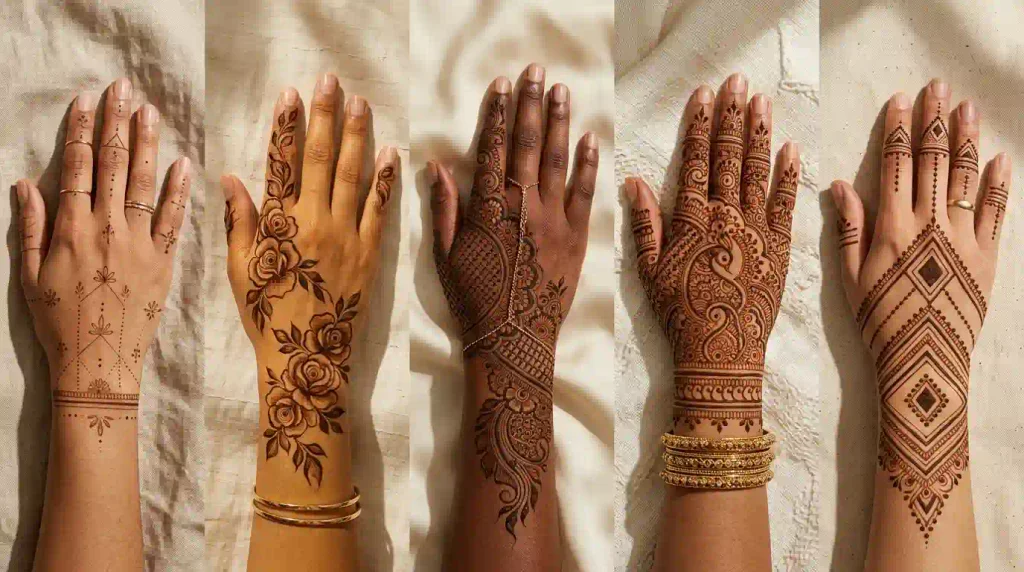
Individual motifs give mehndi artwork its character.
Flowers create a graceful appearance, geometric shapes introduce structure, and traditional birds or paisleys provide recognizable decorative elements.
Combining motifs in different sizes and arrangements allows artists to develop creative compositions.
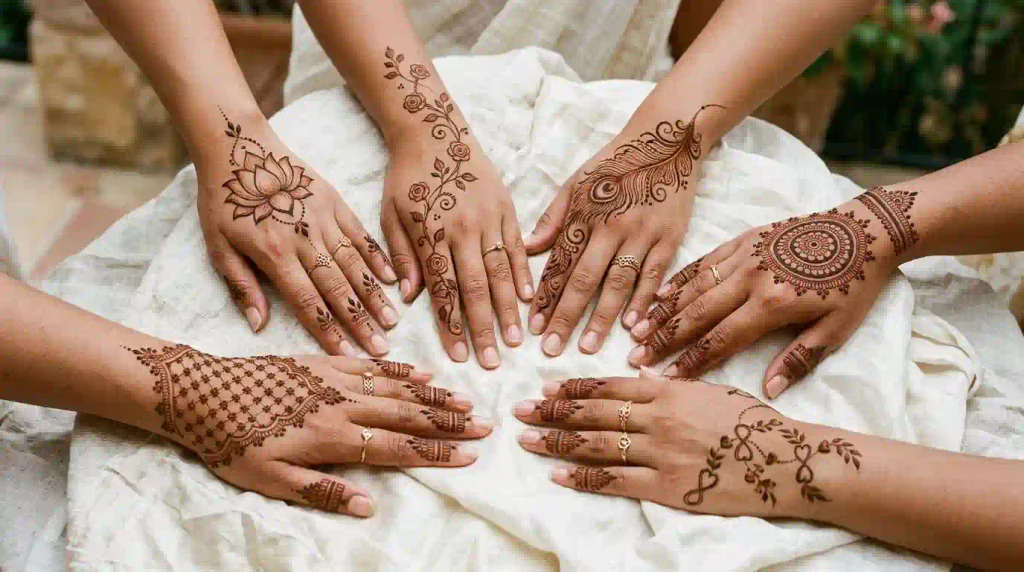
Lotus Mehndi Designs
Lotus motifs are particularly attractive in symmetrical and contemporary henna.
A large lotus can form the center of a palm mandala, surrounded by fine dots and decorative borders.
For a minimalist design, place one small lotus near the wrist and leave the remaining skin uncovered.
Another creative option is to create a half-lotus on each palm.
When both hands are placed together, the petals form one complete flower.
A lotus can also be combined with geometric shapes for a modern fusion appearance.
Use consistent petal sizes and enough spacing to keep the motif recognizable.
Rose Mehndi Designs
Rose motifs use curved petals arranged around a spiral-like center.
A single large rose on the back of the hand creates an elegant focal point.
For a distinctive appearance, connect the rose to smaller buds through a thin leafy stem.
Another idea is to create a decorative rose bracelet around the wrist.
Fine dotted chains can extend from the flower toward selected fingers.
Roses work beautifully in Arabic, Indo-Arabic, and contemporary botanical compositions.
Varying the petal sizes can create depth without requiring dense background patterns.
Peacock Mehndi Designs
Peacock motifs are popular in traditional South Asian henna because of their recognizable shape and ornamental feathers.
A large peacock may decorate the palm or forearm.
For a more unusual design, use only the curved feather pattern and connect it to delicate floral vines.
Another option is to frame a miniature peacock inside a geometric arch.
The feathers can contain paisleys, dots, and fine curved lines.
Avoid reducing the motif so much that its distinctive features disappear.
Peacock artwork is especially attractive for bridal ceremonies and traditional festive styling.
Mandala Mehndi Designs
Mandala mehndi uses circular patterns arranged around a central point.
A traditional design may feature several decorative rings containing petals, dots, and scalloped borders.
To create a unique mandala, introduce alternating patterns rather than repeating the same petals throughout.
For example, one ring may contain tiny leaves, while the next uses geometric diamonds.
A half-mandala near the edge of the palm creates an asymmetrical appearance.
Another option is to connect a small mandala to decorative finger bands through fine lines.
Circular motifs are versatile because they suit both minimalist and detailed henna.
Floral, Leaf, and Vine Designs
Flowers, leaves, and vines can be arranged into countless decorative combinations.
A leafy trail extending across the back of the hand creates a graceful appearance.
For a more creative design, combine large flowers with miniature blossoms and thin branches.
One attractive concept uses a flowing vine that begins near the wrist, curves around a central flower, and continues toward the fingers.
Another approach places small flowers at different points along the side palm.
Explore beautiful mehndi designs for inspiration involving balanced botanical arrangements.
Open spaces help individual flowers remain visible.
Paisley Mehndi Designs
Paisleys are curved teardrop-shaped motifs widely used in traditional henna artwork.
They can contain miniature flowers, spirals, dots, and leaves.
A single oversized paisley on the palm creates a bold traditional design.
For a more original composition, place several paisleys in alternating directions along a curved vine.
Another idea is to fill the paisley with a geometric grid instead of conventional floral details.
Paisleys also work well as borders around mandalas.
Choose different motif sizes to create movement while preserving consistent line thickness.
Jaali, Mesh, and Lace Patterns
Jaali patterns feature crossing lines that create decorative net or lattice structures.
The resulting diamonds or squares may contain miniature flowers, dots, or leaves.
Lace-inspired patterns combine fine net backgrounds with ornamental borders.
A creative back-hand design might feature a central flower framed by delicate jaali panels.
Another option is to use a lace-like wrist cuff connected to narrow finger patterns.
For more elaborate inspiration, explore intricate mehndi designs featuring fine linework and detailed ornamental arrangements.
Maintain consistent spacing so the pattern remains readable after the stain develops.
Geometric and Criss-Cross Patterns
Geometric mehndi uses diamonds, triangles, squares, circles, and repeated decorative lines.
Criss-cross patterns can form net-like backgrounds or standalone designs.
One creative option is to arrange several diamonds diagonally across the back of the hand.
Another uses alternating filled and outlined triangles around the wrist.
Geometric motifs can also frame flowers or small mandalas.
For a more contemporary appearance, use asymmetrical placement and narrow open borders.
Consistency is important because uneven lines are especially noticeable in structured artwork.
Mughal-Inspired and Ornamental Designs
Mughal-inspired mehndi draws inspiration from historical South Asian architecture, floral ornamentation, and decorative frames.
Jharokha-style arches, symmetrical panels, and ornamental borders are recognizable elements.
A palace-inspired design may feature a central arch containing a flower or personalized initial.
For elaborate bridal artwork, the frame may surround a miniature portrait.
Another creative idea is to combine several small architectural panels into a forearm composition.
Fine latticework and floral borders can connect the sections.
These designs create an elegant royal appearance when their main architectural shapes remain clearly defined.
Sun, Feather, Heart, and Infinity Motifs
Small symbolic motifs provide opportunities for personalized henna.
A sun-inspired pattern may contain a central circle with decorative rays.
A feather motif can extend along the wrist or forearm.
Tiny hearts can be arranged along dotted trails, while an infinity symbol can be incorporated into a floral border.
These elements are particularly suitable for minimalist and contemporary designs.
For a cohesive appearance, choose one meaningful symbol and surround it with a few matching decorative details.
The meaning of a symbol depends on the wearer and cultural context.
A personal connection often makes the design more memorable than elaborate ornamentation alone.
Unique Mehndi Designs by Hand and Body Placement
Placement plays an important role in making henna artwork distinctive.
A traditional motif can look completely different when moved from the palm to the wrist, fingers, or forearm.
Choosing the right placement helps the design follow the natural shape of the hand or body.
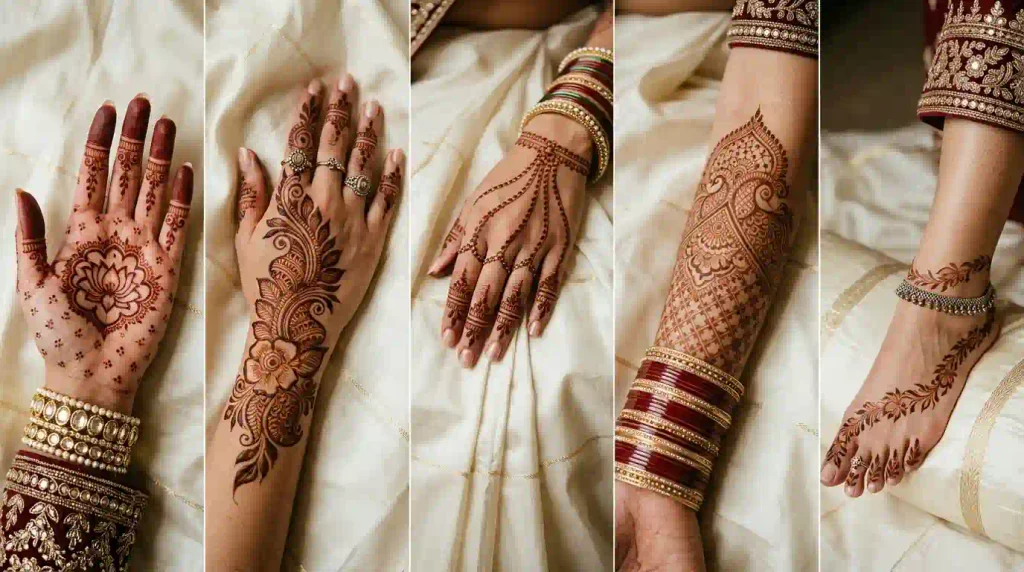
Front-Hand and Palm Designs
Front-hand mehndi is suitable for mandalas, lotus flowers, paisleys, and personalized motifs.
A large circular design can occupy the center of the palm.
For a unique appearance, position the main motif slightly off-center and connect it to one finger through a decorative vine.
Another idea is to create different but complementary patterns on each palm.
One hand may feature a geometric lotus, while the other contains a traditional paisley mandala.
Keep the supporting borders consistent to create visual harmony.
Distinctive palm designs often use one recognizable focal point rather than several competing large motifs.
Back-Hand Designs
Back-hand mehndi provides space for diagonal floral trails, geometric panels, and jewelry-inspired patterns.
A large rose near the wrist can connect to a small mandala on the back of the hand.
Fine dotted chains may extend toward selected fingers.
For a contemporary design, combine one geometric shape with a flowing botanical vine.
Another approach is to decorate only one side of the hand while leaving the remaining skin uncovered.
Back-hand patterns are especially attractive alongside rings and bracelets.
The design should complement jewelry without being hidden beneath it.
Full-Hand and Half-Hand Designs
Full-hand henna can combine several motif families across the palms, fingers, wrists, and backs of the hands.
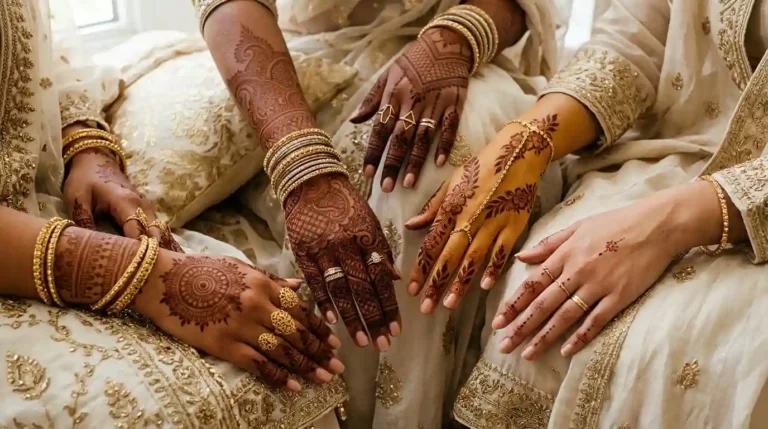
A distinctive bridal composition may feature large flowers, miniature paisleys, ornamental borders, and personalized artwork.
Half-hand designs provide another creative option.
One side of the palm can contain detailed floral patterns while the other remains uncovered.
For a more elaborate look, explore heavy mehndi designs featuring dense coverage and traditional ornamental artwork.
Full-hand patterns require careful planning so each section contributes to the overall composition.
Half-hand patterns benefit from clear borders and intentional negative space.
Finger and Fingertip Designs
Finger mehndi uses narrow shapes suited to smaller surfaces.
Popular motifs include miniature flowers, dotted rings, geometric bands, and fine leafy trails.
A unique finger design may decorate only the index and ring fingers.
Another option uses alternating motifs across all five fingers.
For example, one finger may feature diamonds while another carries delicate leaves.
A decorative chain can connect the ring finger to a small wrist motif.
These patterns can create a jewelry-like effect without requiring full-hand coverage.
Keep the details proportional to the finger width to preserve clarity.
Wristband, Bracelet, and Jewellery-Inspired Designs
Jewelry-inspired mehndi imitates bangles, bracelets, rings, and ornamental hand chains.
A wristband may contain small flowers framed by geometric borders.
A haath phool-inspired design connects a decorative wrist motif to finger-ring patterns through dotted chains.
For a distinctive appearance, combine a central floral motif with asymmetrical chains extending toward two fingers.
Another option is a narrow geometric bracelet with miniature hanging leaf details.
These patterns work beautifully with traditional clothing and contemporary accessories.
Avoid placing the main decorative elements directly beneath jewelry that will hide them.
Forearm Designs
Forearm mehndi provides more space for long floral vines, ornamental panels, and detailed personalized artwork.
A large lotus may become the central motif near the middle of the forearm.
Smaller flowers and geometric borders can connect it to the wrist.
For bridal artwork, a series of architectural arches may contain portraits, initials, or meaningful symbols.
Another creative approach is to create a continuous floral trail that changes motif size as it extends toward the elbow.
Long designs work best when they follow the natural direction of the arm.
Foot and Anklet Designs
Foot mehndi can feature floral trails, small mandalas, paisleys, and decorative ankle bands.
Anklet-style henna may resemble traditional payal jewelry through dots, scalloped borders, and hanging ornamental details.
A creative design might begin with a lotus near the ankle and extend toward the toes through a leafy vine.
Another option is to use a geometric band around the upper ankle.
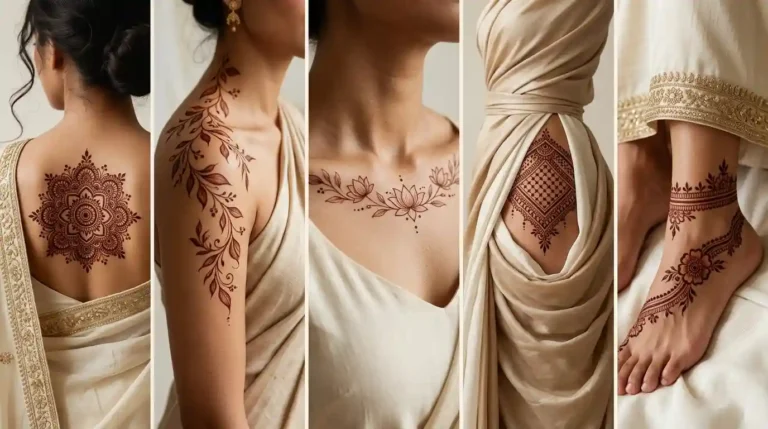
For inspiration beyond traditional hand placements, explore body mehndi designs featuring shoulders, forearms, feet, and other decorative areas.
Consider footwear and clothing friction when selecting the placement.
Bridal and Wedding Mehndi Designs
Bridal mehndi offers opportunities to combine traditional artwork with meaningful personal details.
From full-hand royal designs to minimalist love-story motifs, creative wedding henna can reflect a bride’s outfit, family traditions, and personal preferences.
The best compositions balance decorative richness with recognizable focal points.
Full-Hand Royal Bridal Designs
Royal bridal mehndi may include large lotus mandalas, peacock motifs, decorative architectural arches, and intricate ornamental borders.
Full-hand designs often extend from the fingertips toward the forearms.
For a distinctive composition, use a palace-inspired panel on one palm and a matching floral mandala on the other.
Detailed paisleys and jaali patterns can connect the major elements.
The same motifs may be repeated in smaller arrangements on the feet.
Choose an artist experienced in intricate bridal artwork because extensive designs require careful linework and proportion.
Backhand-Focused Bridal Designs
Some brides prefer the most elaborate artwork on the backs of their hands.
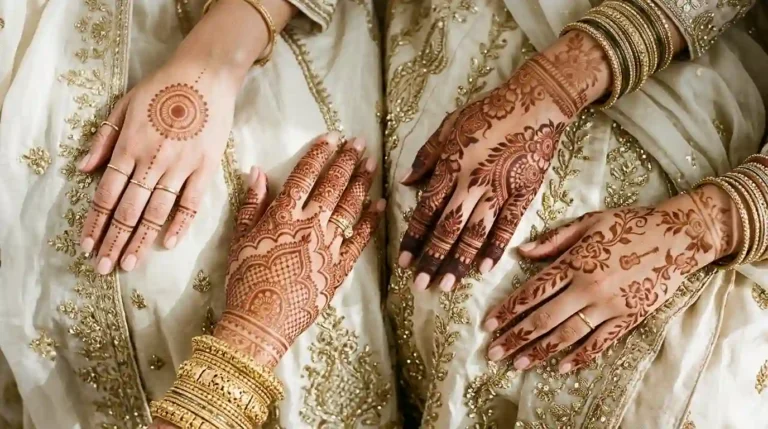
A large floral motif can be surrounded by geometric borders and decorative finger chains.
Another option is a mandala connected to an ornamental wrist cuff.
Backhand-focused designs are especially attractive in wedding photographs because they remain visible alongside rings and bangles.
For a modern look, use one prominent flower and substantial negative space.
For traditional styling, add miniature paisleys and fine latticework.
The palm can remain lightly decorated or feature a complementary motif.
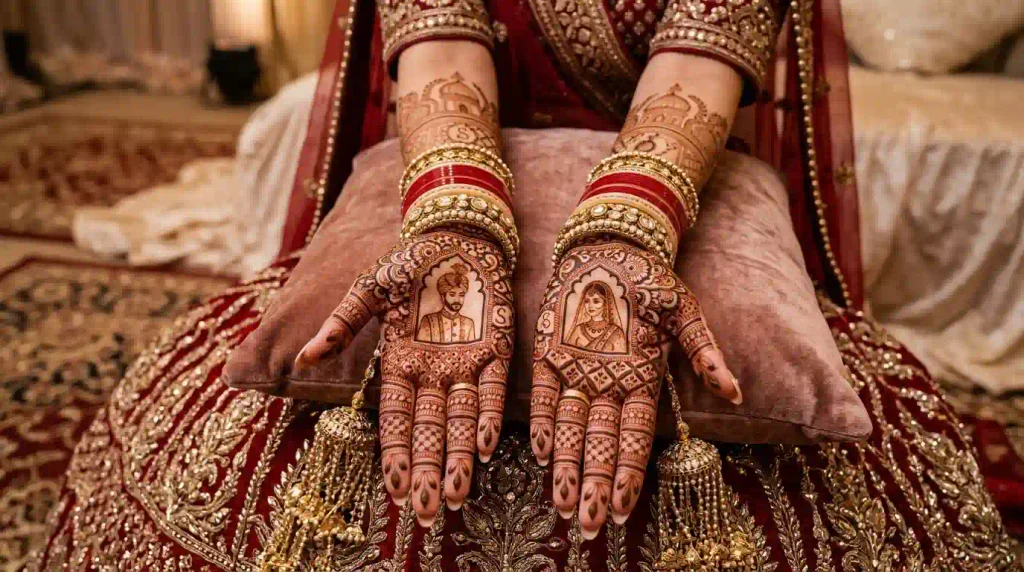
Portrait and Couple Story Designs
Portrait mehndi incorporates artistic representations of the bride, groom, or other meaningful subjects.
A traditional Dulha-Dulhan design may place a bride on one palm and a groom on the other.
For a contemporary version, the artist may create simplified silhouettes within decorative frames.
Some couples choose motifs connected to how they met or an important shared memory.
A wedding-story design might include a small musical instrument, favorite flower, or symbolic location.
Detailed portraits require an experienced artist because proportions and recognizable features are important.
Personalized artwork should be planned before the appointment.
Wedding Vows and Love Story Designs
Wedding vows and love-story mehndi can incorporate meaningful words, short phrases, or symbolic details.
A bride may choose a wedding date surrounded by floral borders.
Another option is a small monogram representing both partners.
Decorative heart trails and infinity motifs can add a romantic touch.
Long passages of text may be difficult to fit legibly into henna, so shorter elements usually work better.
For a unique composition, arrange the meaningful detail inside a mandala or ornamental arch.
The surrounding motifs should support the central message rather than compete with it.
Hidden Names and Initials
Hidden initials are a familiar and playful feature of personalized bridal mehndi.
A groom’s initial may appear inside a paisley, floral center, or decorative wrist border.
The name can also be integrated into a geometric panel.
For a more contemporary design, combine the couple’s initials into one monogram.
The letters should remain readable after the henna stain develops.
Keep enough space around them to prevent the surrounding lines from merging visually.
This type of personalization can be adapted to simple, medium-coverage, or elaborate full-hand patterns.
Bridal Designs with Personal Symbols
Personal symbols can transform traditional artwork into something meaningful.
A bride might incorporate a favorite flower, shared hobby, pet motif, wedding hashtag, or symbolic date.
For example, a couple who enjoys music may choose a small guitar or musical note within a floral border.
A beloved pet could be represented through a tiny paw print or simplified silhouette.
Some brides also take inspiration from celebrity mehndi designs featuring personalized motifs and understated bridal arrangements.
The objective is to adapt an idea to your own story rather than reproduce another person’s wedding design exactly.
Mehndi Designs for Festivals and Other Occasions
Creative mehndi is not limited to wedding celebrations.
Eid, Diwali, engagements, family gatherings, and casual occasions provide opportunities to experiment with different patterns.
The amount of coverage and level of detail can be adjusted according to the event.
Eid Mehndi Designs
Eid mehndi often includes Arabic floral trails, ornamental wrist patterns, circular mandalas, and decorative finger motifs.
For Eid al-Fitr or Eid al-Adha, consider one large flower connected to a fine leafy vine.
Another creative option is a half-mandala positioned near the thumb.
Matching geometric finger bands can add a contemporary finishing touch.
For Chand Raat celebrations, smaller designs may be convenient when several family members want henna.
A distinctive Eid look can combine one traditional motif with an unusual placement or personalized decorative detail.
Diwali and Other Festival Designs
Diwali, Teej, Karwa Chauth, and other traditional festivals inspire a wide range of floral, paisley, and mandala artwork.
A lotus motif surrounded by fine dots creates an elegant palm design.
For a more elaborate appearance, combine a traditional paisley with ornamental geometric borders.
Some people choose symbols associated with their cultural or religious traditions.
For example, Shiva-Parvati or Radha-Krishna-inspired motifs may be meaningful in particular contexts.
Sacred imagery should be selected and placed respectfully, with consideration for individual beliefs and traditions.
A decorative flower or mandala can also provide a festive appearance without figurative or religious symbolism.
Engagement and Party Designs
Engagement mehndi can be personalized without extensive bridal coverage.
A small floral back-hand design can frame an engagement ring.
Another option is a central mandala containing the couple’s initials.
For parties, contemporary geometric patterns and fine botanical motifs provide stylish alternatives to traditional full-hand decoration.
A decorative wrist cuff connected to a finger-ring motif can create a jewelry-inspired appearance.
For creative inspiration, browse Mehndi Design Ideas and select patterns that complement your outfit and accessories.
Casual and Everyday Designs
Everyday henna can feature minimalist flowers, tiny paisleys, geometric bands, or delicate vines.
A small wrist motif may be enough to create an attractive appearance.
For women who prefer limited coverage, small mehndi designs offer inspiration involving miniature decorative elements.
A tiny lotus near the thumb or a simple leafy branch on one finger can work with casual clothing.
Contemporary tattoo-inspired henna may also feature stars, hearts, half-moons, and abstract shapes.
Choose designs that feel comfortable with your routine, remembering that natural henna stains gradually fade rather than disappearing immediately.
Mehndi Designs for Kids
Children may enjoy simple drawing motifs such as flowers, stars, hearts, butterflies, and small leaves.
A tiny floral design or decorative star can provide inspiration for a paper-based activity.
However, applying henna directly to children’s skin requires special caution.
Products marketed as black henna may contain harmful dyes, and even products labeled natural can have undisclosed ingredients.
For younger children, drawing mehndi patterns on paper or reusable practice sheets may be a safer alternative.
Parents should not assume a product is safe simply because the intended pattern is small.
How to Make a Mehndi Design Feel Truly Unique
A distinctive mehndi design does not require an unusual symbol or excessive decoration.
Often, originality comes from changing the arrangement of familiar motifs.
Placement, proportion, negative space, and personal details can transform a conventional pattern into something memorable.
Combine Motifs Without Overcrowding the Design
Begin by selecting one main motif.
This may be a lotus, rose, mandala, paisley, or peacock.
Next, choose one or two supporting elements that complement it.
For example, a large lotus can be surrounded by small geometric diamonds and decorative dots.
A peacock feather may connect to a leafy vine through a narrow ornamental border.
Avoid adding every decorative element that appears in your reference collection.
The most effective combinations share a consistent line thickness, motif scale, or artistic theme.
Leave enough space for each important element to remain recognizable.
Adapt a Reference Design with Personal Details
Reference images are useful starting points, but they do not need to be copied exactly.
Identify what you like most about the original design.
Perhaps you admire the floral arrangement, the wrist border, or the geometric finger pattern.
Retain those elements while changing the placement or adding a personal symbol.
A central mandala might contain an initial instead of a flower.
A traditional paisley could be surrounded by stars or miniature leaves.
This approach makes the design more personal while preserving the visual qualities that originally attracted you.
Use Negative Space, Asymmetry, or a Distinctive Focal Motif
Negative space creates contrast between decorated and uncovered skin.
A large flower surrounded by a clean open border can become more noticeable than several tightly packed motifs.
Asymmetrical designs offer another creative direction.
One side of the hand may contain a floral vine while the other remains undecorated.
A distinctive focal motif can also transform a familiar composition.
Instead of a conventional central flower, choose a peacock feather, geometric medallion, or personalized monogram.
The surrounding details should guide attention toward this main feature.
Motif Meanings and Regional Influences
Traditional mehndi contains decorative motifs that may carry cultural or personal significance.
However, meanings vary across communities, occasions, and individuals.
Understanding regional artistic traditions helps you create thoughtful fusion designs without treating every motif as interchangeable.
Symbolism of Lotus, Peacock, and Mandala Motifs
Lotus flowers are associated with purity, beauty, or spiritual significance in some cultural traditions.
Peacocks may symbolize beauty, elegance, and ornamental richness.
Mandalas can carry spiritual associations in certain contexts, although many henna mandalas are chosen primarily for their decorative symmetry.
Paisleys and floral vines may represent traditional artistic preferences rather than one fixed meaning.
Personal symbols can also hold meanings unrelated to established cultural interpretations.
When selecting meaningful artwork, prioritize the symbolism that genuinely matters to you.
Avoid assuming every person or community interprets a motif in the same way.
Differences Between Indian, Pakistani, Arabic, Rajasthani, and Moroccan Styles
There is no fixed number of mehndi design types because artists continually combine traditional and contemporary influences.
However, several broad regional styles are commonly discussed.
| Style | Recognizable Features | Creative Design Direction |
| Indian | Mandalas, paisleys, flowers, detailed borders | Personalized palm compositions |
| Pakistani | Floral vines, tikki motifs, jaali, ornamental wrists | Asymmetrical floral arrangements |
| Arabic | Bold flowers, flowing leaves, open space | Diagonal botanical trails |
| Rajasthani | Peacocks, portraits, traditional ornaments | Royal bridal storytelling |
| Moroccan | Diamonds, triangles, geometric repetition | Modern structured wrist and finger patterns |
| Khaleeji | Flowing florals, curved outlines, decorative accents | Elegant partial-hand designs |
| Indo-Arabic | Bold flowers with intricate detailing | Detailed fusion compositions |
These are general artistic tendencies rather than strict regional boundaries.
Individual artists may use several styles within the same design.
Combining Regional Styles Thoughtfully
Fusion henna works best when one style provides the main structure and another contributes supporting details.
For example, use an Arabic floral vine as the central composition and add Indian-style paisleys along the borders.
A Moroccan geometric frame can also surround a Pakistani-inspired floral motif.
For a more traditional wedding appearance, combine a Rajasthani arch with delicate botanical details.
Avoid introducing too many unrelated shapes.
Repeated motifs, consistent spacing, and matching line thickness help the design feel cohesive.
Culturally meaningful imagery should be used with awareness of its context, particularly when incorporating religious or ceremonial elements.
How to Choose a Unique Mehndi Design
Choosing creative henna involves more than selecting the most unusual reference image.
Consider the occasion, amount of coverage, hand placement, clothing, jewelry, and available application time.
A well-planned design should remain attractive on the actual hand or foot rather than only in a photograph.
Match Coverage to the Occasion and Outfit
A formal bridal outfit may complement elaborate mandalas, floral borders, and traditional paisleys.
A minimalist dress may pair more naturally with fine-line botanical motifs or geometric patterns.
For a casual gathering, limited coverage can create an elegant appearance without extensive decoration.
Traditional sarees, lehengas, and embroidered suits can inspire motif choices.
A lotus embroidered on the outfit might become the focal point of the henna.
For broader styling inspiration, explore mehndi designs for women across different occasions and coverage levels.
The design should complement the clothing rather than reproduce every decorative detail.
Choose Placement to Highlight the Hand or Foot
Placement affects how a motif appears.
Circular mandalas work naturally on the palm.
Diagonal floral trails suit the back of the hand.
Geometric bands can decorate fingers and wrists.
Long ornamental patterns are suitable for forearms, while anklet-inspired designs complement the feet.
Consider whether the artwork should remain visible with your chosen clothing and footwear.
A small motif near the wrist may be hidden by bangles.
Similarly, a detailed upper-foot design may be obscured by closed shoes.
Choose a placement that allows the main decorative element to be appreciated.
Balance the Design with Rings, Bangles, and Other Accessories
Jewelry can influence the arrangement of henna artwork.
A delicate ring may be framed by dotted finger chains.
Traditional bangles can complement ornamental wrist cuffs.
For heavily decorated bridal jewelry, a design with negative space may help prevent visual overcrowding.
A bride wearing kaleere may prefer detailed back-hand patterns that remain visible above the hanging ornaments.
For minimalist accessories, a larger floral motif can become the main decorative feature.
The goal is to create harmony between jewelry, clothing, and henna rather than making every element equally prominent.
Compare Minimal, Medium-Coverage, and Intricate Designs
Different levels of complexity create different visual effects.
Minimal designs feature small motifs and generous open space.
Medium-coverage patterns may include a central flower, decorative fingers, and a wrist border.
Intricate compositions use miniature details, layered motifs, and carefully connected ornamental sections.
| Design Level | Typical Features | Approximate Application Time |
| Minimal | Tiny flowers, simple vines, dots | 5–20 minutes |
| Small decorative | Mini mandala, finger bands, wrist motif | 15–30 minutes |
| Medium coverage | Floral trails, paisleys, decorated fingers | 30–90 minutes |
| Intricate | Fine jaali, miniature ornaments, layered motifs | 1–3 hours |
| Full-hand bridal | Dense patterns and personalized details | 2–5 hours |
| Extensive bridal | Hands, forearms, and feet | 4–8+ hours |
These are broad planning estimates. Actual duration depends on the artist, design size, and complexity.
The application time does not include the additional period needed for paste processing and stain development.
Decide Whether the Design Is Suitable for DIY Application
Some creative mehndi patterns are practical for beginners.
Small flowers, dots, leaf trails, and basic geometric bands can be practiced using a suitable applicator on paper or a reusable practice surface.
Complex portraits, miniature wedding scenes, and extensive jaali patterns require greater precision.
A beginner can simplify an elaborate design by retaining one main motif and removing dense background details.
For example, a full-hand bridal lotus composition can become a single palm mandala with a narrow border.
DIY suitability depends on technical skill, placement, and the product being considered.
Do not assume that an easily drawn design makes an unidentified henna product safe for skin.
Planning a Custom Design with a Mehndi Artist
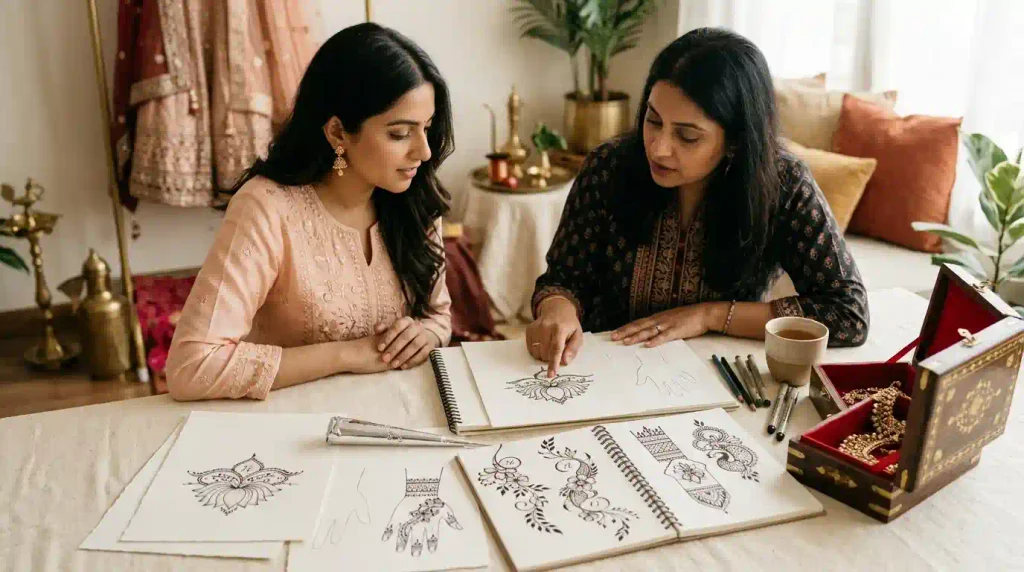
Professional artists can help turn separate reference ideas into one cohesive composition.
This is particularly valuable when combining different regional styles or incorporating personalized wedding details.
Planning also helps estimate the required appointment time and avoid last-minute changes.
Share Reference Images and Preferred Motifs
Collect clear photographs showing the artistic elements you prefer.
Save separate references for flowers, mandalas, geometric patterns, wrist borders, and personalized motifs.
Tell the artist which parts of each image you like.
For example, you may prefer the central lotus from one photograph and the finger borders from another.
A professional can suggest how to combine those elements without overcrowding the design.
Use high-quality images where the fine lines and decorative details remain visible.
Avoid relying on references that show only a small portion of the complete artwork.
Specify Placement, Coverage, and Personal Details
Explain whether you want palm, back-hand, finger, wrist, forearm, or foot decoration.
Mention the amount of coverage you prefer.
For personalized bridal artwork, provide correct names, initials, dates, or symbolic details in advance.
Discuss whether the two hands should match exactly or feature complementary designs.
If a portrait or architectural motif is important, identify it as a central element.
Also explain any patterns you do not want.
Clear communication gives the artist a better foundation for developing the composition.
Confirm the Design Plan and Application Time
Before beginning, review the proposed motif placement and overall design structure.
Ask how long the appointment is expected to take.
Complex bridal artwork may require several hours, especially when portraits or detailed forearm patterns are involved.
Discuss the order of application if both hands and feet will be decorated.
For wedding celebrations, consider when the natural henna stain should appear most prominent.
A well-planned appointment allows sufficient time for drawing, paste processing, and comfortable breaks.
The artist should also be willing to explain the ingredients of the product being used.
Know When to Choose an Experienced Artist
Professional assistance is particularly valuable for intricate portraits, royal bridal motifs, and connected full-hand compositions.
Review the artist’s portfolio for examples of similar work.
Look for clear linework, balanced spacing, recognizable figures, and consistent decorative borders.
If the design includes miniature portraits, ask to see previous portrait henna examples.
An artist experienced in simple floral patterns may not necessarily specialize in detailed figurative artwork.
For elaborate wedding henna, choose someone whose portfolio demonstrates the specific techniques required.
A good artist should also be able to adapt motifs to different hand shapes and placement sizes.
Mehndi Application, Stain, and Care
Creative mehndi requires suitable application techniques and realistic expectations about stain development.
Natural henna does not reach its final shade immediately after the paste is removed.
Application timing, product formulation, placement, and skin characteristics all influence the finished appearance.
When to Apply Mehndi Before an Event
Many brides schedule natural henna application approximately one or two days before the main wedding celebration.
This allows time for the stain to develop after paste removal.
The initial color may appear orange or light brown, then gradually deepen toward reddish-brown over the following 24–48 hours.
For Eid, engagement ceremonies, and parties, consider the same general development period.
However, actual results vary with the product, application conditions, and skin.
Complex designs also require additional drawing time.
Discuss the schedule with your artist before booking, particularly if you plan to decorate both hands and feet.
Caring for Mehndi as the Stain Develops
Follow the product’s instructions for paste processing and removal.
Avoid unnecessary movement while the paste is wet so the design does not smudge.
When the recommended processing time has passed, remove the material gently rather than scraping aggressively.
Natural henna stains commonly remain visible for approximately one to three weeks.
Washing, friction, skin turnover, and placement influence how quickly they fade.
Fine details may gradually become less distinct as the stain lightens.
Traditional aftercare practices sometimes include lemon-sugar mixtures, natural oils, or clove steam.
These methods are not essential, and acidic ingredients, fragrances, or excessive heat can irritate or injure the skin.
Avoid unknown chemicals or aggressive techniques intended to force a darker stain.
Those interested in bright white, blue, gold, or glittering designs can explore colored mehndi designs. These effects generally involve different cosmetic materials rather than the natural reddish-brown stain produced by traditional henna.
Henna Products and Skin-Safety Checks
Skin safety matters regardless of how attractive or detailed a mehndi design appears.
Prepared henna pastes may contain additional ingredients, and some temporary skin-decoration products are marketed under misleading names.
Always consider the ingredients and intended use before application.
Check the Ingredients in Henna Products
Traditional henna comes from the leaves of Lawsonia inermis.
Prepared pastes may contain additional substances, including fragrances, preservatives, or dyes.
Ask the artist or seller for complete ingredient information.
Do not assume that a product is safe merely because its label says natural, herbal, or organic.
Avoid products with unknown additives or suspicious claims about instant darkening.
A product that draws clean lines is not necessarily suitable for skin.
The reliability of the ingredient information and its intended use are more important than the appearance of the paste.
Understand the Difference Between Traditional Henna and “Black Henna”
Natural henna generally produces orange to reddish-brown or brown stains.
Products marketed as black henna may contain para-phenylenediamine, commonly called PPD.
PPD-containing temporary skin decorations can cause serious allergic reactions, including blistering, swelling, and painful inflammation.
Natural henna does not ordinarily create an immediate jet-black stain.
The U.S. Food and Drug Administration’s guidance on henna, mehndi, and black henna explains these risks and notes that henna is approved as a hair-color additive, not for direct skin decoration, in the United States.
Avoid suspected PPD-containing products and unidentified black henna mixtures.
A small patch test does not guarantee safety and should not be used to justify applying a product suspected of containing PPD.
Know When to Stop Application and Seek Medical Advice
Do not apply henna to broken, inflamed, infected, or irritated skin.
If a product causes burning, significant itching, or discomfort during application, stop using it.
Swelling, blistering, spreading redness, or a painful rash may indicate a serious skin reaction.
Seek medical advice promptly when these symptoms occur.
People with previous reactions to henna, temporary tattoos, or hair dyes should consult a qualified healthcare professional before considering further skin application.
A dermatologist can help assess possible contact allergies.
Children and people with sensitive skin require particular caution.
The design’s size, complexity, or temporary nature does not eliminate ingredient-related risks.
Frequently Asked Questions About Unique Mehndi Designs
What Are Unique Mehndi Designs?
Unique mehndi designs are creative henna patterns distinguished by personalized details, unusual motif combinations, original placements, or distinctive decorative arrangements.
How Many Types of Mehndi Designs Are There?
There is no fixed number, but commonly discussed styles include Indian, Pakistani, Arabic, Rajasthani, Moroccan, Khaleeji, Indo-Arabic, and contemporary minimalist mehndi.
What Are the Best Unique Mehndi Designs for Hands?
Lotus mandalas, Arabic floral trails, geometric patterns, peacock motifs, and personalized bridal designs are attractive choices.
How Can I Make My Mehndi Design Different?
Combine selected motifs, use creative negative space, change the placement, or incorporate meaningful symbols and initials.
Which Unique Mehndi Designs Are Best for Brides?
Royal mandalas, bridal portraits, hidden initials, wedding-story motifs, floral jaali patterns, and personalized full-hand artwork are popular options.
Can I Combine Arabic and Indian Mehndi?
Yes, Indo-Arabic fusion combines flowing floral patterns with detailed paisleys, geometric borders, and traditional decorative elements.
Are Unique Mehndi Designs Suitable for Eid?
Yes, creative Arabic vines, small mandalas, geometric finger patterns, and asymmetrical florals work beautifully for Eid.
What Are Simple Unique Mehndi Designs for Beginners?
Tiny flowers, geometric bands, small paisleys, half-mandalas, and short leafy vines are approachable drawing ideas.
Can Mehndi Include Wedding Dates and Names?
Yes, initials, names, wedding dates, monograms, and meaningful symbols can be incorporated into personalized designs.
What Is a Jaali Mehndi Design?
Jaali mehndi uses crossing lines to create decorative net or lattice patterns, often enhanced with small flowers and dots.
What Is a Haath Phool Mehndi Design?
Haath phool-inspired mehndi imitates decorative hand jewelry by connecting wrist patterns to finger motifs through ornamental chains.
Can Unique Mehndi Designs Be Applied on Feet?
Yes, floral ankle bands, lotus motifs, geometric borders, and ornamental foot trails can create distinctive designs.
Are Unique Mehndi Designs Suitable for Older Women?
Yes, women of every age can choose simple or elaborate patterns based on personal preferences; mehndi designs for older women offer additional traditional and minimalist inspiration.
How Long Does a Unique Mehndi Design Take to Apply?
A small motif may take only several minutes, while detailed full-hand bridal artwork can require several hours.
How Long Does Natural Henna Last?
Natural henna stains commonly remain visible for approximately one to three weeks, depending on placement, skin characteristics, and aftercare.
Can I Create Unique Mehndi Designs at Home?
Yes, beginners can practice simple motifs on paper or reusable surfaces before considering skin application with a suitably assessed product.
Does Unique Mehndi Have to Be Intricate?
No, originality can come from a single unusual motif, creative placement, or thoughtful use of negative space.
What Is the Difference Between Traditional and Modern Mehndi?
Traditional styles often use established regional motifs, while modern designs may experiment with minimalism, abstract shapes, asymmetry, and personalized arrangements.
Final Thoughts
Unique mehndi designs offer endless possibilities for combining traditional beauty with creativity and personal expression. From delicate lotus mandalas and Arabic floral trails to royal peacock motifs, Moroccan geometric patterns, and personalized bridal artwork, every design can become distinctive through thoughtful arrangement and meaningful details. The most memorable henna does not always require extensive coverage. Sometimes, one carefully placed flower, a creative wrist band, or a hidden initial is enough.
Choose motifs that complement your outfit, select placements that suit your preferences, and work with an experienced artist when planning complicated designs. Prioritize safe ingredients and appropriate aftercare throughout the process.
For more inspiration, explore Mehndi Designs Studio and discover creative henna ideas for your next wedding, festival, or special celebration